
30 Stylish Terracotta Kitchen Ideas That Warm Up Any Space
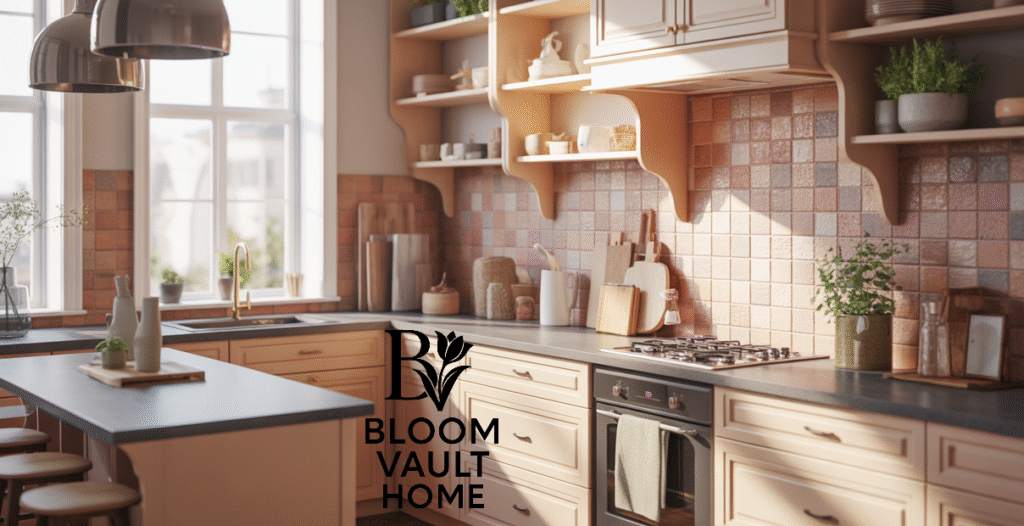
In 2026, kitchens are shifting toward warmer, earthier tones and terracotta is leading the way. Once seen only in Tuscan style villas or Mediterranean homes, terracotta is now a go to design element for modern, rustic, and even minimalist interiors. It brings in depth, texture, and a lived in warmth that’s hard to replicate with cooler tones.
Whether you’re looking to update your backsplash, install clay tile floors, or simply add terracotta accents, this color delivers personality and a grounded aesthetic that feels both cozy and contemporary.
Let’s dive into 30 stylish terracotta kitchen ideas that can transform your space with character and color.
1. Terracotta Tile Backsplash with White Cabinets
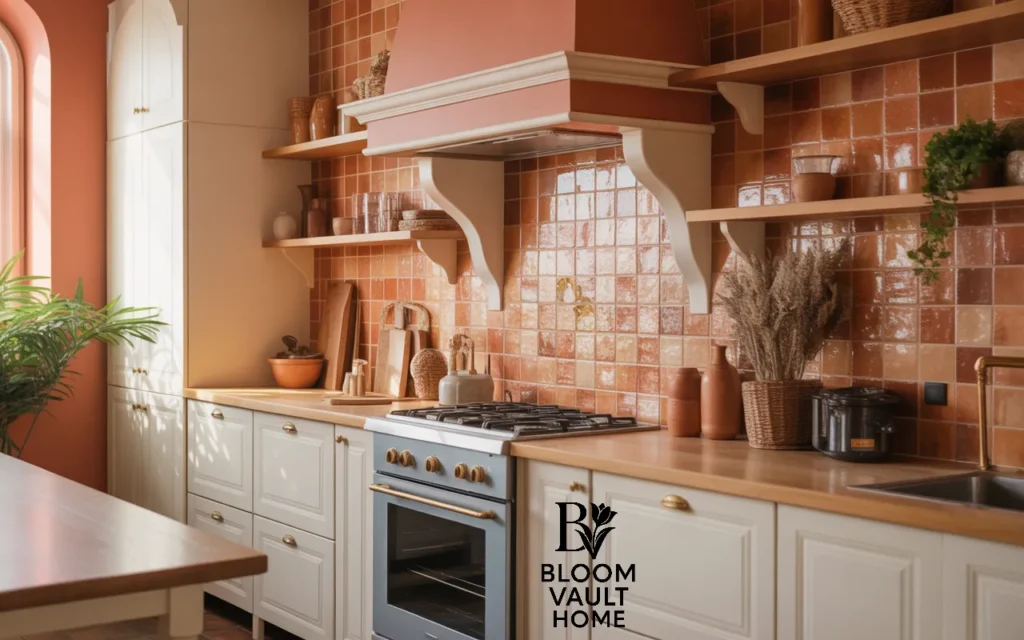
Combining a glazed terracotta tile backsplash with crisp white cabinetry strikes a perfect balance between earthy warmth and modern freshness. The rich, burnt orange tones of terracotta bring a rustic Mediterranean feel to the space, while white cabinets keep everything clean, bright, and timeless. This contrast creates a kitchen that feels both inviting and visually dynamic ideal for those who want to add warmth without overwhelming the space.
The natural variations in terracotta tiles especially handmade or zellige style add texture, character, and a hint of artisan charm. When used as a backsplash, terracotta becomes a focal point that adds depth behind otherwise minimal cabinetry. The glossy glaze helps bounce light around, making the space feel cozy yet open.
Pro Tips
- Choose hand glazed or zellige tiles for more texture: Their irregular surfaces add visual depth and artisanal appeal.
- Use warm white or cream cabinetry instead of stark white: It softens the contrast and complements the terracotta better.
- Go with a neutral grout tone: Light beige or soft gray keeps the look cohesive and lets the tile stand out.
- Add natural textures nearby: Think wood shelving, linen curtains, or ceramic accessories to enhance the warmth.
- Highlight with under cabinet lighting: It amplifies the tile’s glaze and makes the space glow in the evenings.
Key Style Elements
- Glazed terracotta tiles (subway, square, or irregular format) in earthy orange or clay tones
- White or off white shaker or slab style cabinets
- Quartz, marble, or butcher block countertops in soft neutrals
- Brushed brass or matte black hardware for subtle contrast
- Light wood or terracotta colored tile flooring
- Minimalist or rustic open shelving for display
- Warm ambient lighting: pendant lights, sconces, or under cabinet LEDs
- Earthy decorative accents like clay pots, woven baskets, or olive wood utensils
2. Terracotta Colored Cabinets
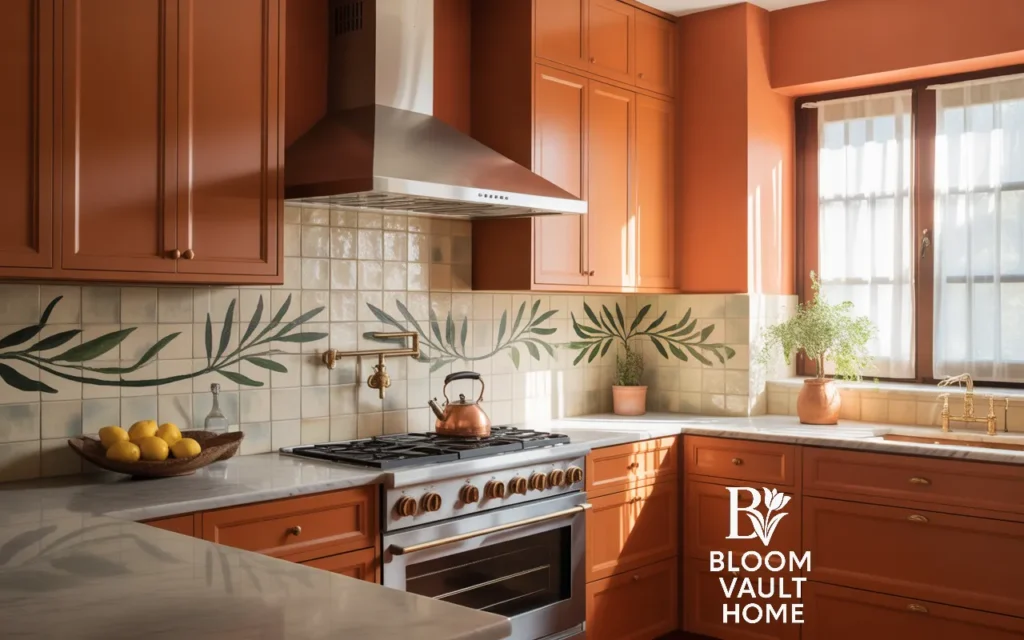
Step away from traditional cabinet hues like navy or gray and embrace the warm, sunbaked beauty of matte terracotta colored cabinets. This bold choice brings instant character to your kitchen, evoking Mediterranean villas and desert modern vibes all at once. The earthy orange red tones add warmth and vibrancy, making the space feel lively, grounded, and full of personality.
Terracotta cabinets pair beautifully with natural materials and neutral tones, but they truly shine when accented with bronze or matte black hardware. These metal finishes provide depth and sophistication, turning your cabinetry into a true design statement. Whether used for all cabinetry or just the lower half in a two tone setup, terracotta offers a fresh alternative to conventional palettes and helps you create a kitchen that stands out.
Pro Tips
- Use a super matte or velvet matte finish: It enhances the richness of the color and provides a soft, modern look.
- Pair with minimalist hardware: Thin pulls or edge pulls in matte black or aged bronze keep the focus on the cabinetry.
- Balance with neutral counters and backsplash: Soft whites, creams, or light stone help tone down the boldness.
- Incorporate natural accents: Wood shelving, jute rugs, or terra cotta pots tie the look together organically.
- Limit upper cabinets or use open shelving: This keeps the space feeling airy and prevents color overload.
Key Style Elements
- Matte terracotta cabinetry in slab or shaker style
- Hardware in aged bronze, oil rubbed bronze, or matte black
- Light countertops in quartz, marble, or butcher block
- Neutral backsplash: zellige tile, plaster, or stone in off white tones
- Warm toned wood or concrete look flooring for a grounded feel
- Open shelves in light oak or metal for texture and function
- Earth inspired decor: clay vases, woven baskets, and copper cookware
- Soft ambient lighting with warm tones to complement the earthy palette
3. Terracotta Hexagonal Floor Tiles
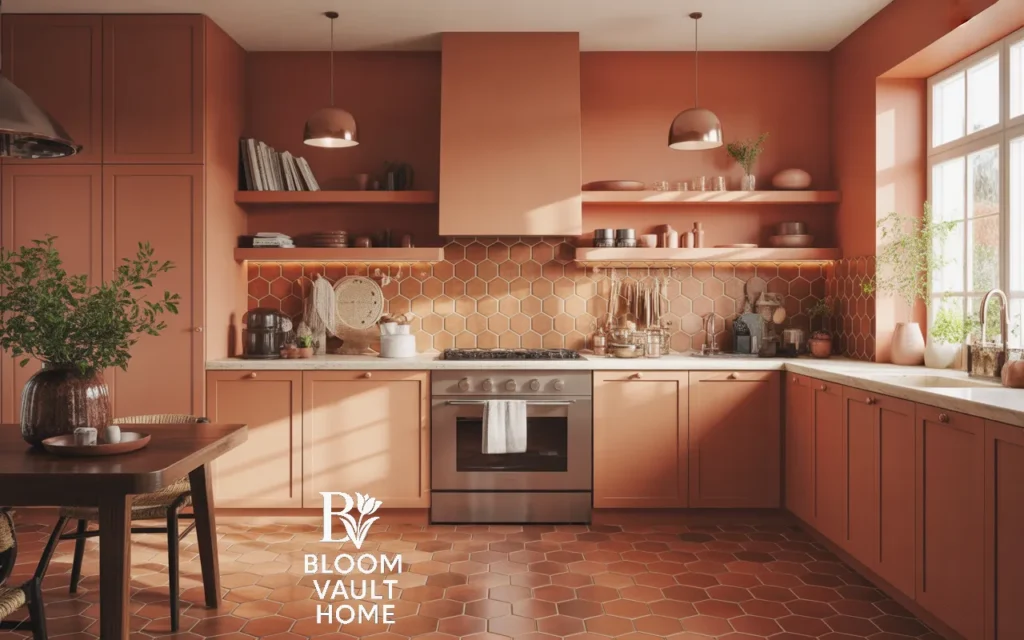
For a floor that’s as timeless as it is stylish, terracotta hexagonal tiles deliver a perfect mix of tradition and visual intrigue. The classic clay tones provide warmth and rustic authenticity, while the geometric hex shape adds a modern twist. This blend of old and new makes terracotta hex tiles a standout choice for farmhouse kitchens, Mediterranean inspired spaces, and boho modern interiors alike.
These tiles offer subtle texture and natural variation, giving your kitchen a lived in, artisanal feel that only gets better with age. They’re also practical terracotta is naturally durable, slip resistant, and pairs beautifully with underfloor heating. Whether you use them across the entire kitchen or in a defined area like a breakfast nook, hex tiles ground the room in earthy elegance.
Pro Tips
- Seal tiles properly: Terracotta is porous use a breathable sealer to protect the surface while maintaining its natural look.
- Go with handmade or tumbled edges: They enhance the rustic, organic vibe and feel more authentic underfoot.
- Use a contrasting grout color: Light grout highlights the hex pattern; darker grout creates a seamless effect.
- Pair with warm tones: Terracotta floors look best with cream, wood, soft sage, or muted green cabinetry.
- Layer in texture above: Think linen curtains, plaster walls, or reclaimed wood shelves for full impact.
Key Style Elements
- Hexagonal terracotta floor tiles in matte or lightly textured finish
- Variations in tone for an authentic, handcrafted feel
- Light or neutral grout to highlight the geometric layout
- Complementary cabinetry in white, sage, wood, or terracotta hues
- Earthy countertop materials: butcher block, travertine, or honed quartz
- Warm metal fixtures (bronze, copper, or antique brass)
- Organic accents: woven baskets, ceramic serveware, and wood accessories
- Layered lighting with pendant and under cabinet fixtures for ambiance
4. Earthy Terracotta Accent Wall
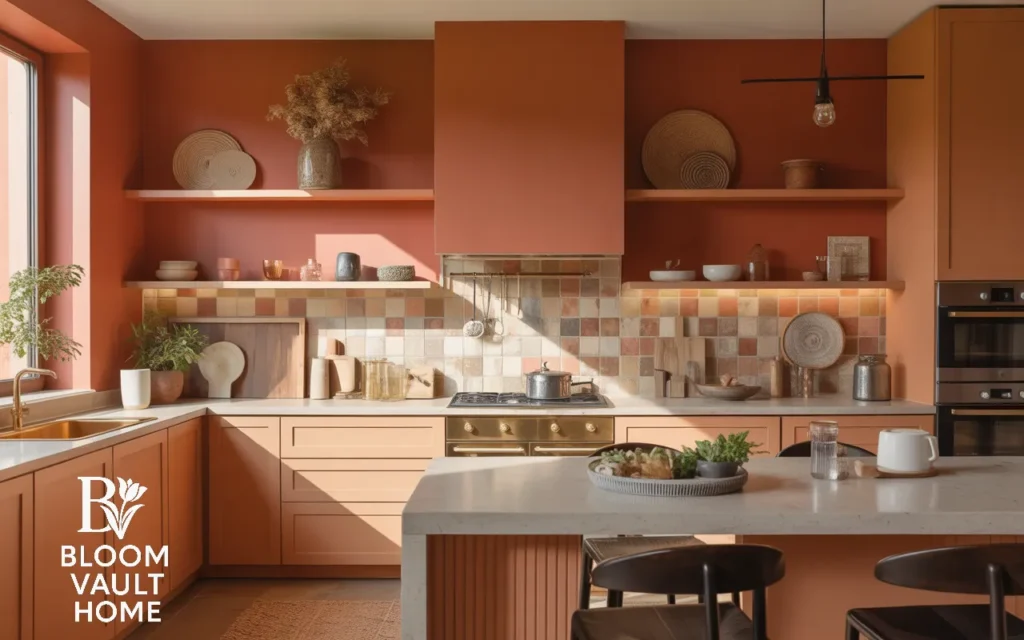
If you’re looking to introduce warmth without committing to full terracotta cabinetry or flooring, an earthy terracotta accent wall is a beautiful, low risk design choice. Whether painted in a soft clay hue or finished with a textured plaster effect, this feature wall brings a grounded, organic energy to the kitchen instantly making the space feel more curated, cozy, and connected to nature.
Terracotta walls make a stunning backdrop for wood elements, brass fixtures, or open shelving. The muted orange brown tones add visual depth while remaining soft and soothing. This works especially well behind dining nooks, shelving units, or appliance walls, and is perfect for open plan kitchens where you want to define a zone with color without closing off the space.
Pro Tips
- Choose a muted or dusty terracotta shade: It’s more versatile and pairs better with natural materials.
- Use a matte or limewash finish: Adds depth and texture, giving the wall a soft, artisan look.
- Contrast with light cabinetry or tiles: Helps the wall stand out without overwhelming the space.
- Highlight with brass or gold accents: Warm metals echo the undertones of terracotta beautifully.
- Test swatches in natural light: Terracotta can shift dramatically depending on lighting check it at different times of day.
Key Style Elements
- Painted or plastered accent wall in earthy terracotta (matte or textured finish)
- Light toned cabinets (white, ivory, or warm wood) for contrast
- Open wood shelving or wall mounted brass rails
- White or beige tile backsplash to break up the color and add texture
- Bronze, brass, or gold toned hardware and lighting fixtures
- Earthy accessories: terra cotta planters, woven trays, linen textiles
- Complementary countertops in quartz, stone, or natural wood
- Layered lighting with wall sconces or pendants to highlight the feature wall
5. Terracotta and Cream Color Palette
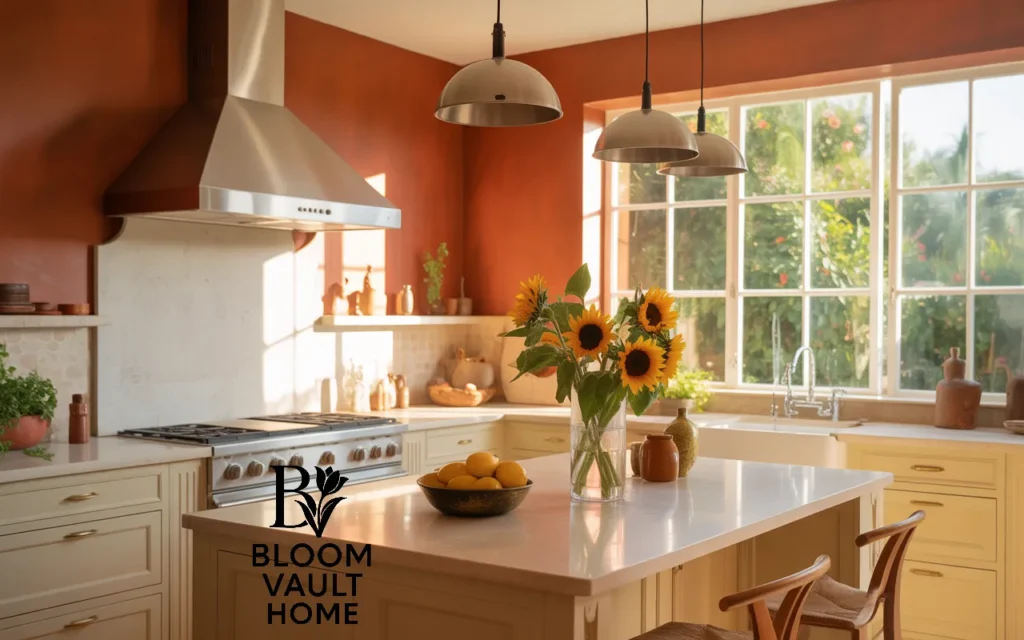
For a kitchen that feels both warm and timeless, the pairing of terracotta and cream is a match made in design heaven. Terracotta brings earthy richness and depth, while creamy off white tones soften the palette, creating a refined yet relaxed farmhouse inspired aesthetic. This color combo works beautifully in both rustic and modern spaces offering balance, light, and a sense of natural harmony.
Use terracotta in the form of a backsplash, flooring, or accent cabinetry, and offset it with creamy painted cabinets and natural stone countertops like marble, travertine, or quartz. The contrast between the grounded warmth of terracotta and the airy elegance of cream results in a space that feels welcoming, elevated, and distinctly Mediterranean or Southwestern in spirit.
Pro Tips
- Choose warm creams with yellow or beige undertones: These blend seamlessly with the reddish tones of terracotta.
- Use terracotta in small doses if your kitchen is compact: A backsplash or accent wall may be enough.
- Add aged brass or bronze fixtures: These tones complement both cream and terracotta beautifully.
- Incorporate natural textures: Think rattan bar stools, linen drapes, or wood accents for layered warmth.
- Maintain tonal consistency: Use soft whites instead of stark ones to avoid harsh contrast.
Key Style Elements
- Cream colored cabinetry in shaker or inset style (matte or satin finish)
- Terracotta tile backsplash, flooring, or accent walls
- Countertops in warm natural stone limestone, travertine, or honed quartz
- Brass or bronze hardware and faucets for warmth
- Soft white or pale beige walls to keep the palette cohesive
- Open shelving in natural wood for texture and display
- Earthenware and ceramic decor pieces to echo the color palette
- Textural layering with jute rugs, linen fabrics, or woven lighting
6. Moroccan Terracotta Zellige Tiles
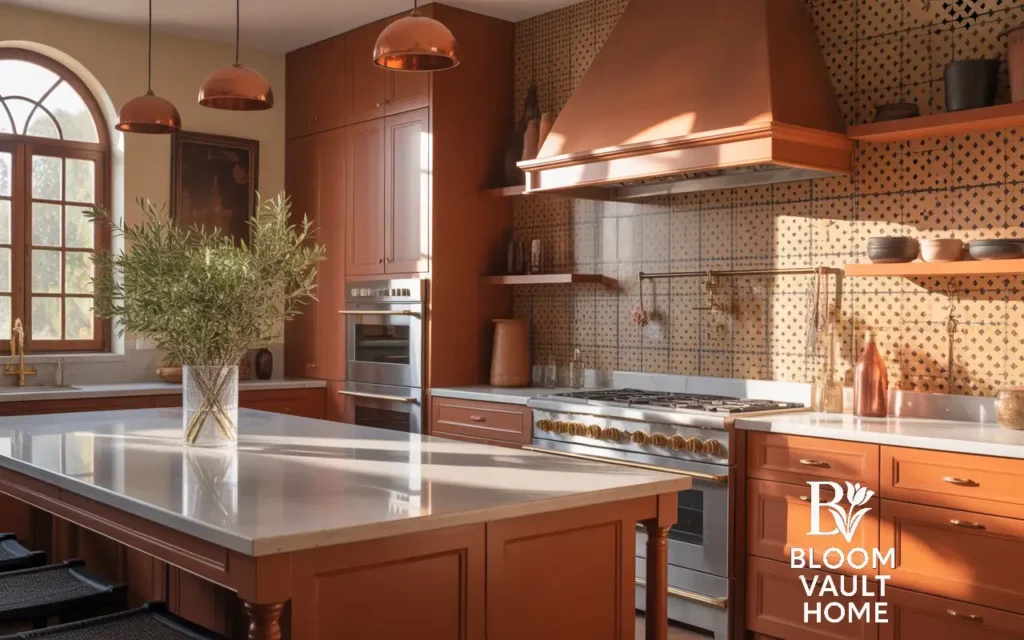
If you’re aiming for a kitchen with global flair and artisanal charm, Moroccan terracotta zellige tiles are an exceptional choice. These handmade, high gloss clay tiles are celebrated for their organic imperfections, deep glaze variations, and luminous finish bringing a true boho luxe feel to backsplashes, island fronts, or even range surrounds.
The irregular edges and rich terracotta tones of zellige add movement and texture, catching light in ever changing ways throughout the day. Perfect for eclectic, Mediterranean, or modern bohemian kitchens, zellige tiles are both functional and decorative. Their handcrafted nature makes every installation unique, transforming a simple wall into a living, breathing piece of art.
Pro Tips
- Expect and embrace variation: No two zellige tiles are the same this is what gives them their charm.
- Use a skilled tile installer: Precision is key to maintaining their beauty and managing irregularities.
- Pair with simple cabinetry: Let the tiles shine by keeping cabinets minimal in white, cream, or wood tones.
- Avoid bright white grout: A soft beige or clay colored grout will blend better and feel more organic.
- Use under cabinet lighting: Highlights the gloss and texture for a high end finish.
Key Style Elements
- Handmade Moroccan zellige tiles in terracotta tones (glossy or semi gloss)
- Traditional square or irregular shapes for authenticity
- Neutral or natural tone cabinetry to complement the tile
- Warm countertops in marble, quartzite, or limestone
- Aged brass, matte black, or copper fixtures for contrast
- Light toned wood or rustic flooring to ground the look
- Global inspired accessories: ceramic dishware, vintage pots, or patterned textiles
- Warm ambient and task lighting to highlight tile sheen and texture
7. Terracotta and Green Combo
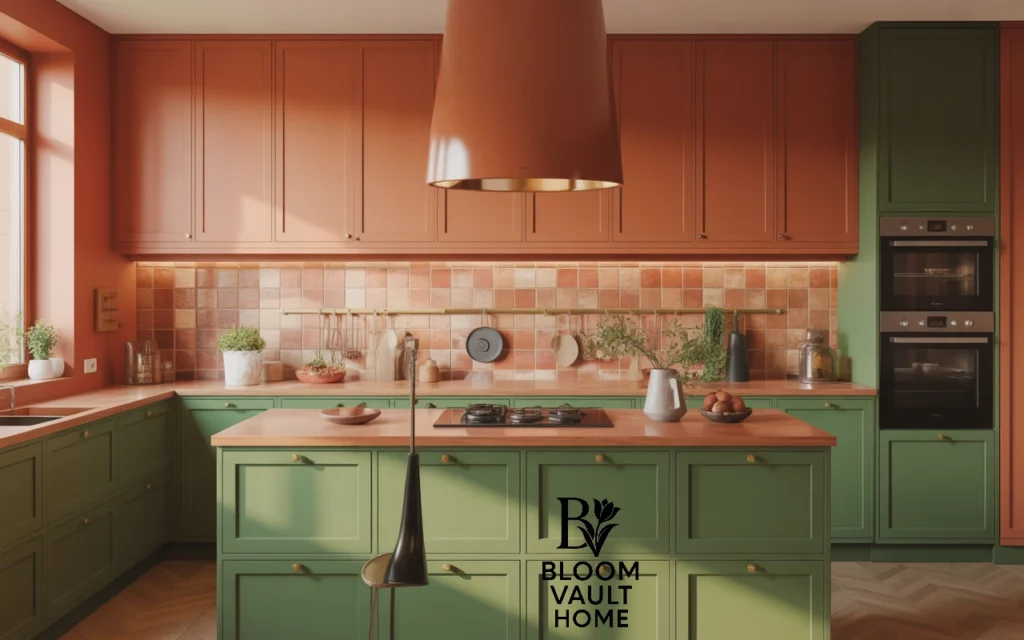
Bring nature indoors with a kitchen that celebrates earth and foliage through a timeless terracotta and green color combination. Pairing sage green cabinets with terracotta tile flooring creates a calming, organic palette that feels grounded, inviting, and unmistakably biophilic. The warm clay tones of the floor evoke sunbaked earth, while soft green cabinetry offers a leafy, tranquil balance perfect for those who crave harmony between their home and the natural world.
This combo works beautifully in both modern rustic and Mediterranean style kitchens. The softness of sage keeps the palette light and approachable, while terracotta adds depth and character underfoot. When styled with natural wood accents, matte finishes, and plenty of sunlight, this pairing becomes a serene sanctuary for everyday living.
Pro Tips
- Stick to muted, dusty greens like sage or olive: These pair better with the warmth of terracotta than bold or cool toned greens.
- Add plant life: Reinforce the nature inspired theme with hanging plants or herb gardens.
- Use a soft white or cream wall color: It keeps the space open and doesn’t compete with the main palette.
- Choose natural textures: Think wood beams, woven baskets, and linen curtains for depth and cohesion.
- Opt for matte or honed finishes: These prevent glare and add a soft, earthy feel to the space.
Key Style Elements
- Sage green or olive cabinetry in shaker or flat front style
- Terracotta floor tiles (square, hex, or Moroccan pattern)
- Countertops in light toned quartz, concrete, or natural stone
- Walls in warm white, ivory, or light beige for contrast
- Hardware in bronze, black, or antique brass for warmth
- Natural wood accents open shelving, beams, or furniture
- Greenery: potted herbs, trailing vines, or succulents
- Earth inspired accessories: clay vessels, jute rugs, or woven lighting
8. Terracotta Range Hood Cover
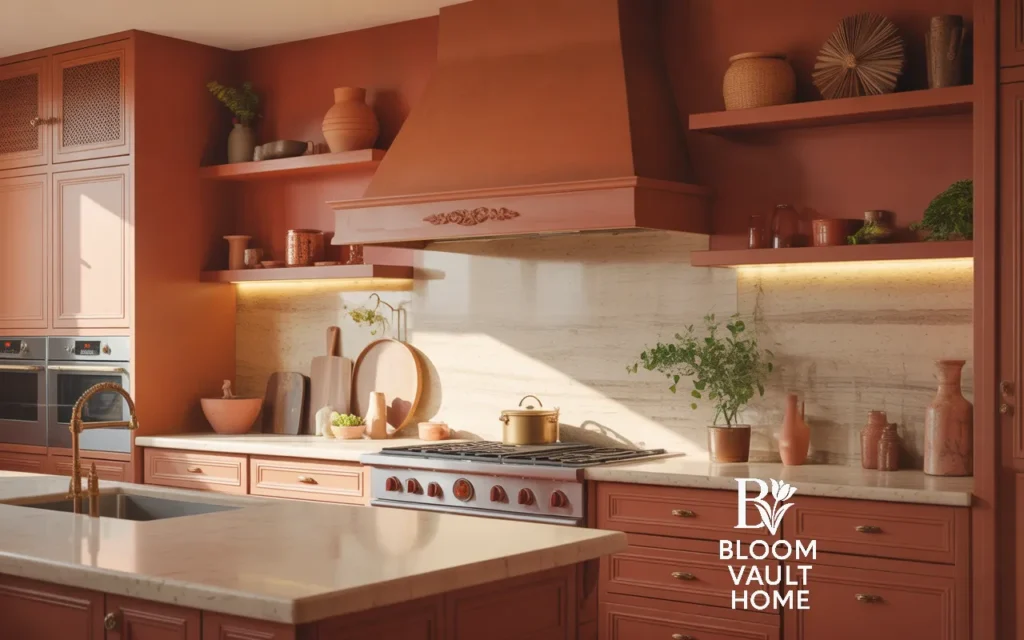
Make your kitchen feel curated and artisanal by turning the range hood into a standout feature with a terracotta toned cover. Whether crafted from smooth plaster, handmade tile, or textured stucco, a terracotta hood surround adds rustic warmth and architectural interest to the heart of your cooking space. This design move creates an eye catching focal point while reinforcing a handcrafted, Mediterranean or desert inspired aesthetic.
A terracotta range hood works beautifully in kitchens with natural materials wood, stone, and metal offering a balance of earthy and refined. It pairs especially well with neutral cabinetry or warm wood tones, becoming the sculptural centerpiece that draws the eye without overwhelming the space.
Pro Tips
- Use a lime plaster or clay based finish for a soft, matte look: Adds authenticity and artisanal texture.
- Blend it with your backsplash or create contrast: Match tones for subtlety or go bolder to create a visual statement.
- Add floating shelves or sconces nearby: They frame the hood and enhance its central presence.
- Keep cabinetry simple and neutral: This allows the hood’s form and color to take center stage.
- Consider curved or tapered silhouettes: These shapes add softness and a bespoke feel.
Key Style Elements
- Terracotta colored hood cover made from plaster, tile, or textured stucco
- Neutral or wood cabinetry (white, cream, or oak tones) for complementary contrast
- Warm toned backsplash: zellige, natural stone, or artisan tile
- Brass, bronze, or matte black fixtures and lighting
- Natural countertops in marble, travertine, or quartz
- Open shelving around the hood with rustic dishware or pots
- Earthy textures: linen curtains, clay vases, or jute rugs
- Ambient lighting: wall sconces or recessed lights to highlight the hood’s shape
9. Open Shelving with Terracotta Vases
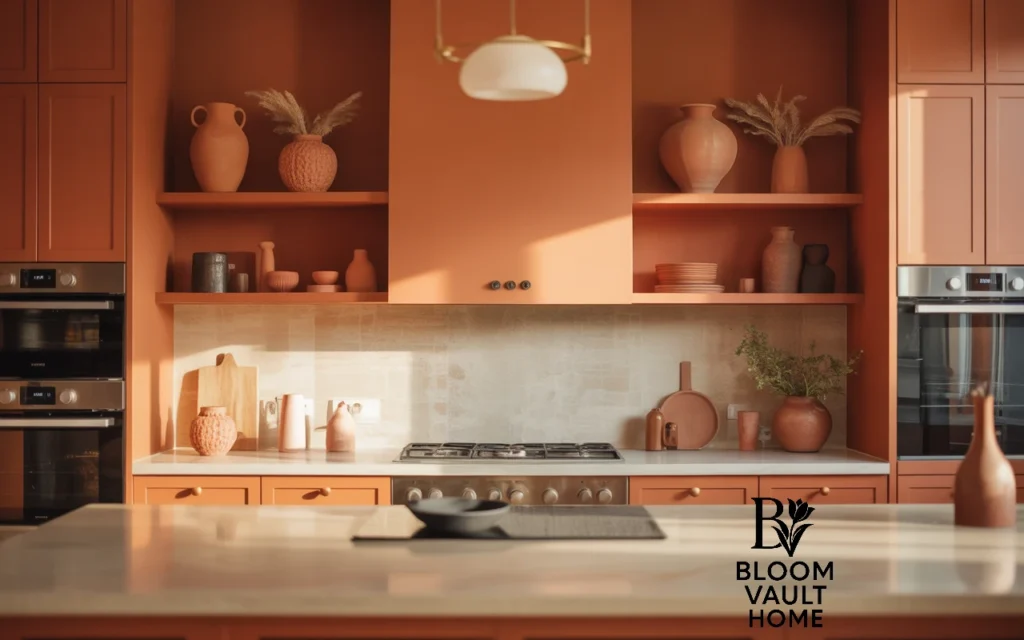
For a kitchen that feels lived in, warm, and beautifully curated, style your open shelving with an assortment of terracotta vases, planters, and serveware. These earthy accents introduce warmth and texture, bringing a relaxed, collected feel to the space especially when paired with natural wood shelves and neutral backdrops.
Terracotta pieces not only add a splash of rustic charm but also connect your kitchen to global and artisan traditions. Whether you’re displaying heirloom pottery, handmade vessels, or functional dishware in warm clay tones, open shelving gives you a perfect canvas to showcase personality, story, and style.
Pro Tips
- Mix old and new: Combine vintage terracotta pieces with modern forms for an effortlessly layered look.
- Use varying heights and shapes: Tall vases, wide bowls, and stacked plates create visual rhythm.
- Group in threes or odd numbers: Styling in uneven clusters feels more natural and appealing.
- Add a few green touches: Small potted herbs or trailing vines look beautiful against terracotta.
- Keep the rest of the shelf simple: Let the pottery be the focal point by limiting clutter.
Key Style Elements
- Natural wood open shelving (oak, pine, or reclaimed wood)
- Assorted terracotta pottery: vases, jugs, bowls, and plates
- Potted herbs or trailing plants to soften and add life
- Background wall in white, cream, or muted clay tones
- Brass or matte black wall brackets or shelf hardware
- Decorative accents: woven baskets, ceramic mugs, or glass jars
- Under shelf lighting or nearby sconces for warm display lighting
- Simple cabinetry and neutral surfaces to keep the look balanced
10. Terracotta Herringbone Floor Pattern
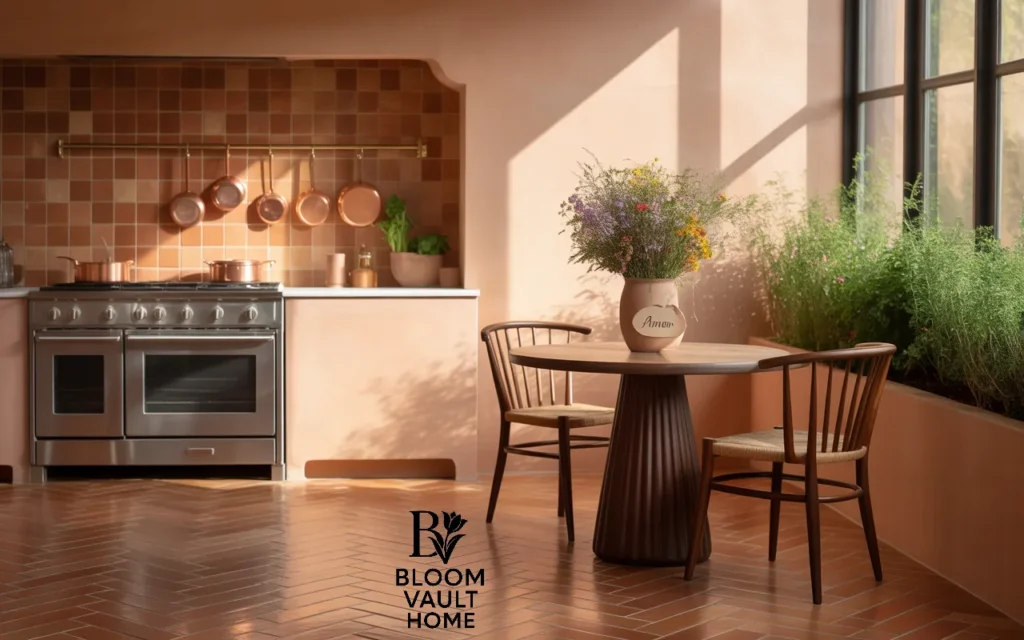
Elevate your kitchen’s design by using slim terracotta tiles laid in a classic herringbone pattern. This layout introduces elegant movement and texture, turning your flooring or even a backsplash into a visually striking design feature. The warm, earthy hue of terracotta combined with the timeless herringbone arrangement creates a space that feels both sophisticated and grounded.
Perfect for farmhouse, Mediterranean, or modern rustic interiors, a terracotta herringbone pattern adds architectural interest underfoot while maintaining that inviting, sun baked quality terracotta is known for. Whether you use it wall to wall or in a specific zone like under the dining nook or kitchen island, it brings a handcrafted, artisan flair to your space.
Pro Tips
- Use long, narrow tiles for cleaner herringbone lines: 2×8″ or 2×10″ formats work beautifully.
- Opt for a matte or lightly textured finish: Keeps it slip resistant and rustic in feel.
- Choose grout that complements the tile tone: Soft tan, clay, or muted gray helps maintain a cohesive look.
- Frame the pattern with a border tile or threshold: Adds a polished finish and keeps the layout visually contained.
- Consider heated flooring beneath: Terracotta retains heat well ideal for cozying up cold mornings.
Key Style Elements
- Slim terracotta tiles in a 2×8 or 2×10 format
- Classic herringbone layout on the floor (or as a backsplash feature)
- Natural or handmade tile finish for organic texture
- Complementary grout in warm neutral tones
- Neutral cabinetry: cream, white, or warm wood to let the floor shine
- Minimalist countertops in quartz, marble, or concrete
- Warm tone lighting: pendant fixtures, sconces, or under cabinet LEDs
- Earthy decor elements: woven rugs, clay pots, or wooden bar stools
11. Terracotta and Concrete Fusion
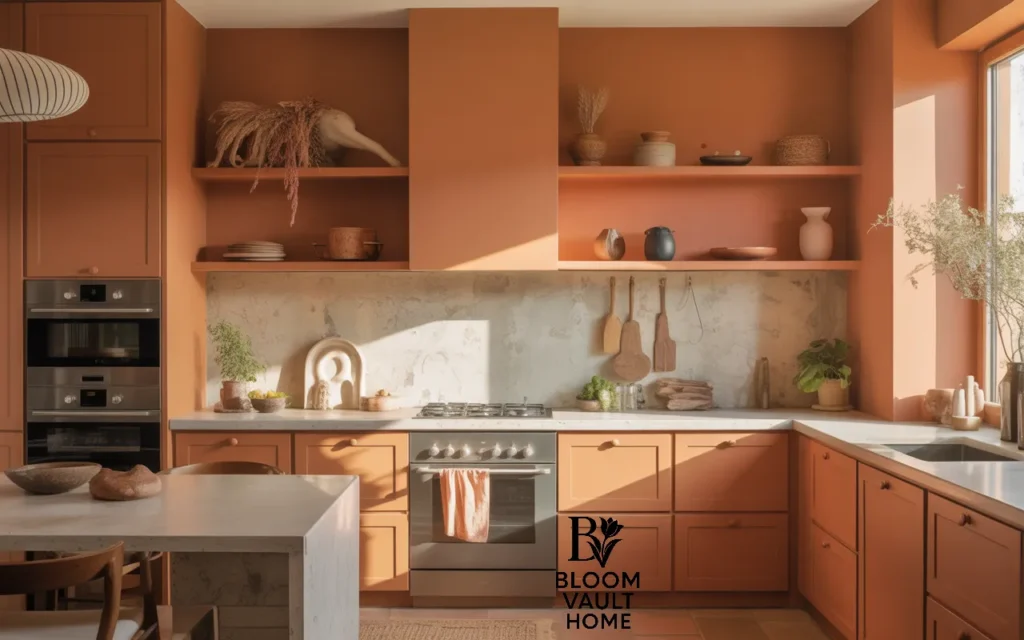
Strike the perfect balance between warmth and edge with a terracotta and concrete fusion. This pairing blends the earthy, sunbaked tones of terracotta with the cool, industrial vibe of gray concrete countertops, creating a kitchen that feels grounded, modern, and unmistakably stylish. The contrast in texture and temperature rough clay vs. sleek stone adds a sophisticated tension that’s ideal for design forward homes.
This look thrives in modern rustic, industrial chic, or minimalist kitchens where you want to keep the palette neutral but still rich in visual interest. Terracotta can appear in tile floors, wall finishes, or cabinet colors, while concrete makes a statement through countertops, islands, or even open shelving. Together, they form a raw yet refined combination that feels both durable and welcoming.
Pro Tips
- Keep cabinetry simple: Flat panel or wood grain doors let terracotta and concrete take center stage.
- Seal concrete properly: This prevents staining and maintains a smooth, cleanable surface.
- Mix textures for balance: Add in soft textiles, like linen curtains or woven rugs, to prevent the space from feeling too cold.
- Use matte finishes throughout: They keep the overall look cohesive and contemporary.
- Introduce greenery or warm lighting: Softens the starkness of concrete and complements the terracotta tone.
Key Style Elements
- Terracotta tile or plaster walls, floors, or cabinet faces
- Concrete countertops (poured in place or precast) with a matte or satin finish
- Neutral cabinetry: white, black, or light wood for balance
- Warm metal accents in aged brass or blackened steel
- Natural wood open shelving to tie the materials together
- Pendant or track lighting in black or bronze for an industrial touch
- Textural decor: clay vessels, wooden bowls, linen dish towels
- Earthy meets urban vibe perfect for lofts, open kitchens, or modern farmhouses
12. Clay Colored Island with Wood Top
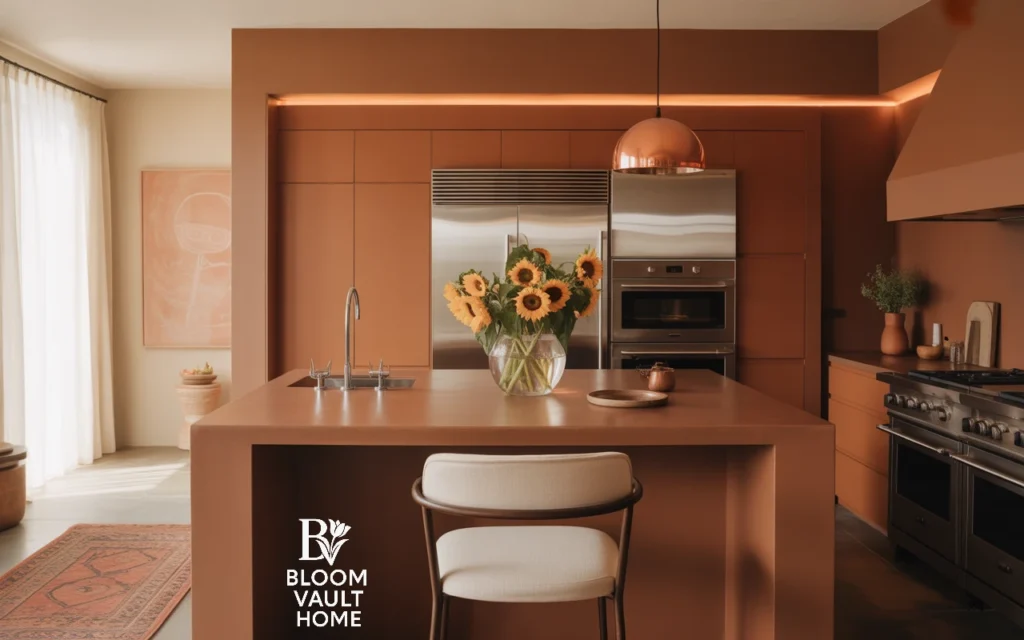
Turn your kitchen island into a statement making centerpiece with a clay colored base paired with a natural wood countertop. This combination fuses warmth, texture, and contrast offering a fresh alternative to traditional neutrals. A terracotta toned island brings earthy vibrance to the space, while a butcher block or light oak surface introduces organic softness and utility.
This design is perfect for those who want a pop of color without overwhelming the entire kitchen. Whether your cabinetry is white, cream, or wood toned, a clay colored island adds character and acts as an anchor. The wood top brings durability and a touch of farmhouse charm, making it a practical and beautiful workspace for prepping, serving, or gathering.
For another bold yet nature-inspired look, you can also check out our guide on Dark Green Kitchen.
Pro Tips
- Use a muted terracotta tone: Look for clay or adobe shades with a soft, matte finish for a modern yet rustic appeal.
- Seal your butcher block properly: This prevents staining and prolongs the wood’s warmth and usability.
- Pair with neutral cabinetry: Keeps the island as the focal point without visual competition.
- Incorporate open shelving or drawers on the island: Adds function and showcases the paint finish.
- Add warm pendant lighting above: Highlights the rich tones of both the base and the wood top.
Key Style Elements
- Kitchen island base painted in a soft clay or terracotta tone (matte or satin finish)
- Butcher block, light oak, or reclaimed wood countertop
- Perimeter cabinetry in white, cream, or light wood
- Warm hardware in bronze or antique brass for cohesive warmth
- Neutral flooring stone tile, polished concrete, or wide plank wood
- Pendant lights with linen, metal, or rattan shades for texture
- Earthy decor: woven baskets, ceramic bowls, or linen stools
- Functional extras like drawers, wine racks, or seating on the island
13. Terracotta Brick Wall for Texture
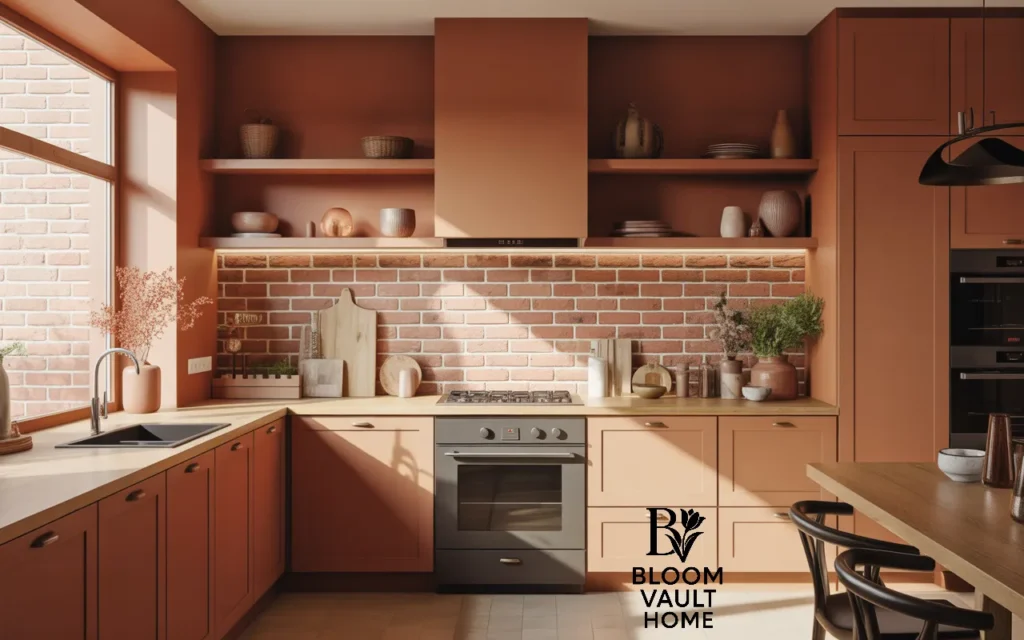
Introduce timeless charm and rich visual depth with a terracotta brick accent wall. Whether original or newly installed, an exposed brick wall in warm, clay based tones instantly adds texture, history, and architectural interest to your kitchen. The natural irregularities in brick color variations, rough edges, and mortar lines bring a tactile quality that softens sleek modern finishes and enhances rustic or industrial vibes.
This design choice works beautifully in both urban lofts and country style homes. It pairs effortlessly with a variety of cabinetry colors, from white and cream to deep green or navy, and can be used as a backsplash, full wall feature, or even around a range hood. The warm terracotta hue of the brick invites a cozy, lived in feel that never goes out of style.
Pro Tips
- Use reclaimed or faux brick veneer for easier installation: These options offer character without the weight or structural needs of traditional brick.
- Seal the brick surface: Keeps it dust free, stain resistant, and easier to clean especially in cooking areas.
- Add contrast with smooth finishes: Pair with quartz countertops or polished metal fixtures for balance.
- Layer with soft materials: Textiles like linen curtains or woven rugs help soften the rugged look.
- Illuminate with warm lighting: Wall sconces or under cabinet LEDs enhance the brick’s natural warmth and texture.
Key Style Elements
- Terracotta toned brick wall (reclaimed, real, or veneer) with visible mortar lines
- Natural or painted cabinetry (white, wood, green, or charcoal)
- Stone, quartz, or wood countertops for material contrast
- Matte black, bronze, or brass hardware and fixtures
- Industrial or farmhouse lighting: exposed bulbs, sconces, or metal pendants
- Neutral flooring: light wood, tile, or concrete for grounding
- Rustic decor: clay pots, copper cookware, wood cutting boards
- Optional floating shelves mounted on the brick for added storage and display
.
14. Glazed Terracotta Tiles with Copper Fixtures
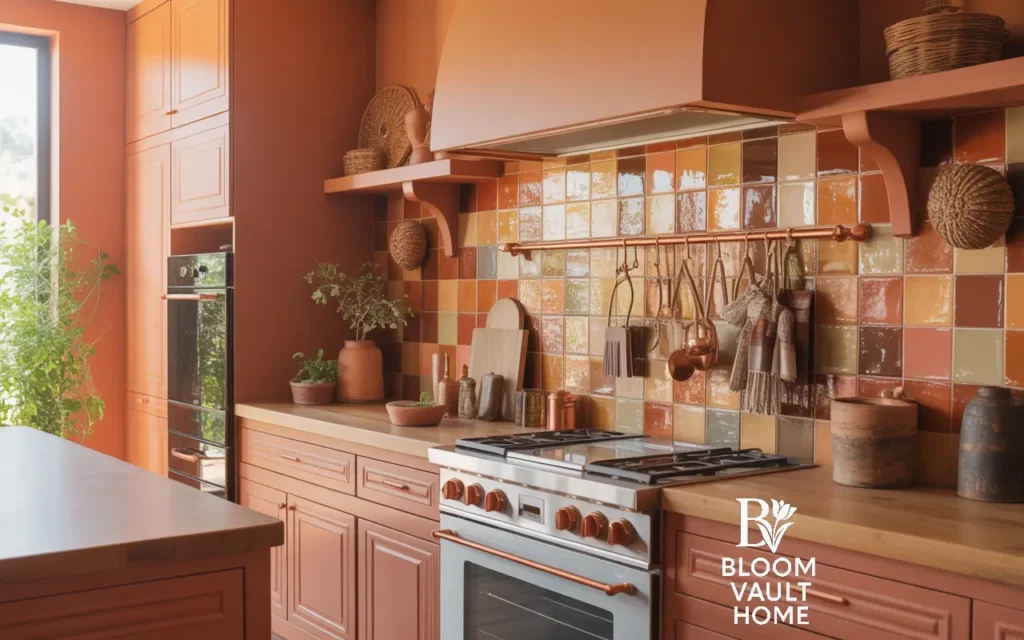
Create a radiant, inviting kitchen by pairing glazed terracotta tiles with copper or rose gold fixtures. The high gloss finish of terracotta tiles reflects light beautifully, while the metallic sheen of copper adds warmth and sophistication. Together, they form a harmonious palette that feels luxurious, earthy, and full of character.
This combination works especially well for backsplashes or accent walls, where the gleam of the glaze catches the eye and the copper fixtures amplify the glow. Whether you’re aiming for a Mediterranean vibe or a romantic, boho luxe kitchen, this duo brings richness and depth without overwhelming the space.
Pro Tips
- Choose handcrafted glazed tiles for texture and variation: The uneven surfaces create a more artisanal, high end look.
- Stick to warm metals like copper or rose gold throughout: Including faucets, cabinet handles, and pendant lights for consistency.
- Balance with light cabinetry or countertops: This keeps the look airy and prevents it from feeling too heavy.
- Use warm LED lighting: Enhances the glow of both the tile and metallic finishes.
- Seal grout lines properly: Especially with glossy tiles, to keep the finish pristine and prevent water stains.
Key Style Elements
- Glazed terracotta tiles in subway, square, or Moroccan shapes
- Fixtures and hardware in copper or rose gold (faucets, handles, lighting)
- Light toned cabinetry in cream, pale wood, or off white
- Natural stone or quartz countertops in soft beige or ivory tones
- Accent lighting: copper sconces, pendant lights, or under cabinet LEDs
- Neutral or terracotta toned walls to echo the tile warmth
- Earthy accessories: clay pots, copper canisters, or blush toned textiles
- Optional open shelving to showcase curated copper and terracotta pieces
15. Minimalist Terracotta Walls and Light Wood
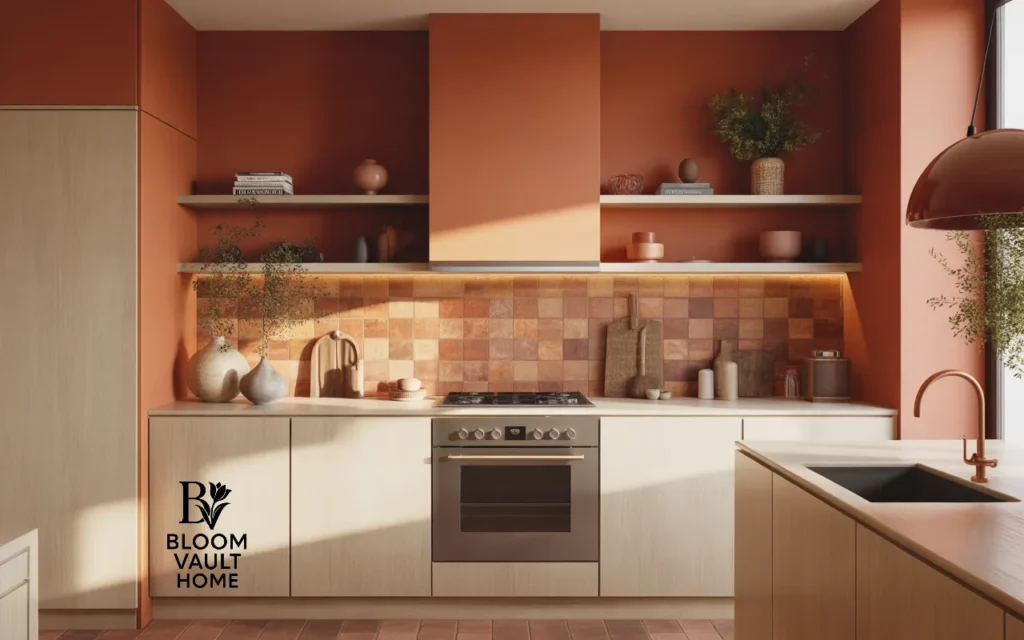
Blend the sunbaked warmth of the Mediterranean with the clean simplicity of Scandinavian design by pairing soft terracotta walls with light wood cabinetry. This minimalist yet cozy combination delivers an effortlessly stylish kitchen that feels grounded, serene, and full of natural beauty. The muted clay tones bring subtle warmth, while pale oak or ash cabinetry adds brightness and organic texture.
This design thrives on simplicity and balance. With minimal ornamentation and a neutral material palette, the terracotta becomes the soft anchor of the space. It’s perfect for open plan layouts, modern homes, or anyone who craves calm and cohesion in their kitchen. The result? A space that’s equal parts functional and soulful.
Pro Tips
- Use matte terracotta wall paint or limewash: These finishes offer a natural, velvety look without overpowering.
- Choose flat front or slab style light wood cabinets: Keeps the lines clean and Scandi modern.
- Layer in soft whites and beige tones: On countertops or backsplashes for contrast without clutter.
- Stick with natural materials: Avoid gloss or high shine think raw wood, unpolished stone, and linen.
- Let in as much natural light as possible: It enhances the warmth of terracotta and the softness of the wood.
Key Style Elements
- Matte painted or limewashed terracotta walls in muted clay or adobe tones
- Flat panel cabinetry in pale oak, birch, or whitewashed ash
- Neutral countertops in quartz, limestone, or marble (white or light beige)
- Minimal hardware integrated pulls or slim matte black handles
- Seamless backsplash in stone, plaster, or subtle tile
- Warm wood or light concrete flooring
- Natural woven decor: jute rugs, cane stools, or linen textiles
- Ambient lighting with minimalist fixtures in white, brass, or wood tones
16. Terracotta Ceiling Beams in White Kitchen
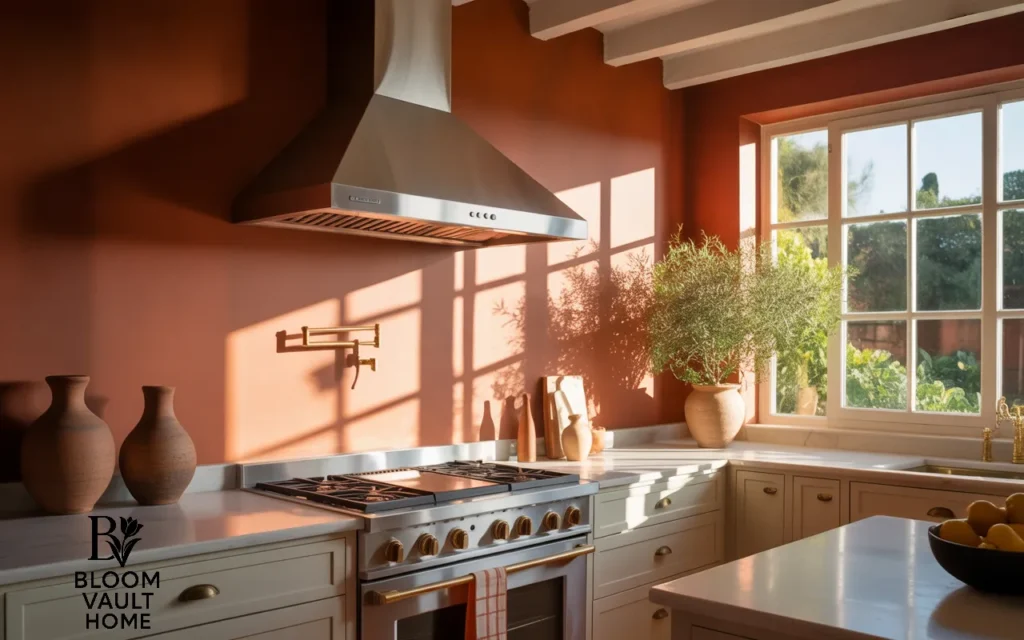
Add warmth and architectural charm from above by incorporating terracotta painted ceiling beams in a crisp white kitchen. This subtle yet impactful detail introduces earthy color without crowding the space, offering a refined nod to terracotta in an otherwise minimalist or modern layout. The contrast between the clean white backdrop and the muted clay tones of the beams creates visual rhythm and depth.
This design choice works beautifully in kitchens with high ceilings or open layouts, especially in farmhouse, Mediterranean, or transitional homes. It brings texture and grounded warmth while allowing cabinetry, countertops, and backsplash materials to stay light and neutral.
Pro Tips
- Use a soft, muted terracotta tone: Avoid bright orange opt for dusty clay or adobe shades for elegance.
- Pair with white or off white ceilings and cabinetry: Keeps the space bright and visually balanced.
- Use matte or chalk finish paint on beams: This enhances texture and complements natural materials.
- Echo the beam color subtly: Repeat terracotta tones in accessories or textiles for cohesion.
- Add warm toned lighting: Pendants or recessed lighting can highlight the beams’ richness.
Key Style Elements
- Exposed ceiling beams painted in soft terracotta or clay hues
- White or cream cabinetry (shaker or slab style)
- Light natural countertops: quartz, butcher block, or marble
- Subtle backsplash: white tile, beadboard, or light stone
- Warm metal finishes: brushed brass or matte black
- Neutral flooring: wide plank wood, light tile, or polished concrete
- Terracotta accents: pottery, planters, or linen in warm earth tones
- Lighting fixtures that cast upward glow to highlight ceiling detail
17. Modern Farmhouse with Terracotta Accents
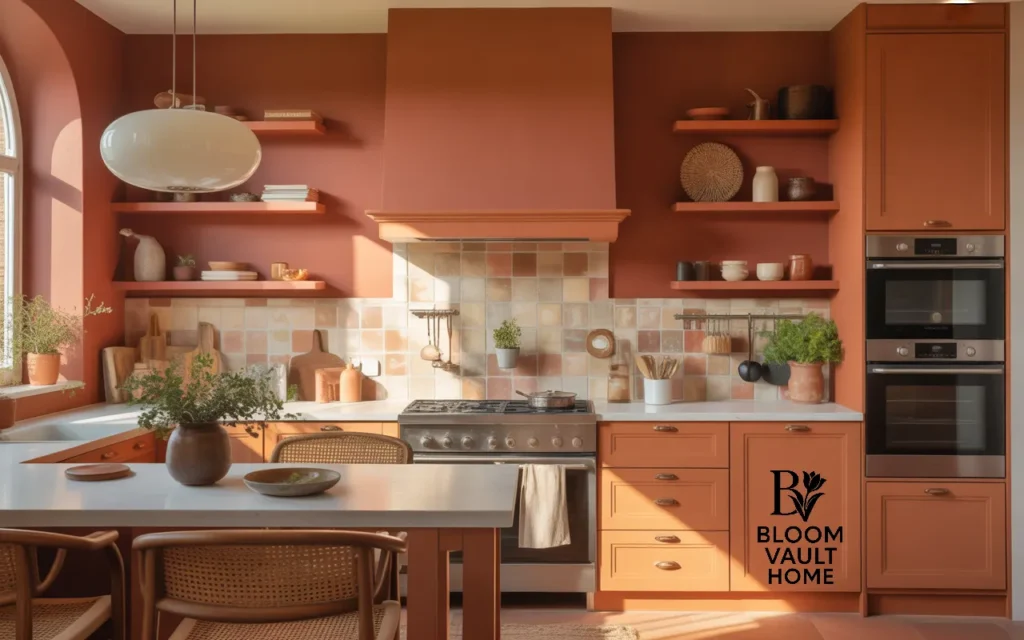
Bring subtle warmth and handcrafted charm to your modern farmhouse kitchen by weaving in terracotta accents through thoughtfully chosen details like ceramic pendant lights, rustic clay pots, or even terracotta hued drawer pulls. These small yet impactful touches create a cozy, lived in aesthetic that complements the clean lines and natural textures often found in farmhouse design.
Unlike fully tiled backsplashes or painted cabinetry, this approach keeps terracotta as an accent color, allowing it to enhance the space without dominating it. Whether you’re styling open shelves or selecting light fixtures, incorporating terracotta through accessories adds a layer of organic elegance and personality.
Pro Tips
- Opt for artisanal, handmade pieces: Their imperfections and textures add authenticity and charm.
- Use terracotta in repetition: A few well placed items in the same tone help create visual cohesion.
- Pair with warm whites and wood grains: Keeps the farmhouse style fresh and inviting.
- Mix matte and glazed finishes: This adds subtle contrast and depth to the accessories.
- Don’t overcrowd less is more: Select a few key terracotta pieces to avoid clutter.
Key Style Elements
- Ceramic pendant lights or sconces in terracotta tones
- Rustic terracotta pots, jugs, or canisters on open shelves
- Drawer pulls or knobs with a clay or terracotta finish
- White or cream shaker cabinetry for a farmhouse base
- Warm wood countertops or accents oak, walnut, or reclaimed timber
- Farmhouse sink (apron front) in white or fireclay
- Mixed metal finishes: aged brass, black, or oil rubbed bronze
- Earthy textiles: linen runners, woven baskets, or jute rugs for styling
18. Boho Terracotta Kitchen ideas with Patterned Tiles
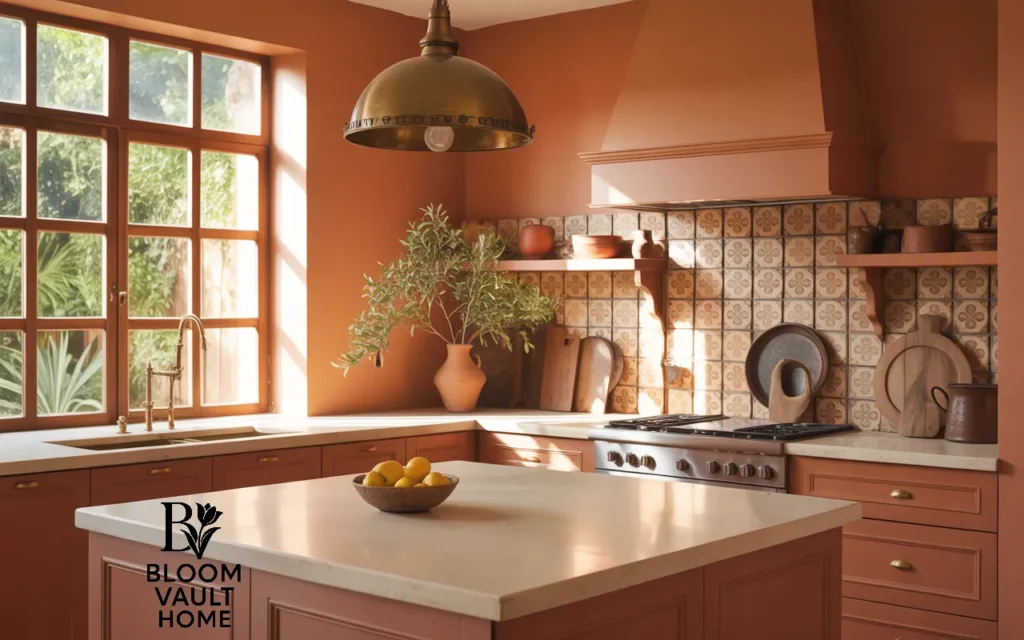
Infuse your kitchen with bohemian soul and artistic flair by incorporating patterned cement floor tiles in terracotta and pink toned hues. These lively, handcrafted tiles bring instant personality to the space, setting the stage for a relaxed, eclectic kitchen filled with warmth, color, and creativity. The terracotta tones ground the design, while subtle pinks and organic patterns add a playful, free spirited energy.
Perfect for boho chic interiors or globally inspired kitchens, these tiles work well with open shelving, mixed materials, and layered textures. Whether you go bold with an all over floor or use them to define a breakfast nook or island zone, they serve as functional art that’s both durable and dazzling.
Pro Tips
- Choose encaustic or cement tiles with matte finishes: These add texture and authenticity while minimizing glare.
- Mix terracotta with soft blush, cream, or muted green: A color palette inspired by nature enhances the boho vibe.
- Balance with simple cabinetry: Let the patterned floor shine by keeping upper elements minimal.
- Use open shelving or glass front cabinets: Helps create an airy, collected look.
- Layer with textiles: Add rugs, curtains, or cushions with tribal or geometric patterns to tie everything together.
Key Style Elements
- Patterned cement or encaustic tiles in terracotta, blush, and warm neutrals
- White or light wood cabinetry with minimal detailing
- Brass, copper, or matte black hardware for contrast
- Terracotta pottery, pink toned ceramics, and woven baskets as decor
- Natural countertops in stone, butcher block, or quartzite
- Open wood shelving to showcase collected dishes and artisanal pieces
- Decorative lighting: rattan pendants, Moroccan lanterns, or ceramic sconces
- Layered textiles: vintage style rugs, macramé wall hangings, or linen curtains
19. Plaster Walls in Muted Terracotta
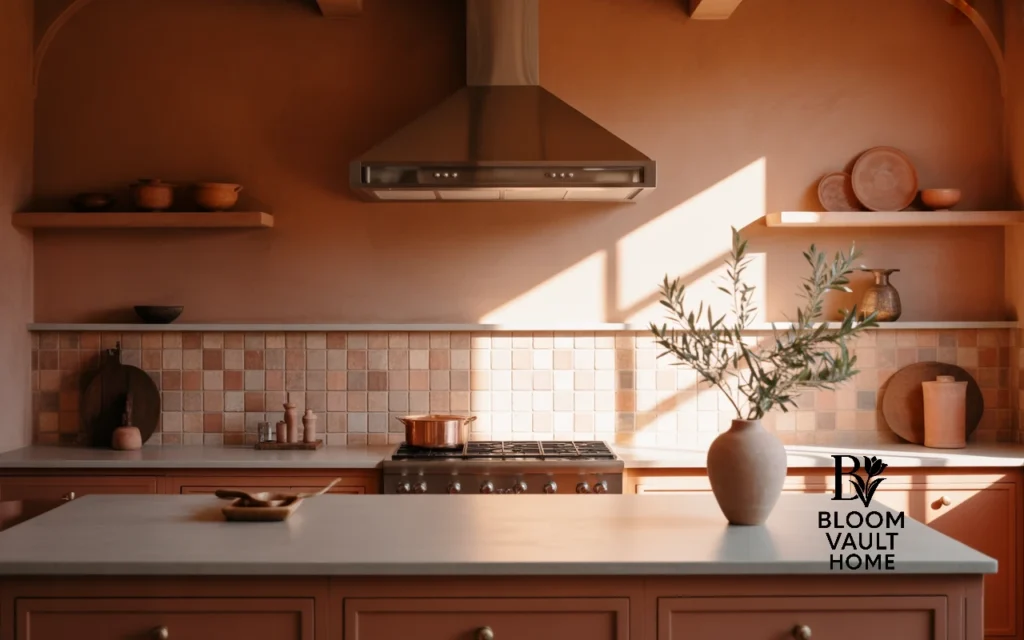
For a sophisticated, tactile backdrop that feels both earthy and elevated, consider textured plaster walls in a muted terracotta hue. The natural movement and tonal variation in plaster bring depth and character to your kitchen, making the walls feel like a living, breathing part of the design. The result is a luxurious finish that blends seamlessly into rustic, Mediterranean, boho, or even minimalist modern kitchens.
Unlike flat paint, plaster offers subtle texture and warmth without needing patterns or bold decor to make a statement. It enhances light beautifully, softens acoustics, and provides an artisanal feel that elevates even the simplest cabinetry.
Pro Tips
- Opt for lime plaster or clay based plaster for a natural matte look: These materials add authenticity and texture.
- Stick with soft, desaturated terracotta tones: Think adobe, blush clay, or dusty peach for versatility.
- Seal the walls with a breathable wax or finish: Helps maintain durability while preserving the look.
- Balance with smooth finishes elsewhere: Matte plaster pairs beautifully with stone counters and polished fixtures.
- Use as a full wall treatment or just a focal zone: Ideal behind open shelves, ranges, or in dining nooks.
Key Style Elements
- Textured plaster walls in muted terracotta tones (matte or satin finish)
- Cabinetry in warm neutrals: cream, sand, sage, or natural wood
- Stone or quartz countertops with soft veining or warm undertones
- Aged brass, bronze, or black fixtures for added depth
- Rustic flooring: terracotta tile, wide plank wood, or concrete
- Natural wood or metal open shelving to complement the walls
- Layered lighting: sconces, pendants, or hidden LEDs to highlight texture
- Organic accessories: ceramic pottery, woven trays, or dried botanicals
20. Terracotta Window Trim
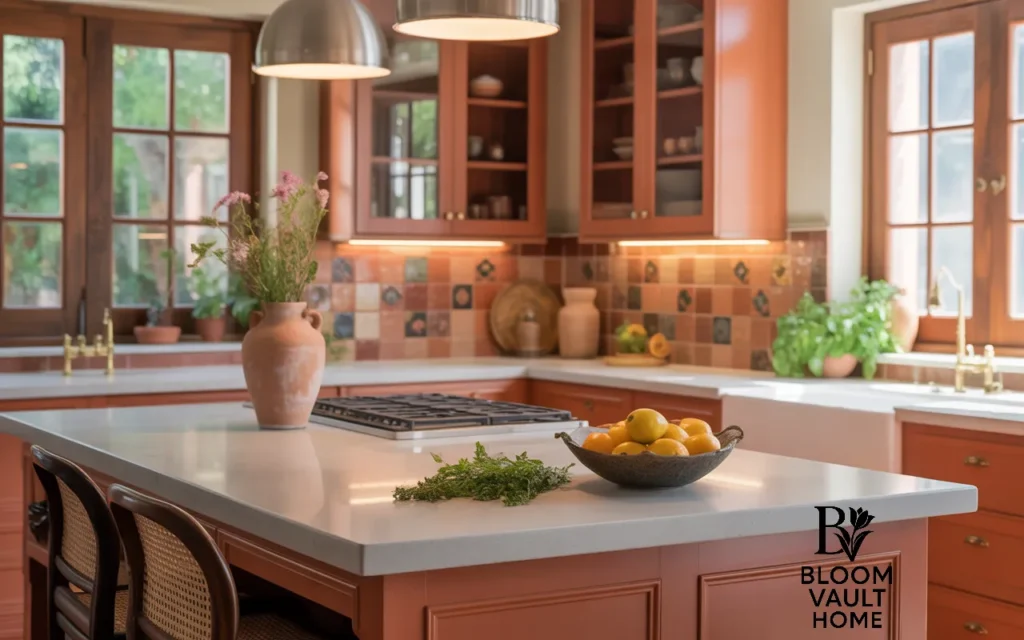
Add a warm, unexpected design element by framing your kitchen windows with terracotta colored trim or tile detailing. This subtle upgrade adds a pop of earthy color that draws the eye upward, enhances architectural interest, and complements a variety of kitchen styles from Mediterranean and Spanish Revival to modern farmhouse or boho chic.
Whether you opt for painted wood trim or use decorative terracotta tiles as a border, this technique infuses the space with color without overwhelming it. It’s a smart choice for those who want to incorporate terracotta in a refined, targeted way bringing warmth and visual definition to often overlooked areas.
Pro Tips
- Use soft, muted terracotta paint for trim: It’s versatile and won’t compete with other kitchen colors.
- Consider decorative terracotta tiles as a window surround: Adds artisanal charm and textural contrast.
- Pair with light walls and cabinetry: Ensures the terracotta stands out as an intentional focal point.
- Match with accessories or backsplash accents: Create cohesion by echoing the color elsewhere.
- Choose matte or satin finishes: Keeps the effect subtle and refined rather than glossy or loud.
Key Style Elements
- Terracotta painted wood trim or clay toned tile border around windows
- Light or white walls to contrast and frame the trim color
- Neutral or warm wood cabinetry for a soft, balanced look
- Stone or butcher block countertops with earthy undertones
- Mixed metal finishes: bronze, copper, or black hardware and fixtures
- Terracotta accessories on the sill: planters, jars, or mini vases
- Linen or sheer white curtains to soften the space
- Optional coordinating backsplash or shelf decor in terracotta shades
21. Rustic Cottage Kitchen with Terracotta Flooring
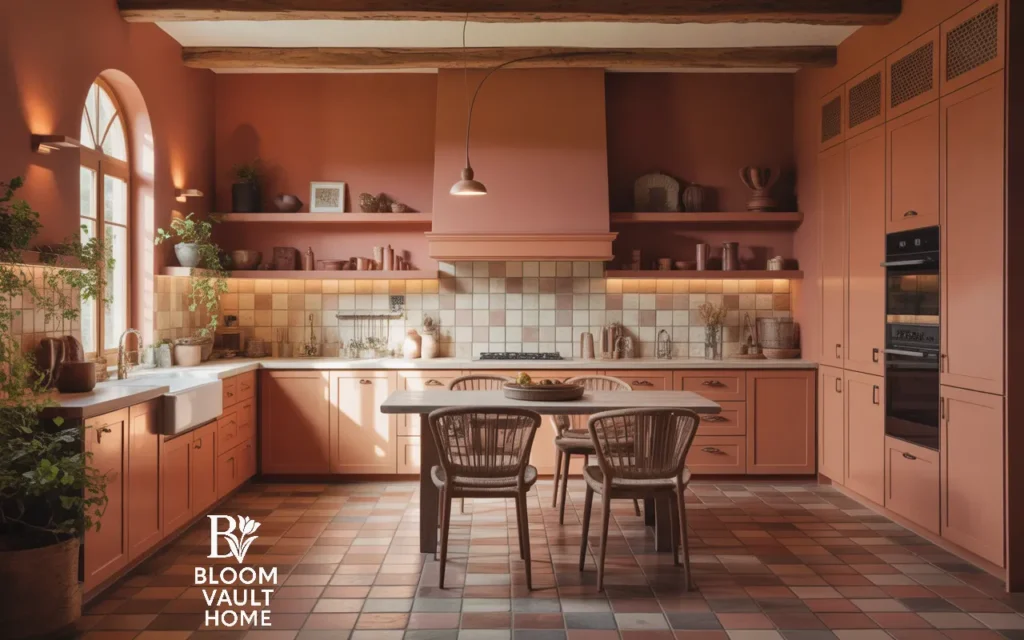
Capture the essence of countryside living with a rustic cottage kitchen anchored by terracotta tiled flooring. These timeworn, clay tiles set the stage with warmth, texture, and heritage, while white shiplap walls and vintage brass fixtures add to the homey, lived in charm. It’s a look that feels timeless, cozy, and delightfully unpretentious perfect for traditional cottages, English inspired interiors, or anyone craving rustic character.
The terracotta floor provides natural variation and depth underfoot, aging gracefully over time and working beautifully with vintage details. Pair it with a soft white palette, open shelving, and antique inspired hardware to evoke a sense of story and nostalgia in your kitchen space.
Pro Tips
- Opt for hand pressed or reclaimed terracotta tiles: These offer authentic patina and color variation.
- Seal tiles properly: Ensures durability and protects the floor from spills and stains.
- Pair with vertical or horizontal shiplap walls: Adds texture while keeping the walls light and clean.
- Use warm toned metals: Brass, antique bronze, or copper fixtures blend beautifully with terracotta.
- Layer in cozy elements: Woven rugs, gingham curtains, or open plate racks add to the cottage feel.
Key Style Elements
- Traditional terracotta floor tiles with matte finish and soft tonal variation
- Crisp white shiplap walls for contrast and texture
- Shaker or beadboard style cabinetry in white, sage, or cream
- Vintage inspired brass taps, knobs, and light fixtures
- Butcher block or stone countertops for a grounded, rustic surface
- Farmhouse sink (apron front) for old world charm
- Open shelving with ceramic dishware, copper pots, or glass jars
- Soft textiles: cotton curtains, linen runners, and braided rugs
22. Terracotta and Navy Contrast
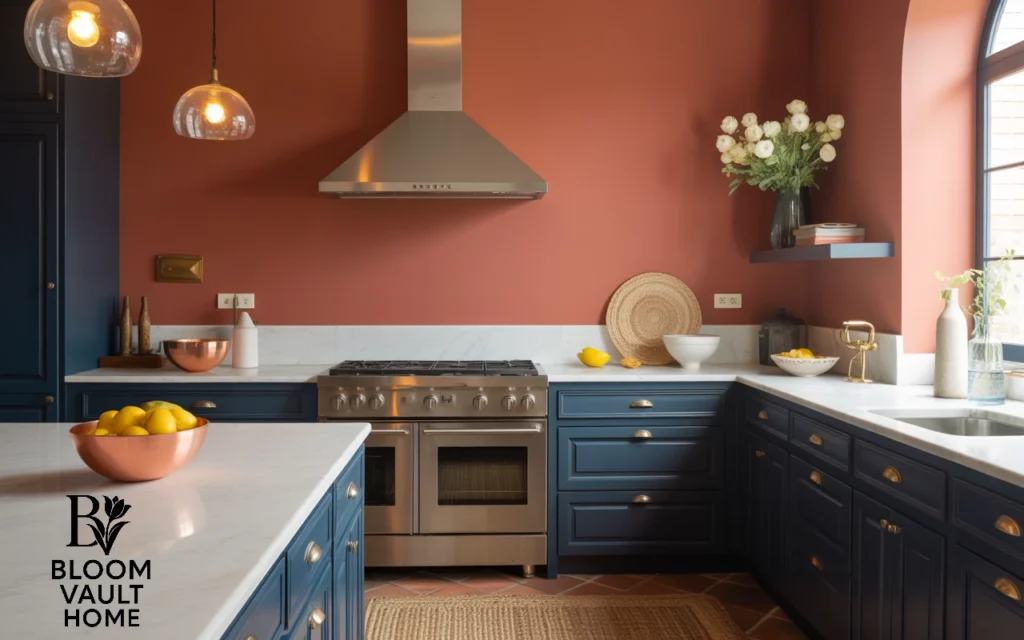
For a kitchen that exudes boldness and sophistication, pair dark navy cabinetry with terracotta flooring or backsplash tiles. This high contrast combination balances the cool depth of navy with the earthy warmth of terracotta, creating a rich and grounded palette that feels both modern and timeless. Ideal for decorators who love strong color stories, this duo brings drama, depth, and elegance into any kitchen space.
Terracotta surfaces whether underfoot or behind the stove soften the intensity of navy and prevent the kitchen from feeling too dark or cold. Together, they form a palette that’s visually striking but still natural, especially when paired with warm metals and simple textures.
Pro Tips
- Use navy on lower cabinets or a kitchen island: It anchors the room while allowing terracotta to shine elsewhere.
- Choose large terracotta tiles for flooring: Keeps the space feeling spacious despite bold colors.
- Incorporate brass or gold accents: These add a luxe finish that bridges the warmth of terracotta and the coolness of navy.
- Stick with matte or satin finishes: These keep the palette soft and refined, avoiding harsh reflections.
- Add white or light countertops: Brightens the space and balances the visual weight of navy cabinetry.
Key Style Elements
- Matte or satin navy cabinetry (shaker, flat front, or inset style)
- Terracotta tile flooring or backsplash in natural clay or zellige finish
- White or light quartz countertops for brightness and balance
- Brass or brushed gold hardware and fixtures
- Warm wood open shelving or accents to soften the contrast
- Light neutral walls (white, soft beige, or cream) to frame bold tones
- Pendant lighting in warm metal finishes or woven materials
- Subtle accessories: navy dishware, terracotta planters, or patterned textiles
23. Monochrome Terracotta Look
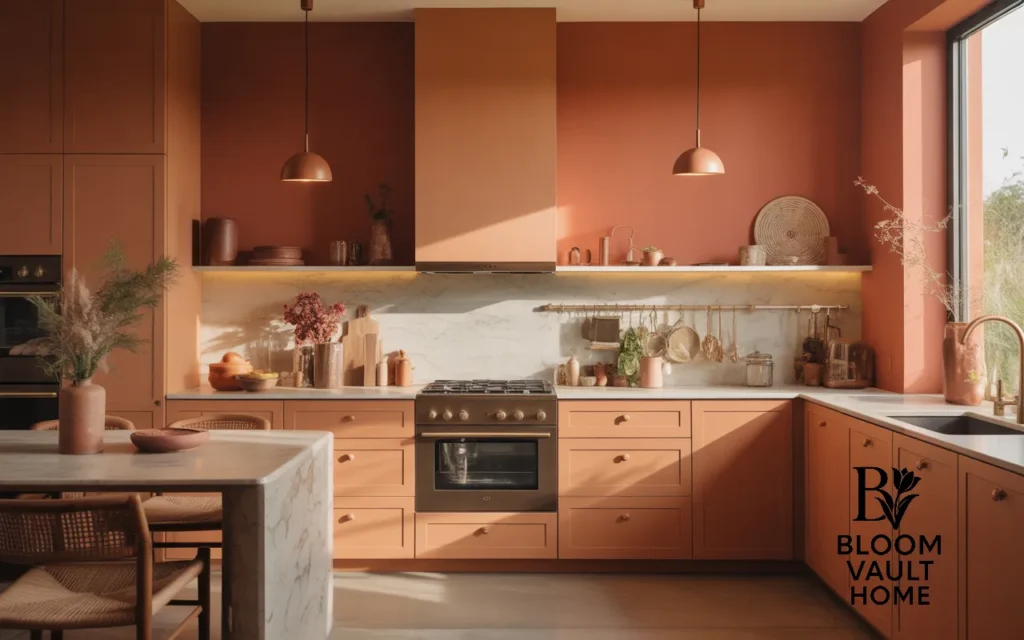
If you’re ready to make a confident design statement, embrace the monochrome terracotta look by layering cabinets, walls, backsplash, and flooring in varying shades of terracotta. This bold, cohesive approach results in a warm, cocoon like space that feels rich, artistic, and architecturally curated. From dusty clay to deep burnt sienna, a tonal terracotta palette delivers depth, texture, and soulful energy.
By playing with different materials matte plaster walls, glazed tiles, hand painted cabinetry, and natural tile flooring you can create a dynamic, multi dimensional kitchen that never feels flat. Ideal for Mediterranean, bohemian, or modern designer spaces, this all in approach celebrates terracotta as both color and concept.
Pro Tips
- Vary the tones and textures: Mix light and dark terracotta hues to add movement and avoid monotony.
- Use different finishes: Combine matte paint, glazed tile, and textured surfaces for layered visual interest.
- Add minimal contrast: A few light or neutral elements (countertops, decor) can help break up the saturation.
- Stick to clean lines and simple silhouettes: This keeps the overall look from becoming too busy.
- Include warm, indirect lighting: Enhances the warmth and richness of the terracotta palette.
Key Style Elements
- Cabinetry painted in soft terracotta or adobe tones (matte or chalk finish)
- Plaster or clay walls in a complementary clay based shade
- Glazed terracotta tile backsplash for light reflection and texture
- Traditional or handmade terracotta tile flooring for grounded warmth
- Subtle neutral countertops (e.g., beige quartz, light travertine) for soft contrast
- Brass, copper, or wood hardware to maintain the earthy feel
- Open shelving or furniture in natural wood to break up the tone
- Accessories in cream, blush, or deep rust to maintain harmony
24. Terracotta Pendant Lighting
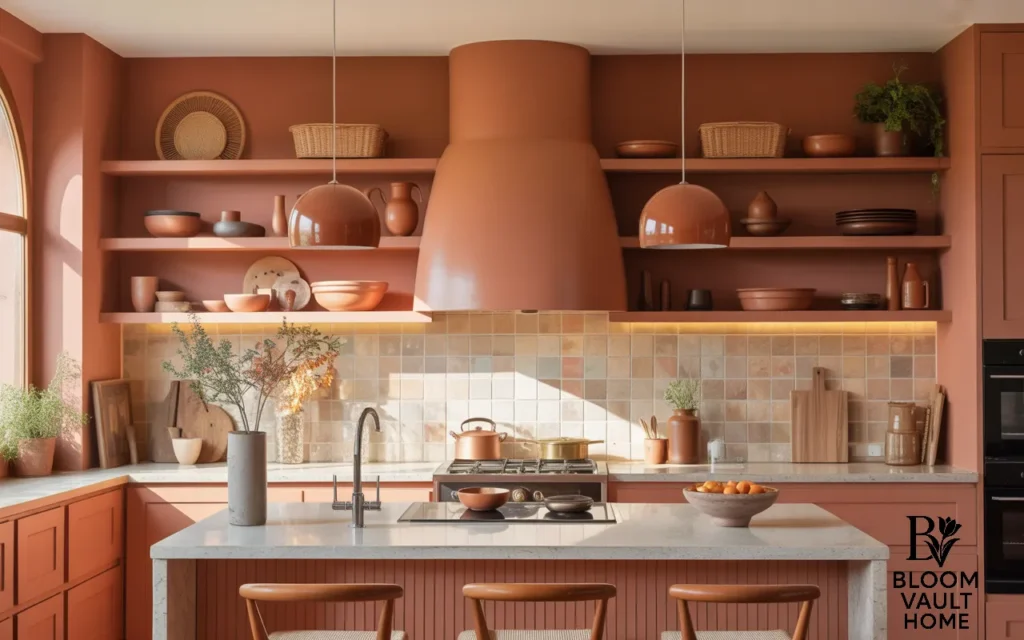
If you’re looking to infuse terracotta tones into your kitchen without committing to paint or tile, terracotta toned pendant lighting offers the perfect solution. These clay inspired light fixtures provide both function and style casting a warm glow while introducing natural color and texture from above. Whether hung over an island, dining table, or breakfast nook, they instantly draw the eye and add an organic, artisan touch to your space.
From raw ceramic shades to glazed finishes in sunbaked hues, terracotta lighting fixtures blend beautifully into Mediterranean, rustic, boho, and modern farmhouse kitchens. The earthy color complements neutrals, wood tones, and warm metals, tying the entire room together with ease.
Pro Tips
- Choose handcrafted or artisanal fixtures: Slight imperfections add authenticity and character.
- Hang in odd numbers (e.g., three over an island): This creates symmetry and a designer look.
- Use warm temperature bulbs: Enhances the natural clay color and sets a cozy ambiance.
- Pair with matte finishes elsewhere: Keeps the overall look grounded and cohesive.
- Repeat terracotta accents in decor or seating: For subtle visual echo and balance.
Key Style Elements
- Pendant light fixtures in terracotta tones matte, raw, or lightly glazed
- Placement over kitchen island, bar, or dining area
- Light wood or white cabinetry to contrast the warm hue
- Brass or black metal detailing on the fixtures for added elegance
- Natural countertops (butcher block, marble, or quartz with soft veining)
- Earth toned accessories: ceramic serveware, terracotta planters, or woven baskets
- Warm toned walls or backsplash in off white, taupe, or muted clay
- Coordinated seating (wood stools, woven chairs) to extend the organic theme
25. Industrial Terracotta Kitchen
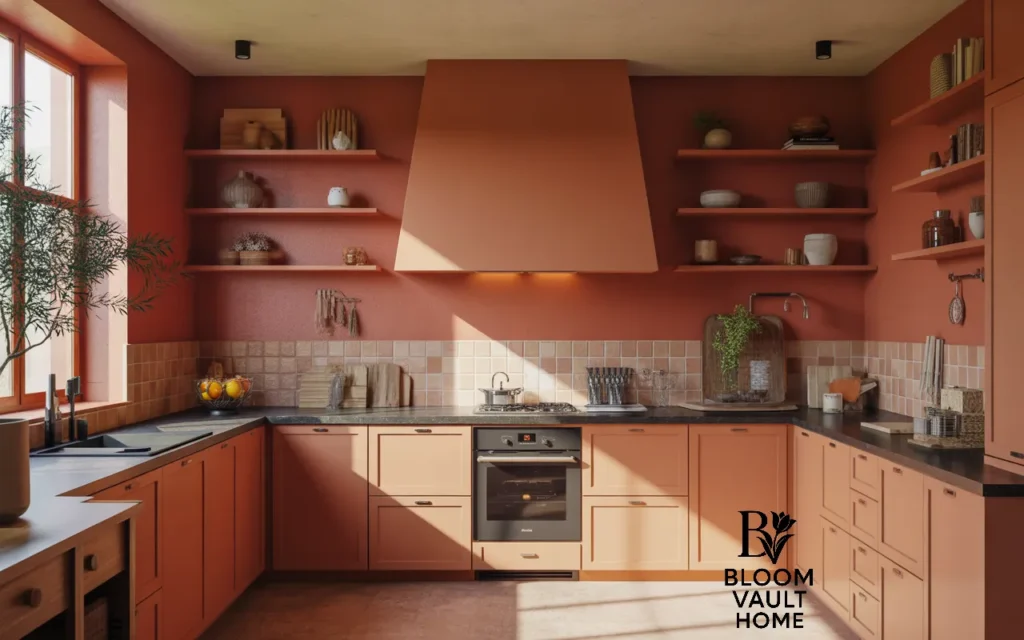
Bring raw sophistication into your space by fusing terracotta slab cabinetry with black metal shelving and concrete walls a look that defines industrial chic with a warm twist. This edgy combination contrasts sleek, modern surfaces with the organic richness of terracotta, creating a bold kitchen aesthetic that’s both urban and earthy.
Terracotta cabinetry softens the often cold industrial palette, adding a dose of color and handcrafted appeal. Black steel accents provide architectural lines and visual structure, while concrete elements ground the space in modern minimalism. The result is a kitchen that feels curated, confident, and full of design forward personality.
Pro Tips
- Use flat panel terracotta cabinets: Keeps the look clean and contemporary.
- Balance rough and smooth textures: Mix matte terracotta with polished concrete or smooth black metal.
- Install open black shelving or industrial style racks: Ideal for storing dishes or showcasing artisan cookware.
- Stick to a tight color palette: Grays, blacks, and warm rust tones maintain industrial cohesion.
- Include warm lighting (e.g., Edison bulbs): Adds ambiance and offsets cooler concrete tones.
Key Style Elements
- Matte or satin finish terracotta slab front cabinetry
- Black powder coated metal open shelving or supports
- Concrete walls, floors, or countertops for industrial texture
- Minimalist hardware in matte black or dark bronze
- Open floor plan with exposed ductwork or raw ceiling elements
- Accent lighting: industrial pendants, track lighting, or wall sconces
- Bar stools or chairs in black metal, leather, or wood
- Urban inspired decor: wire baskets, concrete planters, and geometric ceramics
26. Terracotta Breakfast Nook
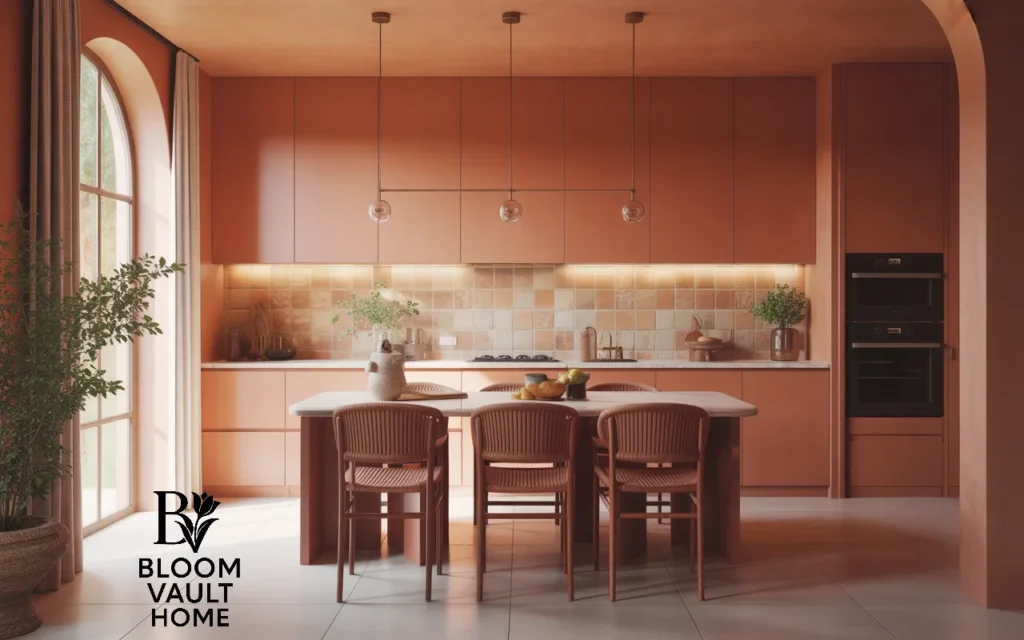
Transform your kitchen’s cozy corner into a design highlight by painting your breakfast nook or banquette seating in terracotta. This subtle yet striking use of color helps define the space, create visual separation, and infuse warmth without overwhelming the entire kitchen. Whether you’re working with built in bench seating, a dining alcove, or a small corner nook, terracotta adds depth and a comforting, lived in feel.
The earthy tones of terracotta blend effortlessly with neutral walls and wood finishes, making it an ideal choice for farmhouse, Mediterranean, or eclectic interiors. It’s a perfect way to introduce color thoughtfully right where morning coffee and cozy meals are enjoyed.
Pro Tips
- Use a soft, muted terracotta tone: Keeps the vibe cozy and not too bold for small spaces.
- Incorporate natural textiles: Add cushions and upholstery in linen, cotton, or canvas for comfort and texture.
- Pair with warm wood elements: A reclaimed wood table or oak seat trim balances the color beautifully.
- Include layered lighting: Wall sconces or a pendant above the nook add charm and functionality.
- Use terracotta paint on walls, trim, or the bench base: Even a partial accent gives a strong visual effect.
Key Style Elements
- Walls or banquette base painted in terracotta or clay hues (matte finish)
- Neutral or white surrounding cabinetry and walls for contrast
- Cushioned bench seating with earthy textiles or patterns
- Light or medium wood dining table for natural grounding
- Brass or black light fixtures for added elegance
- Cozy decor: throw pillows, ceramic mugs, a small plant or vase
- Windows or skylights to bring in natural light and soften the bold color
- Optional gallery wall or artwork with warm undertones to enhance the space
27. Light Terracotta and Brass Pairing
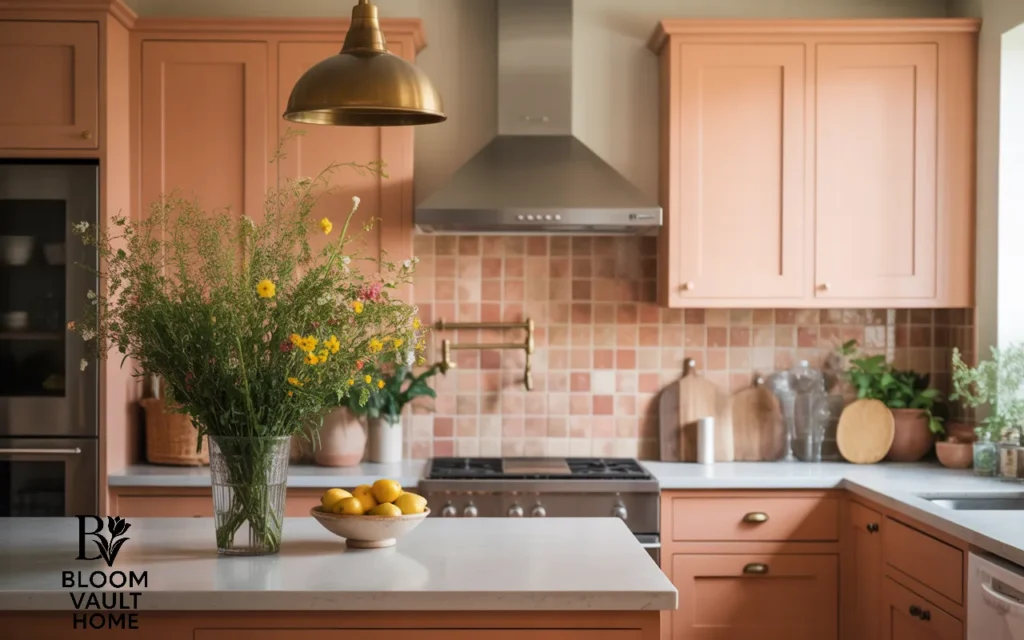
For a kitchen that feels both sunny and sophisticated, combine light terracotta tones with brass accents. This elegant pairing brings together the soft, sunbaked warmth of pale clay with the golden glow of metallic finishes. The result is a bright, uplifting space that feels equally at home in modern, Mediterranean, or boho inspired interiors.
Whether you’re using light terracotta on cabinetry, walls, or tiles, the addition of brass pulls, faucets, and pendant lighting elevates the look with a touch of refined luxury. This duo works beautifully in open concept kitchens, infusing them with both warmth and visual lightness.
Pro Tips
- Choose terracotta tones with a blush or peach undertone: These feel softer and more neutral in larger spaces.
- Use aged or brushed brass finishes: Adds character without the glare of polished metals.
- Balance with light countertops and backsplashes: Keeps the space airy and avoids visual heaviness.
- Repeat brass in multiple elements: For a cohesive look, include it in lighting, fixtures, and hardware.
- Layer with natural textures: Wood, linen, and ceramics enhance the softness of the palette.
Key Style Elements
- Cabinetry or walls in light terracotta or blush toned clay shades (matte or satin finish)
- Brass hardware: drawer pulls, cabinet handles, and knobs
- Brass or gold toned faucets and fixtures (e.g., bridge faucets or gooseneck styles)
- Pendant or sconce lighting in brass or with warm metallic details
- Countertops in white or light beige quartz, marble, or limestone
- Natural wood flooring or light stone tiles
- Subtle decor accents: clay pottery, neutral vases, or gold framed art
- Soft textiles: cream curtains, woven barstools, or jute rugs
28. Mediterranean Kitchen with Terracotta Tiles
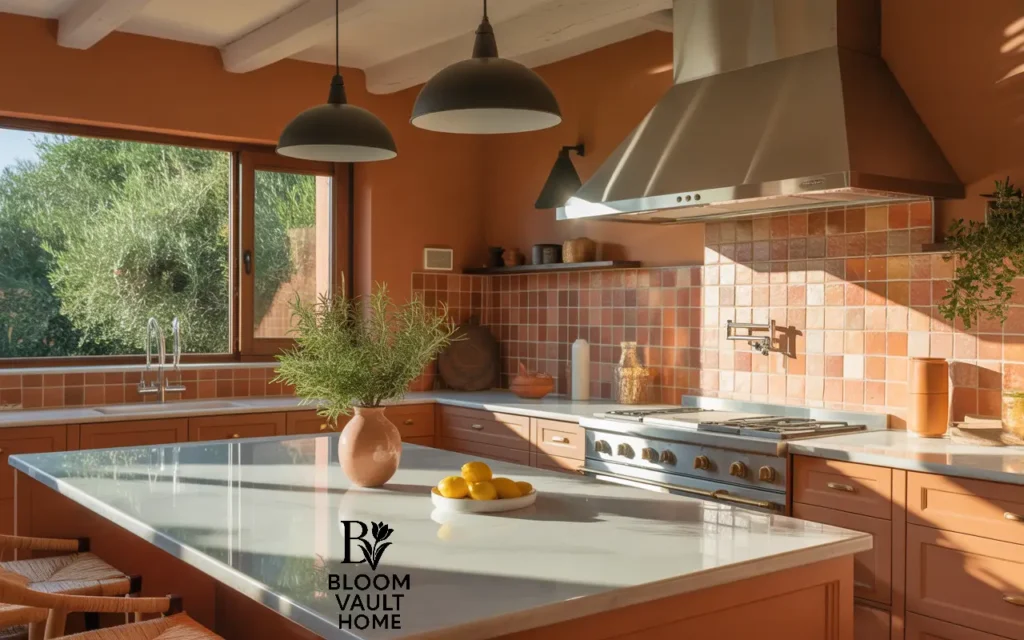
Channel the sun drenched charm of coastal Europe by using Mediterranean style patterned terracotta tiles in your kitchen. Whether featured on the floor or as a backsplash, these tiles infuse your space with color, texture, and timeless character. Their intricate patterns, warm earthy tones, and handcrafted appeal instantly transport the room to the shores of Spain, Italy, or Greece.
This look pairs beautifully with whitewashed walls, natural wood beams, and wrought iron fixtures. The organic imperfections and artisan detail in Mediterranean terracotta tiles make them ideal for creating a space that feels soulful, curated, and full of life.
Pro Tips
- Choose encaustic or hand painted tiles: These offer authentic variation and old world charm.
- Use patterned tiles as a focal point: Behind the range, as a backsplash, or in a tiled “rug” on the floor.
- Balance with simple cabinetry and countertops: Let the tiles shine without overwhelming the space.
- Repeat terracotta tones in accessories: Clay cookware, pottery, or copper pans enhance cohesion.
- Opt for matte or low sheen finishes: Adds authenticity and helps hide wear over time.
Key Style Elements
- Mediterranean style terracotta tiles with geometric or floral motifs
- Application as a full floor, backsplash, or feature wall
- Light or white cabinetry in shaker, flat, or inset style
- Natural stone countertops in beige, limestone, or marble
- Warm metal accents: wrought iron, brass, or aged bronze
- Exposed wood beams, ceiling details, or floating shelves for rustic charm
- Earth toned or ceramic accessories to enhance the Old World feel
- Arched doorways or rounded details (if possible) to enhance Mediterranean architecture
29. White Quartz + Terracotta Cabinets
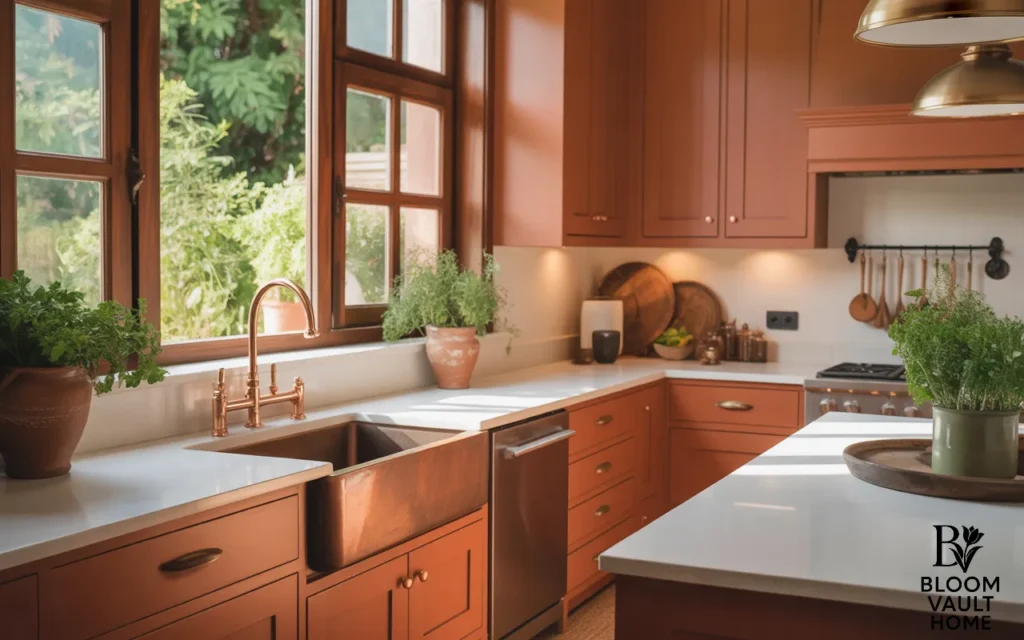
Achieve a beautifully balanced look by pairing terracotta cabinets with white quartz countertops. This combination brings together the earthy richness of clay tones with the crisp brightness of quartz, resulting in a kitchen that feels both grounded and refined. The warm undertones of terracotta offer depth and warmth, while the sleek surface of white quartz adds modern polish and keeps the space feeling light and airy.
This pairing works across various design styles from modern Mediterranean to transitional and boho chic. It’s especially ideal for those who want to embrace terracotta without overwhelming the kitchen in dark or rustic tones. The result? A kitchen that feels fresh, welcoming, and effortlessly stylish.
Pro Tips
- Choose a soft terracotta or muted clay shade for cabinetry: It creates warmth without overpowering.
- Select quartz with subtle veining: This adds texture and elegance without clashing with the cabinet color.
- Use light colored backsplashes (e.g., zellige or marble tile): Keeps the palette cohesive and bright.
- Pair with warm metals like brass or brushed gold: Adds a luxe finish that complements both materials.
- Incorporate under cabinet lighting: Enhances the quartz’s reflective qualities and showcases the cabinetry color.
Key Style Elements
- Terracotta slab or shaker style cabinets in matte or satin finishes
- White quartz countertops with minimal veining for a clean, contemporary surface
- Neutral or white backsplashes to balance and soften the color palette
- Warm metal hardware and fixtures (brass, champagne bronze, or aged copper)
- Natural wood accents: open shelving, stools, or ceiling beams for warmth
- Floor options: light wood, cream tile, or natural stone
- Accessories in beige, clay, and ivory tones to complement the core palette
- Sleek pendant lighting or sconces in gold or matte white finishes
30. Terracotta on Open Plan Accent Walls
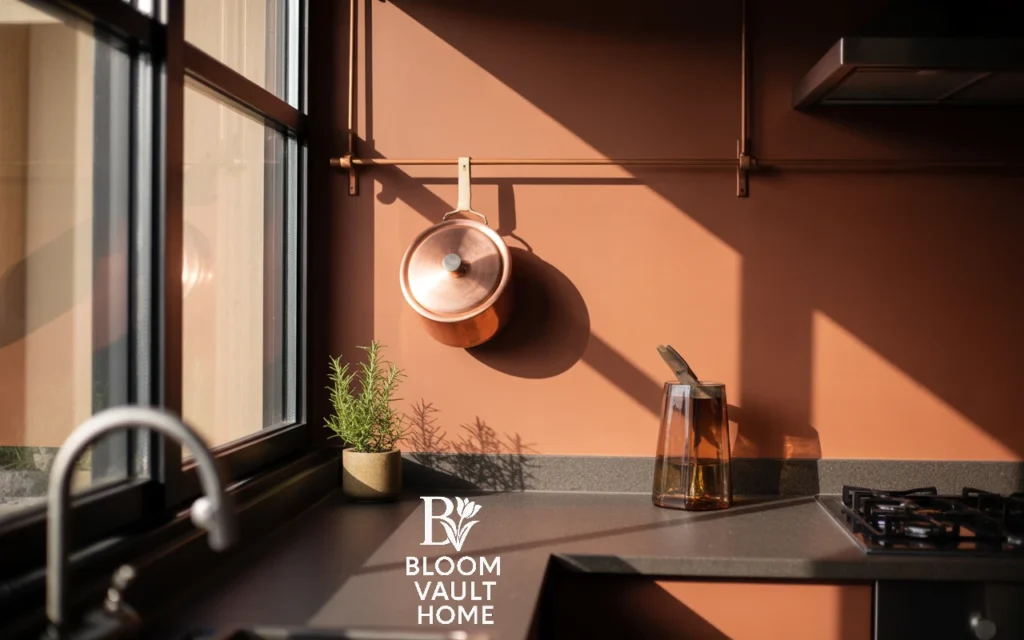
In an open plan kitchen and living space, a terracotta painted accent wall can do wonders for visually anchoring the kitchen and subtly defining its boundaries. This technique not only adds a warm, earthy hue to the room but also introduces architectural intent giving the kitchen area its own distinct identity without using physical dividers.
Terracotta’s natural warmth enhances flow between adjacent zones while still marking the kitchen as a design focal point. Whether you choose a full wall or a partial section behind open shelving or cabinetry, this approach complements modern, transitional, and boho interiors alike.
Pro Tips
- Choose a rich but muted terracotta tone: Look for soft clay or adobe hues to maintain versatility across the space.
- Use the accent wall as a backdrop for shelving, art, or lighting: This amplifies its visual impact.
- Balance with neutral tones in adjacent areas: White, beige, and light wood help the wall stand out without clashing.
- Echo terracotta in smaller accents: Add planters, cushions, or pottery to create cohesion throughout the open space.
- Use low sheen or matte paint: Reduces glare and gives a natural, velvety texture that feels grounded.
Key Style Elements
- Terracotta painted accent wall in soft, muted tones (clay, rust, adobe)
- Open plan layout with clear sight lines between kitchen, dining, and living zones
- Neutral cabinetry: white, cream, or light wood for balance
- Complementary accents: clay toned accessories, artwork, or upholstered seating
- Flooring in wood or large neutral tiles to maintain visual continuity
- Lighting: wall sconces or pendant lights placed against the accent wall
- Natural materials: woven textiles, wooden furnishings, and ceramic details to enhance warmth
- Minimal partitions to maintain the open feel while using color to subtly “zone” the space
Design Tips for Terracotta Kitchens
Terracotta is bold, but also natural and earthy. Here’s how to get the best out of it:
- Balance with Light Neutrals: White, cream, or pale beige balance the warmth of terracotta beautifully.
- Add Natural Texture: Wood, linen, clay, and rattan pair well with terracotta finishes.
- Use Layered Lighting: Terracotta looks richer under warm LED lighting or natural sunlight.
- Stick to a Cohesive Palette: Choose a few earthy tones (terracotta, sand, olive) and repeat them across tiles, walls, and accessories.
FAQs: Terracotta Kitchen Design
Q1. Is terracotta too bold for a small kitchen?
Not if used wisely. Terracotta makes small kitchens feel warm and cozy, especially when paired with light counters and open shelving.
Q2. What colors complement terracotta in kitchens?
Terracotta pairs beautifully with olive green, cream, beige, navy, brass, sage, and even dusty pink.
Q3. Are terracotta tiles durable for kitchen use?
Yes especially sealed or glazed terracotta tiles. They’re tough, water resistant, and naturally slip resistant, perfect for kitchens.
Q4. Can I mix terracotta with modern design?
Absolutely. Combine terracotta with minimalist flat panel cabinetry, sleek lighting, and clean lines for a modern Mediterranean style.
Q5. Is terracotta still in style in 2026?
Very much so. Designers are leaning into warm, natural materials and colors, and terracotta offers both color and earthy texture in one.
Final Thoughts
Whether you’re remodeling your entire kitchen or just adding a splash of warmth, terracotta is a timeless choice that bridges classic charm with modern appeal. Its rich, earthy tone adds soul to your space, while its versatility allows it to complement almost any design style.
From hand glazed backsplashes to bold cabinet color choices, these 30 stylish terracotta kitchen ideas offer something for every taste and layout. Ready to warm up your space with natural beauty? Let terracotta lead the way.
Don’t forget to save your favorite looks or share this guide with your interior designer or contractor!