
23 Perfect Terracotta Kitchen Floor Ideas That Add Warmth & Style
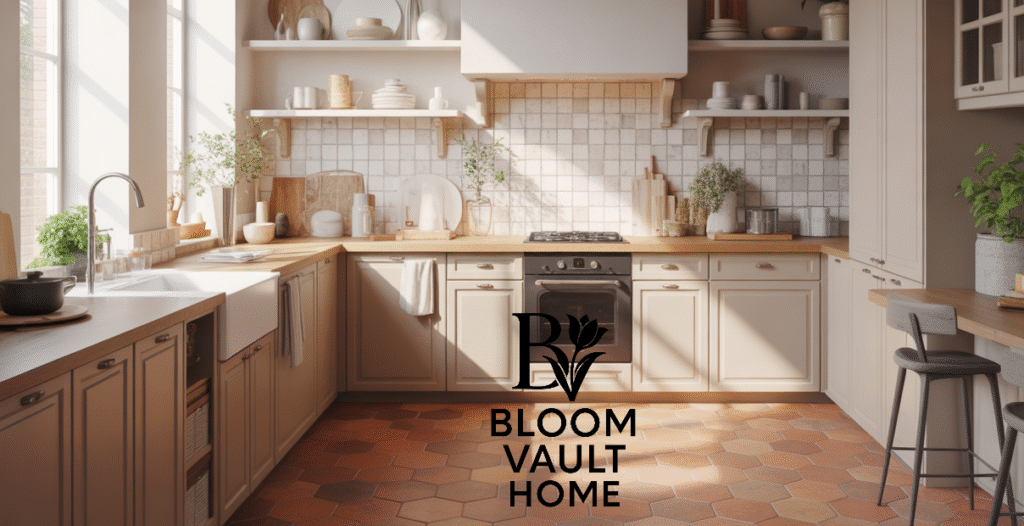
Terracotta flooring has stood the test of time literally. For centuries, homes across the Mediterranean, Southwestern U.S., and rustic European cottages have used this sunbaked clay material to bring warmth and authenticity into everyday spaces.
In 2026, the terracotta trend is making a bold return especially in the kitchen. A terracotta kitchen floor instantly grounds the room with natural texture and cozy earth tones. It’s durable, inviting, and incredibly versatile, working seamlessly in everything from farmhouse kitchens to modern minimalistic interiors.
Let’s dive into 23 perfect terracotta kitchen floor ideas that will elevate your space with warmth, texture, and timeless charm.
1. Classic Square Terracotta Tiles
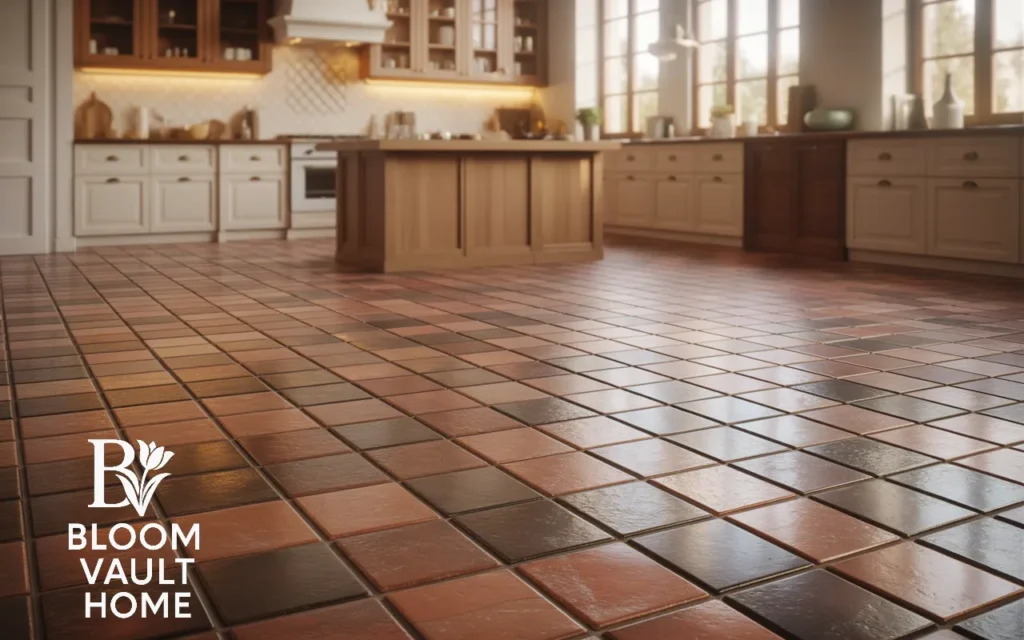
There’s a reason why square terracotta tiles are timeless they bring old world charm and rustic warmth that never goes out of style. Laid in a straight grid pattern, these tiles offer a sense of symmetry and structure that pairs effortlessly with farmhouse, Mediterranean, and country kitchens. Their warm, earthy tones create an inviting atmosphere that feels both grounded and full of soul.
Whether sealed for a glossy look or left matte for a natural finish, this option is as versatile as it is beautiful.
Pro Tips
- Use larger square tiles (12″x12″) for a more traditional feel: Great for spacious kitchens.
- Seal the tiles properly: This enhances durability and prevents staining.
- Opt for a matte finish for a more rustic, authentic vibe.
- Pair with white or cream cabinetry: The contrast highlights the terracotta’s richness.
- Incorporate natural wood accents: Complements the warm undertones perfectly.
Key Style Elements
- Square terracotta floor tiles in warm rust, clay, or cinnamon hues
- Straight grid layout for clean lines and symmetry
- Grout in earthy tones (sand, mocha, or brick red)
- Natural materials like wood, stone, and woven textures
- Ideal for rustic, farmhouse, Tuscan, or Spanish style kitchens
- Compatible with both matte and semi gloss finishes
- Soft, ambient lighting to emphasize tile texture
- Works well with vintage or handcrafted kitchen décor
2. Herringbone Terracotta Layout
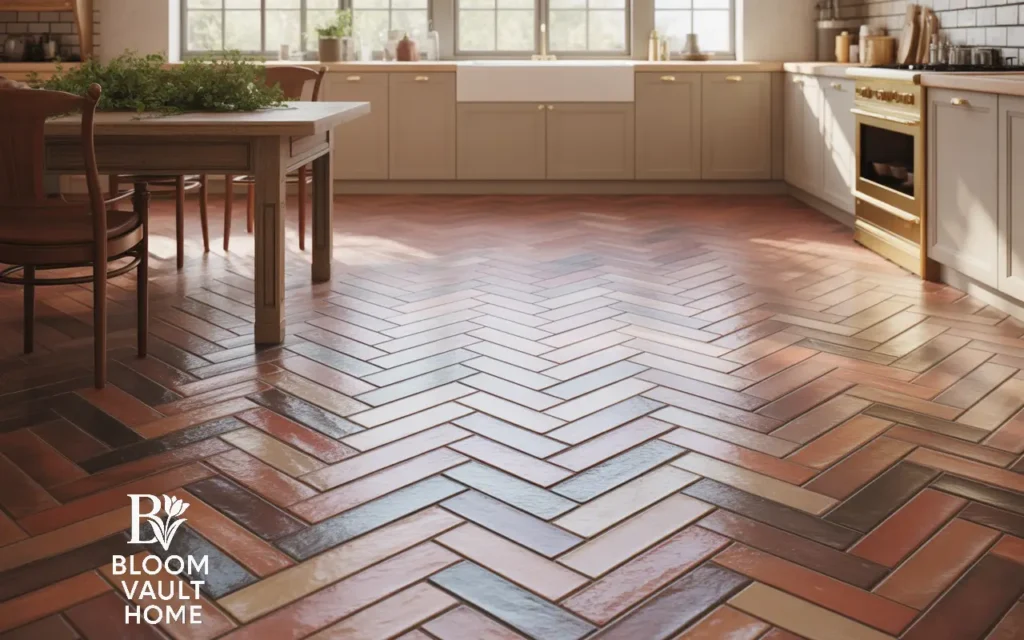
Looking to elevate your kitchen floor while keeping that earthy, handcrafted vibe? Try arranging slim terracotta tiles in a herringbone pattern. This elegant layout adds movement, texture, and upscale flair to your kitchen, making it perfect for transitional, modern rustic, or boho chic spaces. The diagonal placement visually expands the floor, making even smaller kitchens feel more spacious and refined.
It’s the perfect way to turn a traditional material into a statement making design feature.
Pro Tips
- Choose narrow rectangular tiles for the best herringbone effect.
- Use minimal grout lines in a complementary shade: Keeps the pattern the focus.
- Pair with minimalist cabinets and countertops: Lets the floor shine as the hero element.
- Install in a central layout (starting from a focal point): Enhances symmetry and balance.
- Consider a matte finish for a modern look, or lightly glazed for a touch of shine.
Key Style Elements
- Slim terracotta tiles (e.g., 3″x12″) in traditional or muted tones
- Herringbone layout angled across or along the kitchen floor
- Neutral grout that blends with the tile (like sand or terracotta toned)
- Minimalist or modern farmhouse cabinetry for contrast
- Brass or black fixtures to complement the organic warmth
- Understated décor to let the flooring take center stage
- Ideal for both galley and open plan kitchen layouts
- Works beautifully with both rustic and modern styling cues
3. Terracotta Hexagon Tiles
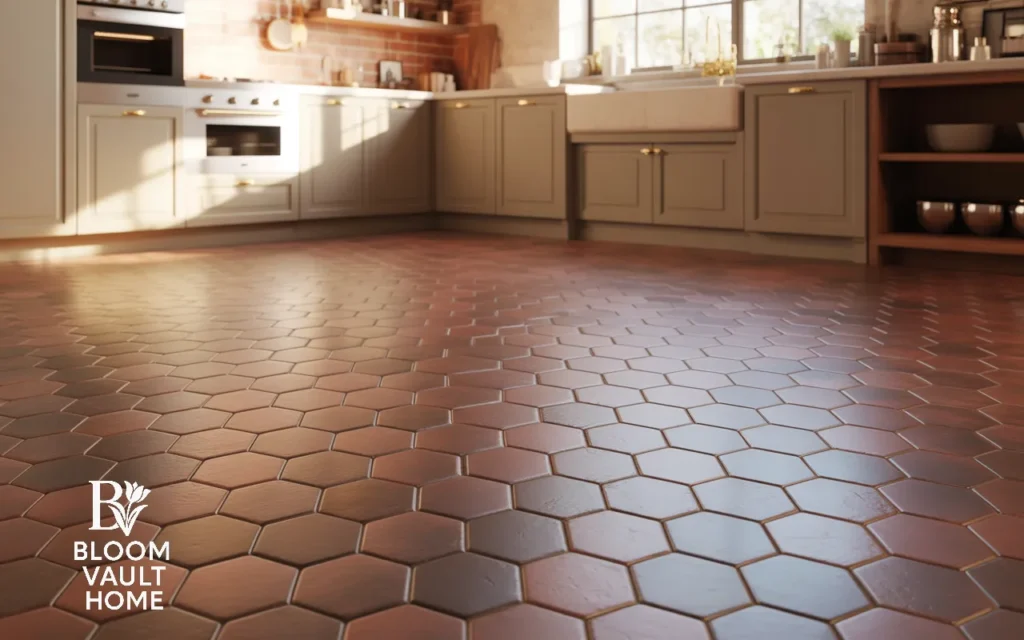
For those who crave a little geometric flair, hexagonal terracotta tiles deliver the perfect mix of pattern and personality. These six sided beauties bring a modern edge to rustic material, making them ideal for eclectic, bohemian, or Mediterranean inspired kitchens. Their shape naturally draws the eye and adds a unique rhythm to the floor, giving the space a bold yet grounded energy.
Whether used throughout the entire kitchen or as a defined zone under a breakfast nook, hex tiles are a statement in any layout.
Pro Tips
- Use medium sized hex tiles (6” 8”) for a balanced visual effect.
- Select a soft grout color for seamless flow or a contrasting one for bold definition.
- Pair with white walls or cabinets to let the floor pop.
- Add vintage or patterned rugs for a cozy, layered look.
- Great for kitchens with open floor plans: Use hex tiles to define zones naturally.
Key Style Elements
- Hexagon shaped terracotta tiles in classic or washed tones
- Matte or satin finish to emphasize texture and warmth
- Soft or bold grout options depending on design intent
- Complements both modern and rustic cabinetry
- Works beautifully in boho, Southwestern, or Mediterranean kitchens
- Can be used as full flooring or patterned inlays
- Often paired with floating shelves and minimalist hardware
- Excellent for small kitchens to create visual movement
4. Reclaimed Terracotta Brick Flooring
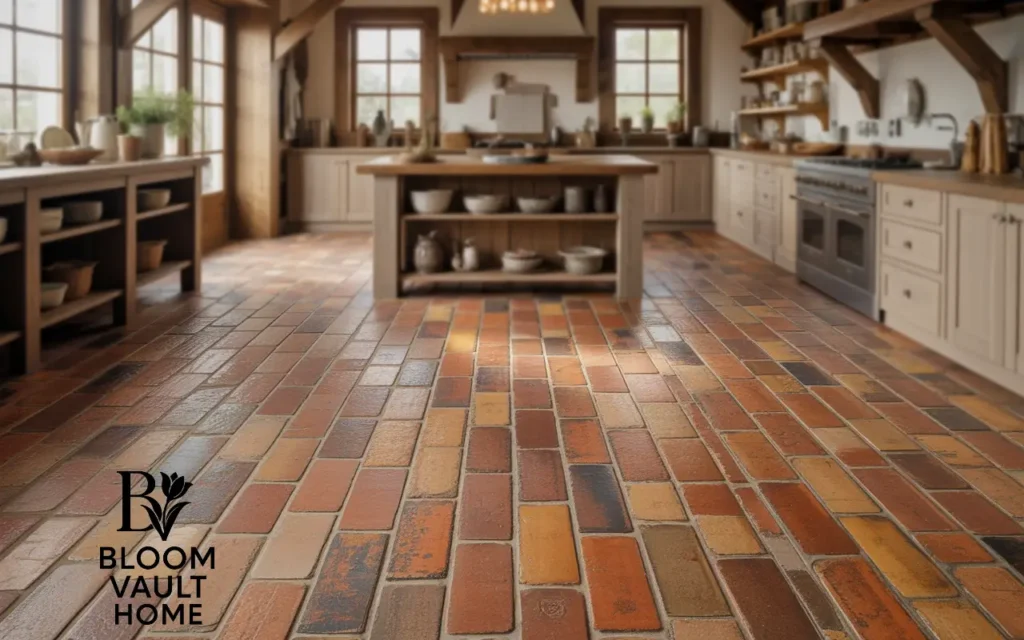
Bring authentic European farmhouse charm into your kitchen with reclaimed terracotta brick flooring. Salvaged from old buildings and farmhouses, these bricks carry natural wear, patina, and time earned imperfections that tell a story with every step. Each piece is unique in tone and texture, making your floor truly one of a kind.
This is a sustainable, character rich option perfect for traditional, rustic, or even transitional kitchens seeking a warm, lived in feel.
Pro Tips
- Source from reputable suppliers to ensure quality and age authenticity.
- Use a sealant to protect against moisture and stains in kitchen environments.
- Offset or running bond patterns enhance the aged brick look.
- Pair with reclaimed wood beams or vintage furniture for full effect.
- Consider radiant floor heating beneath for comfort in colder climates.
Key Style Elements
- Reclaimed terracotta bricks in varied sizes and patinas
- Irregular tones ranging from burnt orange to dusty rose and pale clay
- Laid in offset, herringbone, or running bond patterns
- Earth toned grout for a cohesive aged appearance
- Best suited for farmhouse, rustic French, Tuscan, or country style kitchens
- Works beautifully with open shelving, antique finishes, and natural fabrics
- Durable and long lasting with proper sealing
- Ideal for storytelling interiors with historic or artisanal charm
5. Terracotta and Cement Tile Combo
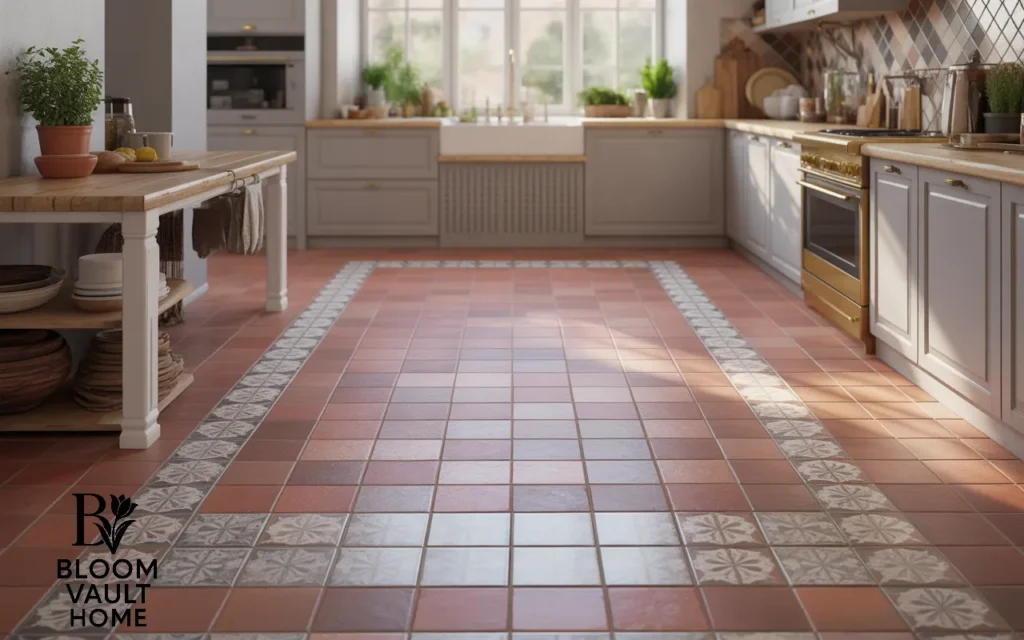
Why choose one stunning tile when you can combine two? Mixing terracotta with patterned cement tiles is a smart and stylish way to visually define zones within an open plan kitchen. Use terracotta as your main flooring, then introduce cement tiles under the island, breakfast nook, or dining area to create a focal point and break up the layout without the need for walls.
This combo is a designer favorite that delivers texture, warmth, and personality all while staying grounded in natural materials.
Pro Tips
- Choose complementary tones: Look for cement tiles with warm hues that echo terracotta’s clay base.
- Define transitions with borders or inlays: This makes the flooring shift feel intentional.
- Keep furniture minimal over patterned zones: Let the tile design speak for itself.
- Great for large, open kitchens or loft style spaces.
- Use matte finishes for both tile types to maintain a cohesive, earthy feel.
Key Style Elements
- Base flooring in natural terracotta tiles
- Patterned encaustic or cement tiles in accent areas
- Clear zone transitions: under islands, dining tables, or pantries
- Grout colors matched to each tile type for a clean finish
- Complements eclectic, boho, farmhouse, or Mediterranean interiors
- Works with open shelving, layered lighting, and mixed metal fixtures
- Bold and playful, yet grounded and warm
- Ideal for creative homeowners wanting a custom feel
6. Matte Terracotta for a Soft, Natural Look
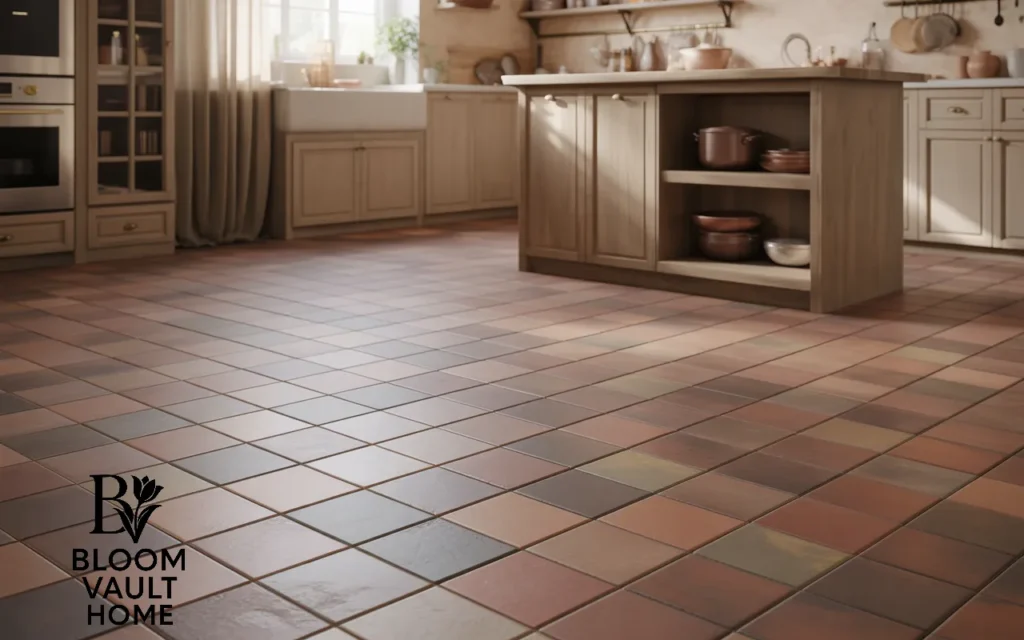
For a kitchen that whispers instead of shouts, opt for matte terracotta tiles. This finish has a dusty, velvety quality that softens the rich tones of the clay, making it ideal for rustic, farmhouse, Japandi, or organic modern spaces. Unlike glossy tiles that reflect light, matte terracotta absorbs it, adding a quiet, earthy warmth to your kitchen floors. If you love this look, you can also explore our guide on Terracotta Backsplash Kitchen for more earthy design inspiration.
This look is effortlessly natural, grounding your space in simplicity and subtle beauty.
Pro Tips
- Choose handmade or raw edge matte tiles for added texture.
- Seal matte terracotta to prevent staining without adding shine.
- Pair with light or neutral cabinetry to enhance the calm vibe.
- Add texture through jute rugs or rattan furniture.
- Ideal for low traffic areas or kitchens that lean into relaxed styling.
Key Style Elements
- Terracotta tiles in matte, unglazed finish
- Warm undertones: rose clay, burnt sienna, sunbaked orange
- Works well with creamy whites, beige, pale wood, or soft green cabinets
- Natural or organic materials: linen curtains, wood stools, ceramic planters
- Complements minimalist or farmhouse aesthetics
- Matte brass or aged bronze fixtures for added warmth
- Earthy, non reflective surfaces that highlight texture
- Great for cozy, retreat style kitchens with an organic touch
7. Glossy Glazed Terracotta Floor Tiles
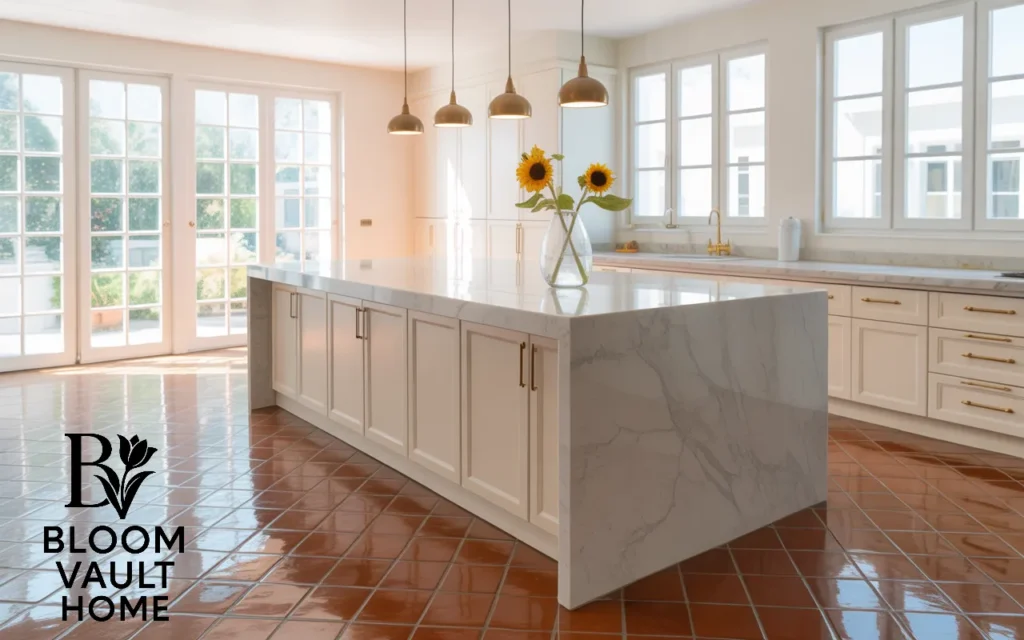
Looking to bring a touch of elegance to your rustic kitchen? Glossy glazed terracotta tiles offer the perfect blend of traditional material and modern finish. The high shine surface enhances the clay’s natural hues while bouncing light around the room ideal for contemporary kitchens, transitional designs, or smaller spaces needing a visual lift.
This style transforms the earthy warmth of terracotta into something polished and refined, without sacrificing its natural charm.
Pro Tips
- Use in kitchens with ample natural light: The glossy finish will help amplify brightness.
- Choose a medium to high glaze for maximum impact and easier cleaning.
- Pair with sleek cabinetry and metallic accents: Creates an elevated, luxe atmosphere.
- Avoid overly busy patterns in the rest of the space: Let the floor be the showstopper.
- Use felt pads on furniture legs to protect the glazed surface.
Key Style Elements
- Glossy glazed terracotta tiles in rich clay or coral hues
- Reflective surface adds depth and elegance
- Ideal for contemporary, transitional, or eclectic interiors
- Works beautifully with white, charcoal, or navy cabinetry
- Matches well with brushed gold, chrome, or stainless steel hardware
- Smooth grout in neutral tones to keep the focus on shine
- Suitable for light filled or urban kitchen spaces
- Perfect for making rustic materials feel modern and upscale
8. Large Format Terracotta Slabs
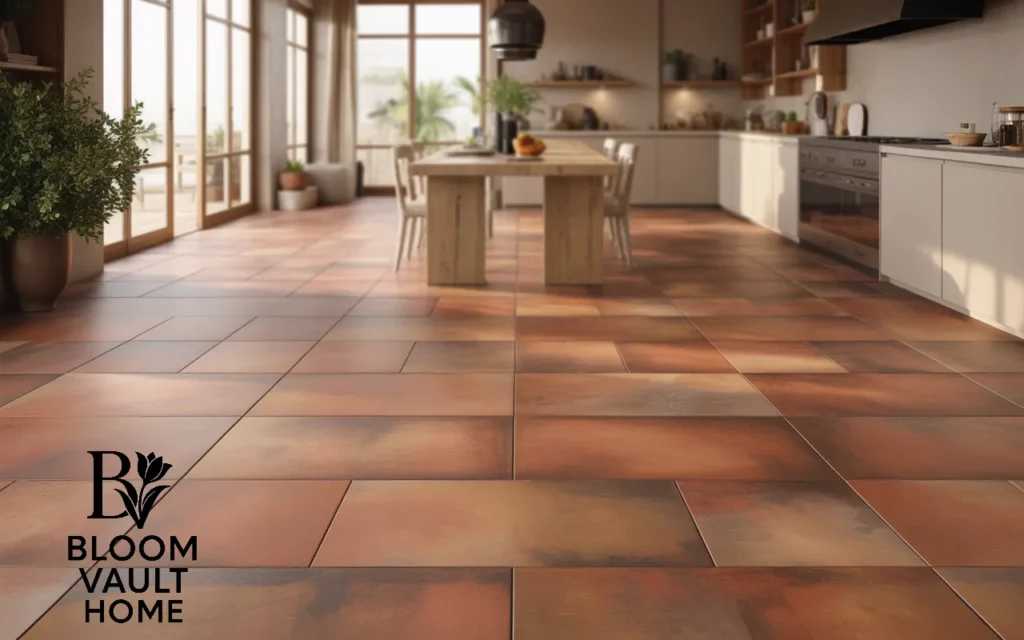
Take terracotta to architectural new heights with large format tiles or slabs, offering a bold, seamless foundation. With fewer grout lines and a sleek surface, these oversized tiles lend a modern, almost monolithic appearance that elevates terracotta from farmhouse staple to designer flooring.
This is the ideal option for minimalist kitchens, open plan layouts, or anyone craving a clean, uninterrupted floorline.
Pro Tips
- Choose tiles sized 12″x24″ or larger for full impact.
- Use grout in a similar tone to make seams nearly invisible.
- Install on a perfectly leveled surface to ensure flawless results.
- Pair with slab cabinetry or integrated handles for a minimalist vibe.
- Finish with matte or satin sealants to maintain a natural, soft glow.
Key Style Elements
- Oversized terracotta tiles or slabs with a modern cut
- Minimal grout lines for a smooth, seamless appearance
- Best suited to modern, Japandi, or industrial kitchen styles
- Warm, solid color palette: rust, deep ochre, terra clay
- Harmonizes with minimalist cabinetry, stone counters, and steel accents
- Creates an open, gallery like floor aesthetic
- Durable and ideal for high traffic, family friendly kitchens
- Adds drama and sophistication with earthy warmth
9. Terracotta Tiles with Dark Grout
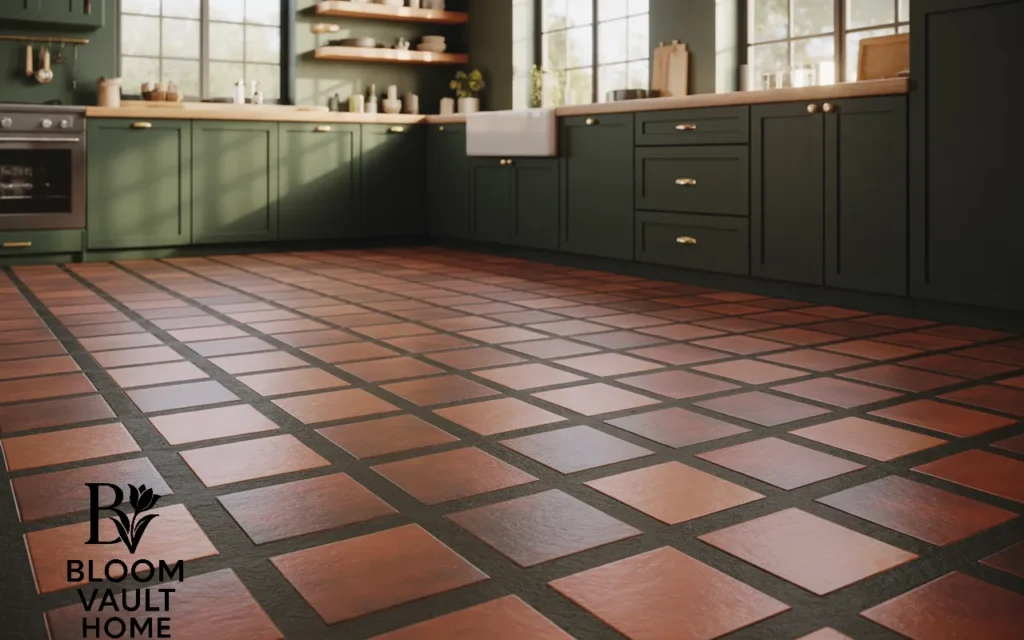
For those who want to highlight the pattern and geometry of their terracotta flooring, pairing it with dark grout think charcoal, espresso, or deep mocha adds instant drama and depth. This design move draws attention to each tile’s individual character and handcrafted edges, making it especially effective with square, hex, or herringbone layouts.
Perfect for both rustic and industrial spaces, this combo creates a bold, graphic statement without losing the warmth of the terracotta.
Pro Tips
- Use dark grout to define tile edges in intricate layouts like herringbone or chevron.
- Seal grout lines properly to prevent discoloration over time.
- Best paired with mid to dark toned terracotta for balance.
- Add matte black fixtures or metal accents for a cohesive look.
- Incorporate dark toned cabinetry to complement the grout and ground the design.
Key Style Elements
- Terracotta floor tiles in natural or deep clay tones
- Grout in espresso, charcoal, or dark brown for visual contrast
- Enhances rustic, bohemian, and industrial interiors
- Works beautifully with patterned tile layouts (hex, chevron, grid)
- Adds structure and emphasis to organic materials
- Complements dark wood cabinetry, metal shelving, or concrete countertops
- Ideal for medium to large kitchens needing graphic interest
- A great way to highlight craftsmanship and texture
10. Terracotta and Natural Stone Mix
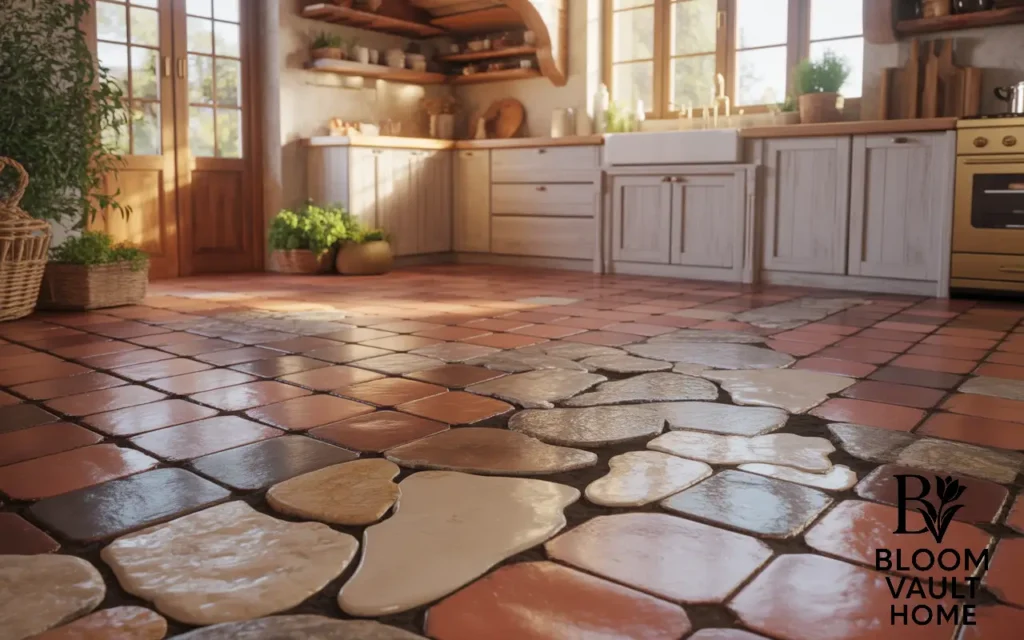
Blend earthy terracotta with elegant natural stones like limestone, slate, or travertine for a refined, Mediterranean inspired floor that feels curated and timeless. The cool tones of stone balance the warm richness of terracotta, creating a dynamic yet harmonious contrast.
This artisanal mix is ideal for kitchens that aim to be both inviting and sophisticated, offering a layered texture that evokes the charm of old European villas.
Pro Tips
- Choose stones in neutral or soft gray tones to balance the warmth of terracotta.
- Create a border or patterned inlay for visual distinction.
- Use a consistent grout tone throughout for cohesion.
- Keep cabinetry and countertops simple to let the floor stand out.
- Excellent for Tuscan, Spanish, or rustic French country kitchens.
Key Style Elements
- Combination of terracotta tiles with limestone, slate, or travertine insets
- Mixed materials add depth, texture, and a handcrafted feel
- Ideal for Old World, Mediterranean, or rustic luxury designs
- Complements wrought iron fixtures, wood beams, and open shelving
- Works well with warm or cool toned cabinetry
- Grout that harmonizes both materials (sand or warm gray)
- Adds artisanal charm and timeless elegance
- Suitable for large kitchens or open plan layouts looking for floor interest
11. Patterned Terracotta Tiles
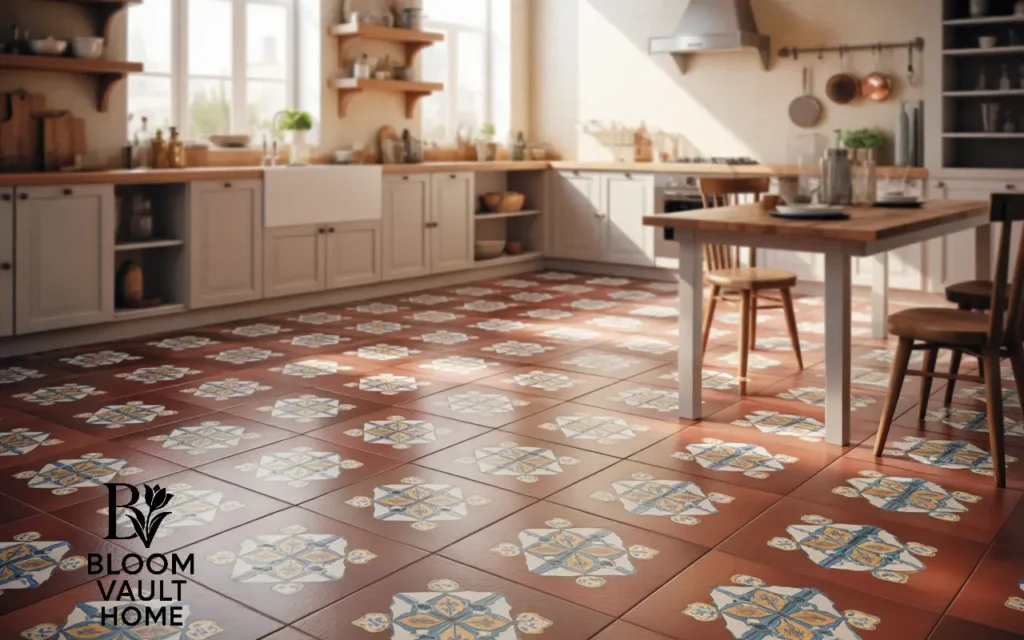
Add a layer of artisanal charm to your kitchen with patterned terracotta tiles whether they’re stamped, embossed, or hand painted. These decorative tiles elevate the floor into a focal point, offering texture, color variation, and a soft rustic elegance. From floral motifs to geometric borders, patterned terracotta introduces Old World craftsmanship into a modern space.
Perfect for adding personality without overwhelming the room, these tiles work beautifully in bohemian, Mediterranean, or Spanish style kitchens.
Pro Tips
- Use patterned terracotta as a border, inlay, or full floor coverage.
- Opt for subtle, low contrast designs to keep things timeless and not too busy.
- Balance the visual interest with neutral cabinetry and walls.
- Great for creating a sense of vintage or hand crafted authenticity.
- Seal tiles to protect the design from fading or wear over time.
Key Style Elements
- Hand painted, stamped, or engraved terracotta tiles
- Designs in soft whites, muted blues, olive greens, or tonal clays
- Ideal for vintage, boho, or Mediterranean interiors
- Works as full flooring, borders, or statement zones
- Pairs well with open wood shelving, vintage rugs, and natural materials
- Enhances textured, layered design schemes
- Adds warmth and handcrafted appeal
- Perfect for kitchens with eclectic or heritage inspired aesthetics
12. Diagonal Tile Layout
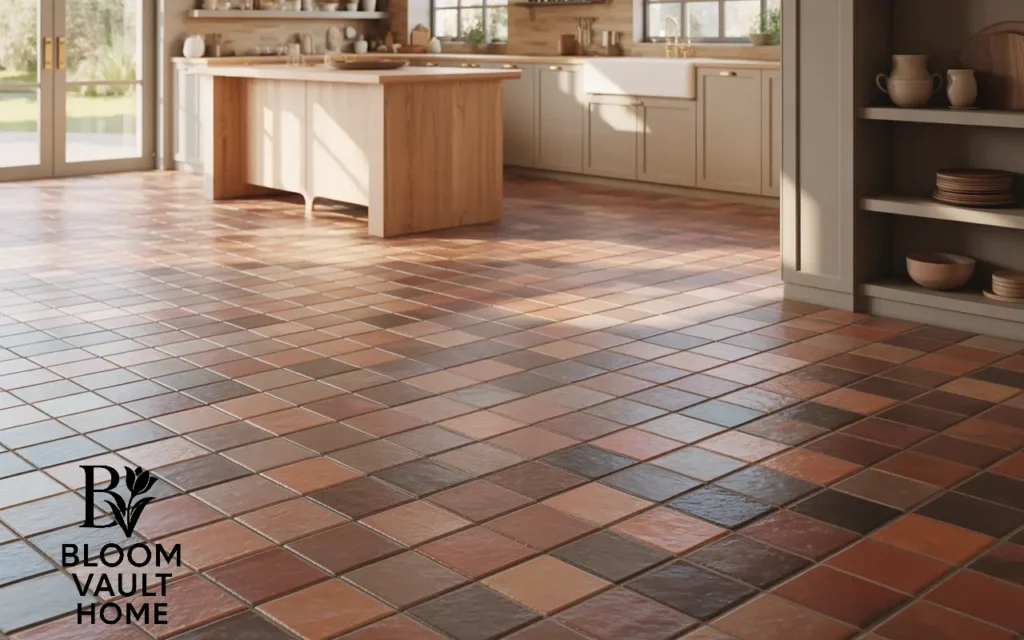
Sometimes, a simple change in angle makes all the difference. Laying terracotta tiles on a diagonal instantly expands visual space, making small or narrow kitchens feel roomier. This layout introduces subtle movement, guiding the eye outward and breaking up traditional gridlines.
Whether you’re working with square tiles or longer planks, a diagonal arrangement adds a sense of elegance and dynamism without introducing a new material or color.
Pro Tips
- Best suited for smaller kitchens, galley layouts, or awkward footprints.
- Use uniform sized tiles for cleaner lines and a cohesive diagonal flow.
- Keep grout lines consistent and neat to maintain the optical illusion.
- Pair with light cabinetry to further open up the space visually.
- Use baseboards in similar tones to keep the floor grounded.
Key Style Elements
- Terracotta tiles laid at 45° angle from the wall
- Enhances sense of space in compact or narrow kitchens
- Subtle directional movement adds sophistication
- Works well with traditional or transitional cabinetry
- Minimizes boxy appearance of small spaces
- Complements both matte and glossy terracotta finishes
- Grout lines create visual rhythm and dimension
- Ideal for understated yet stylish upgrades
13. Radiant Heating Under Terracotta
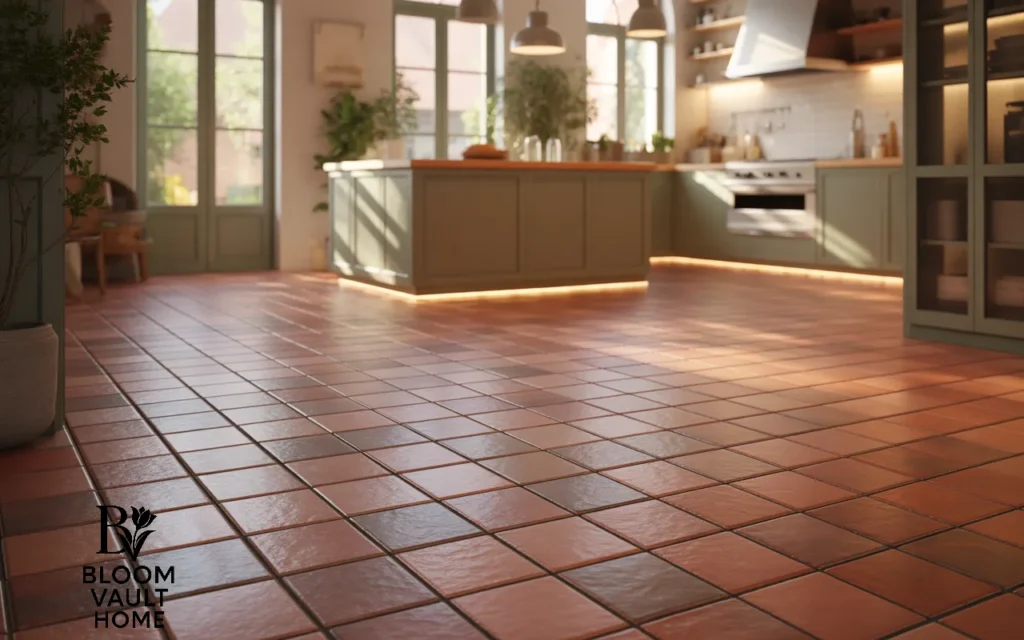
Terracotta isn’t just beautiful it’s practical. Thanks to its natural thermal properties, terracotta tiles retain and distribute heat exceptionally well, making them a perfect match for radiant floor heating systems. This combination delivers not only cozy comfort underfoot during colder months but also an efficient and luxurious upgrade to your kitchen flooring.
Ideal for anyone seeking both style and substance, radiant heated terracotta tiles bring together rustic elegance and modern convenience.
Pro Tips
- Install radiant heating systems before tile placement for optimal heat flow.
- Choose thicker terracotta tiles for better heat retention and even distribution.
- Use a compatible underlayment to enhance energy efficiency.
- Great for open plan kitchens or stone heavy homes where warmth is key.
- Seal tiles properly to maintain their beauty despite temperature changes.
Key Style Elements
- Terracotta tile floor with radiant heating underneath
- Warm, inviting surface ideal for cold climates or winter mornings
- Combines rustic aesthetic with modern technology
- Compatible with matte, glazed, or large format tiles
- Suited to farmhouse, transitional, or luxury rustic kitchens
- Enhances comfort without sacrificing design integrity
- Works best with energy efficient thermostats and smart controls
- Provides even heat with low maintenance durability
14. Terracotta Tiles with Wood Grain Cabinets
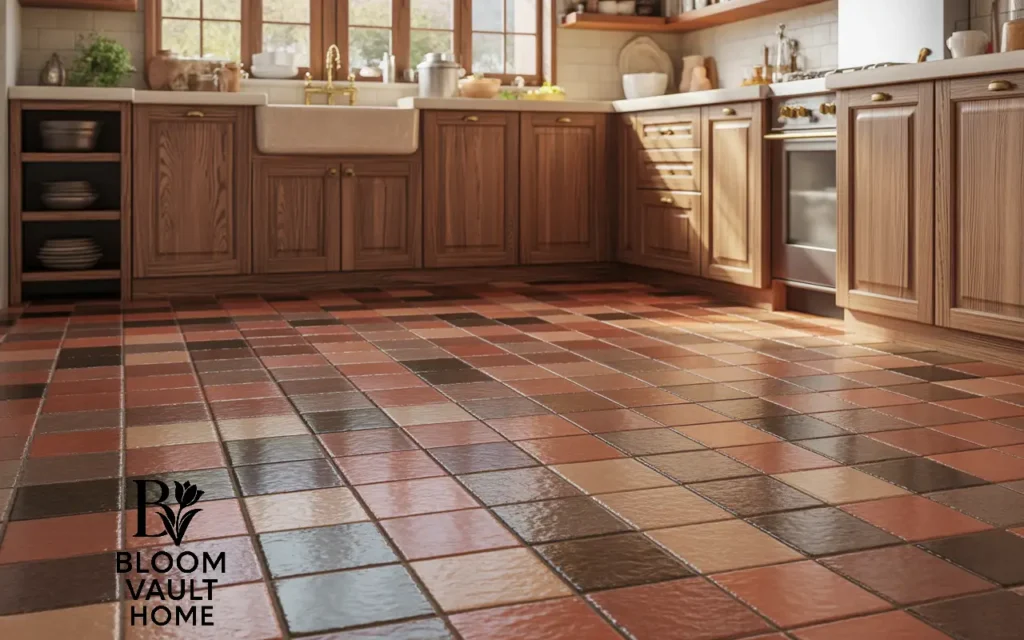
For a kitchen that feels as grounded as it is stylish, pair warm terracotta floor tiles with natural wood grain cabinetry. The combination of earthy clay tones underfoot and rich wood textures above creates a harmonious, nature inspired palette that exudes warmth, calm, and timeless character.
Whether you opt for oak, walnut, or reclaimed wood, this pairing enhances the organic beauty of both materials, making your kitchen feel cozy, welcoming, and authentically lived in.
Pro Tips
- Use mid toned terracotta tiles with lighter or honey toned wood for a balanced look.
- Seal both surfaces to protect against kitchen spills and wear.
- Avoid overly glossy finishes to maintain a natural, earthy vibe.
- Add woven or linen accents to reinforce the organic feel.
- Mix with neutral walls and stone countertops to keep the focus on material contrast.
Key Style Elements
- Terracotta floor tiles in classic rust, burnt orange, or soft clay
- Wood grain cabinetry: oak, walnut, ash, or reclaimed pine
- Ideal for rustic, organic modern, or Japandi style kitchens
- Natural textures create visual and tactile warmth
- Works well with open shelving and handmade décor
- Complements matte black or bronze fixtures
- Inviting, grounded, and effortlessly stylish
- Great for family homes and open plan spaces
15. White Kitchen with Terracotta Flooring
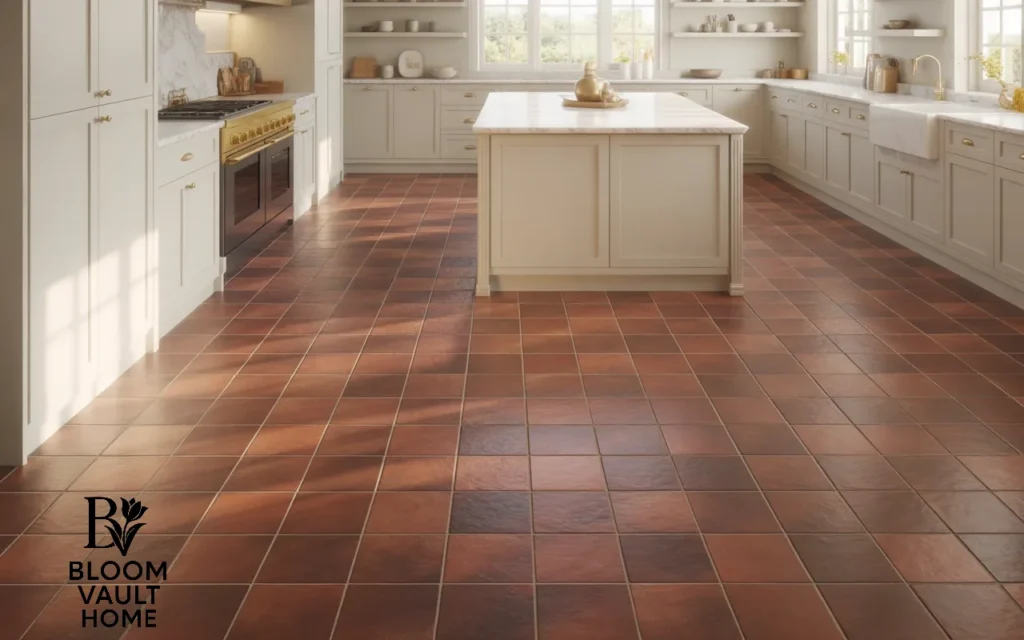
There’s no better way to let your flooring shine than by setting it against a white or off white kitchen backdrop. Rich terracotta tiles immediately pop beneath crisp cabinetry, offering contrast, character, and warmth without overwhelming the space. The effect is both timeless and effortlessly stylish, bridging the gap between modern minimalism and rustic charm.
This combination works beautifully in Mediterranean, farmhouse, and transitional interiors making the terracotta floor a true statement piece.
Pro Tips
- Use matte or lightly textured terracotta to ground the clean lines of a white kitchen.
- Add brass or wooden hardware for warmth and visual interest.
- Balance the room with open shelving or natural wood accents.
- Use warm lighting to enhance the clay tones in the flooring.
- Great for small kitchens white reflects light, and terracotta adds coziness.
Key Style Elements
- Matte or traditional terracotta tile flooring
- White or off white cabinetry and walls
- Brass, bronze, or wood hardware accents
- Ideal for modern farmhouse or Mediterranean kitchens
- High contrast for visual drama
- Works well with butcher block, marble, or quartz countertops
- Adds earthy balance to sleek, modern settings
- Inviting, bright, and grounded aesthetic
16. Soft Pink Toned Terracotta Tiles
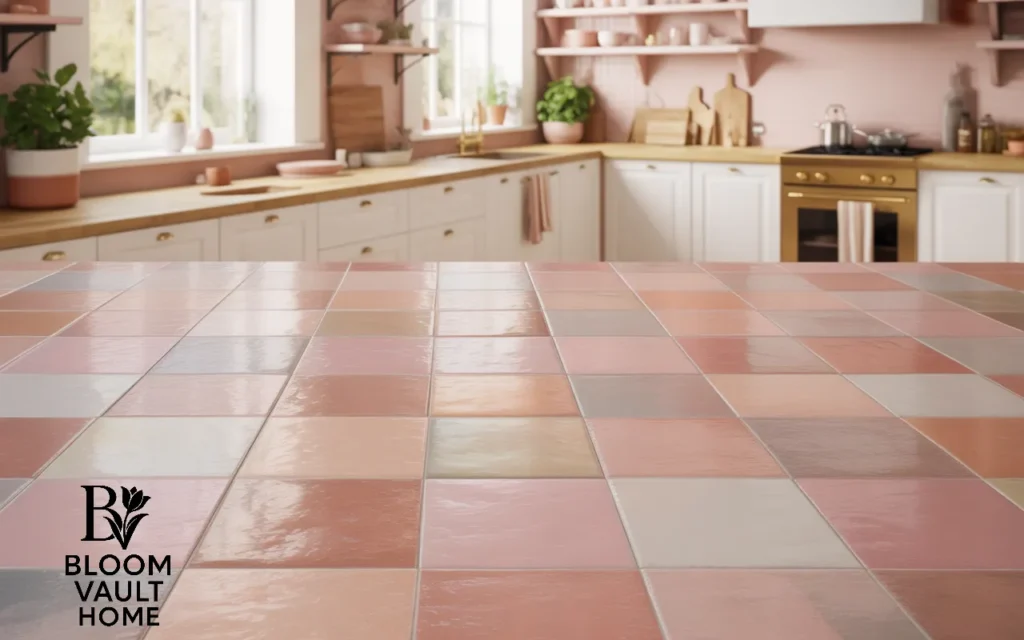
For a subtler, more contemporary spin on terracotta, try tiles with blush or rosy undertones. These soft pink toned terracotta floors introduce warmth without the intensity of traditional red clay, making them perfect for kitchens aiming for a feminine, airy, or Scandinavian inspired look.
Pair them with light woods, muted walls, and brass accents for a floor that feels elegant, fresh, and modern.
Pro Tips
- Use pink toned tiles in spaces with lots of natural light for a warm glow.
- Pair with white oak or light ash cabinetry for a cohesive look.
- Matte finishes enhance the soft, natural aesthetic.
- Accent with cream, blush, or gold for a cohesive palette.
- Seal the tiles properly to prevent fading over time.
Key Style Elements
- Terracotta tiles in soft blush, rose, or dusty pink hues
- Best with light wood or white cabinetry
- Ideal for modern, boho, or Scandi style kitchens
- Works well in both small and open concept kitchens
- Complements soft metallic fixtures like brass or rose gold
- Light grout for a seamless finish
- Adds warmth with a delicate touch
- A sophisticated twist on traditional terracotta
17. Antique Style Terracotta with Worn Edges
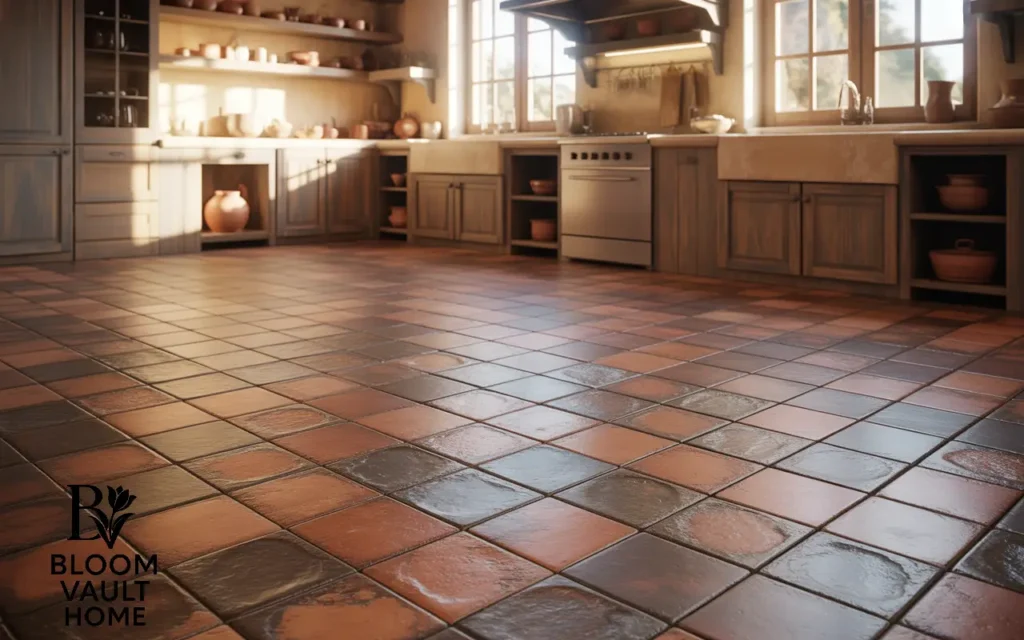
Embrace the charm of a bygone era with distressed or tumbled terracotta tiles that feature soft, irregular edges and subtle color variations. These antique style tiles instantly evoke the feel of a centuries old European cottage or Tuscan farmhouse, infusing your kitchen with timeworn character and cozy elegance.
Ideal for heritage homes or rustic inspired renovations, this style delivers texture, warmth, and a lived in authenticity that only improves with age.
Pro Tips
- Use hand tumbled or reclaimed terracotta for a truly aged appearance.
- Pair with vintage style fixtures like brass taps or aged copper hardware.
- Seal lightly to preserve the raw beauty while protecting from stains.
- Mix in antique furniture or reclaimed wood accents for cohesive styling.
- Use soft ambient lighting to highlight the tile’s unique imperfections.
Key Style Elements
- Tumbled or distressed terracotta tiles
- Worn edges, uneven surfaces, and natural color variation
- Works well in cottage, rustic, Mediterranean, and shabby chic kitchens
- Complements aged wood cabinetry and vintage decor
- Earthy, nostalgic ambiance with timeless appeal
- Often handmade or reclaimed materials
- Pairs beautifully with stone countertops and farmhouse sinks
- Adds soulful warmth and storytelling texture
18. Terracotta Floor with Open Shelving
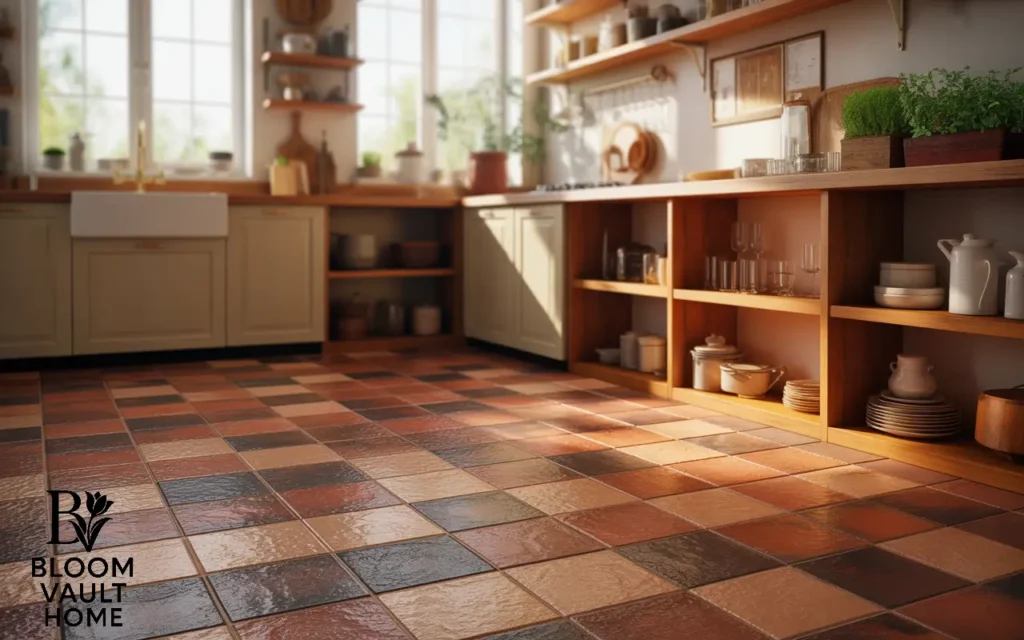
Show off the natural beauty and texture of terracotta flooring by combining it with open shelving and minimalist cabinetry. This approach draws the eye downward, allowing the warm, earthy tones of the floor to become the centerpiece of the space. Open shelving also enhances airflow and visual space, making your kitchen feel more open, light, and welcoming.
This combo is perfect for bohemian, rustic modern, or Mediterranean inspired interiors where material contrast and openness are key.
Pro Tips
- Use floating wood shelves to echo the warmth of the floor.
- Keep cabinetry minimal opt for flat fronts or low profile drawers.
- Add woven baskets, pottery, or glass jars to style open shelves naturally.
- Match grout tones with shelving materials for visual flow.
- Ideal for small kitchens where openness and cohesion matter.
Key Style Elements
- Terracotta tile flooring as the anchor design feature
- Open wood or metal shelving in natural tones
- Minimal cabinetry with neutral finishes
- Ideal for airy, relaxed kitchens with organic elements
- Complements natural textures like rattan, linen, or reclaimed wood
- Enhances light flow and creates a sense of space
- Blends seamlessly with farmhouse or Mediterranean aesthetics
- Keeps the focus on flooring while offering functional design
19. Indoor Outdoor Continuity
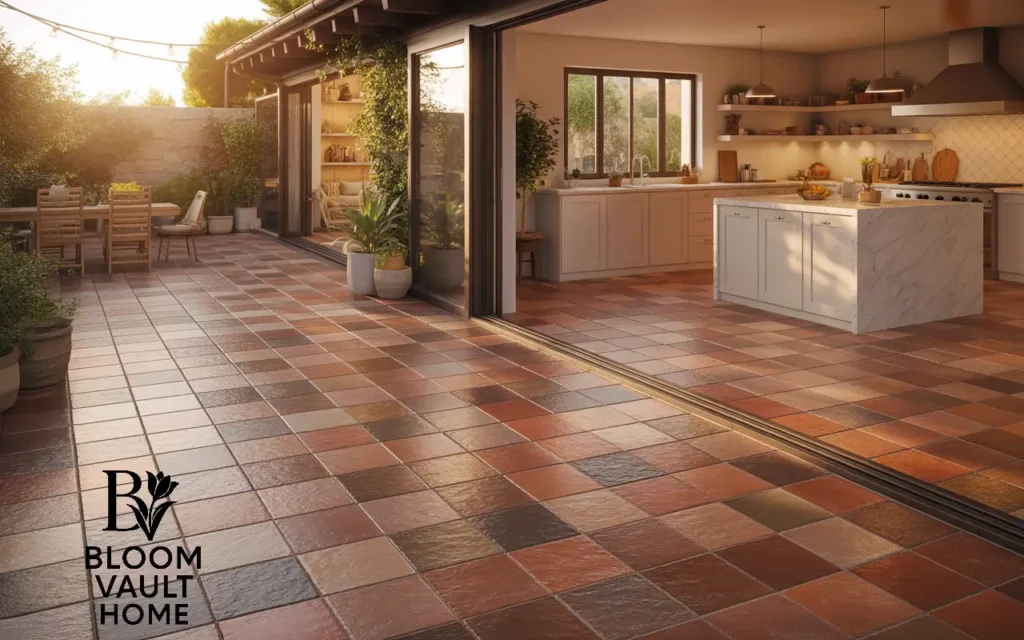
Blurring the lines between indoors and outdoors? Extend your terracotta kitchen flooring out onto a patio or alfresco dining area to create seamless flow and visual harmony across both spaces. This approach is perfect for homes with sliding glass doors or large openings where cohesive flooring enhances the feeling of openness and natural connection.
It’s especially effective in warm climates or Mediterranean style homes where indoor outdoor living is a way of life.
Pro Tips
- Choose frost resistant terracotta tiles if your patio is exposed to the elements.
- Use consistent tile size and grout color inside and outside for seamless transition.
- Install weather resistant sealers for longevity and protection.
- Pair with large glass doors or accordion windows to visually extend the kitchen.
- Add potted herbs, outdoor rugs, and bistro seating for a complete look.
Key Style Elements
- Matching terracotta tile from kitchen to patio
- Suitable for Mediterranean, boho, and rustic modern homes
- Enhances natural light and sense of spaciousness
- Ideal for indoor outdoor entertaining and open plan designs
- Connects kitchen to garden or courtyard seamlessly
- Earthy warmth that grounds both interiors and exteriors
- Functional, stylish, and organically beautiful
- Elevates your lifestyle with a resort style ambiance
20. Minimalist Kitchen with Terracotta Contrast
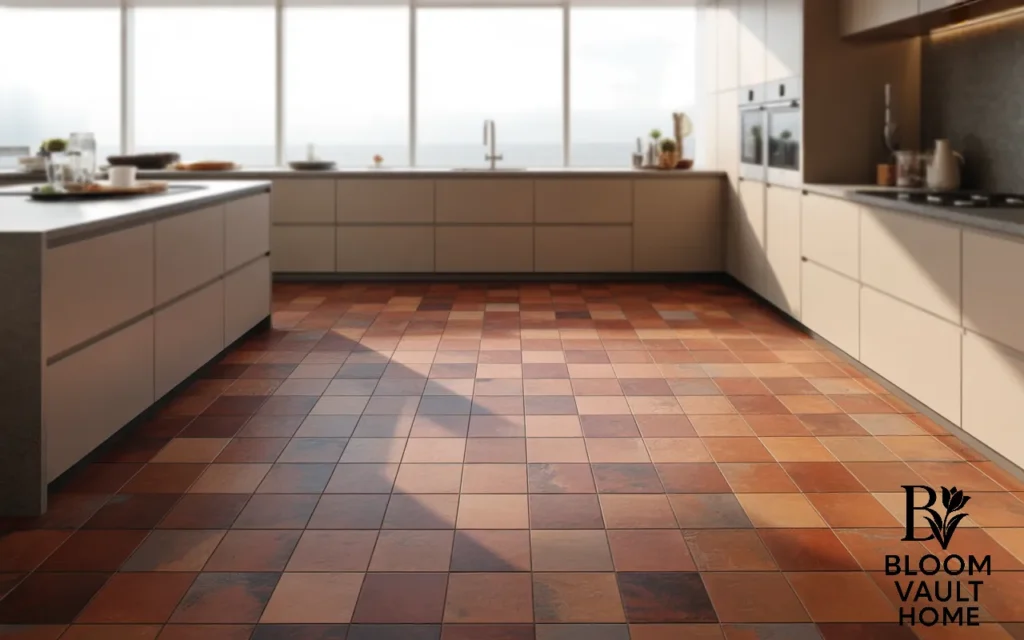
In a kitchen defined by sleek cabinetry, handle less drawers, and monochrome tones, introducing terracotta flooring provides the perfect counterbalance. The natural texture and rich color of terracotta adds depth, warmth, and organic interest to an otherwise ultra modern and minimal space.
It’s a refined way to soften harsh lines and sterile surfaces, infusing your kitchen with quiet personality without compromising its clean aesthetic.
Pro Tips
- Opt for large format or matte finished terracotta tiles to match the minimalist vibe.
- Use minimal grout lines to maintain a seamless look.
- Keep color palette muted pair terracotta with whites, blacks, or soft taupes.
- Add under cabinet lighting to highlight the flooring’s texture.
- Ideal for urban homes, lofts, or Scandinavian minimalist kitchens.
Key Style Elements
- Matte or honed terracotta flooring in red, clay, or blush tones
- Flat panel, handle less cabinetry in white, gray, or wood grain
- Minimalist hardware and clean lines
- Contrasting textures: smooth cabinets + tactile floor
- Works well with concrete countertops and brass lighting
- Balances modernity with earthiness
- Organic meets modern design philosophy
- Quiet luxury and visual warmth without clutter
21. Terracotta Tiles with Patterned Rugs
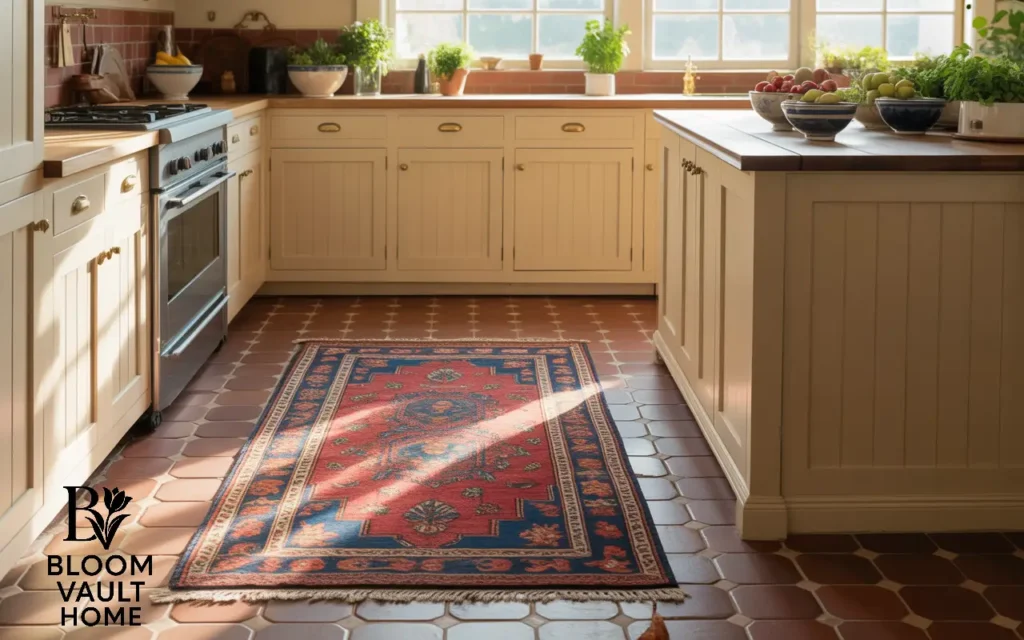
Give your terracotta flooring a stylish upgrade by layering vintage or patterned rugs over the tiles. This technique softens the hard surface underfoot and introduces color, pattern, and cozy charm into your kitchen. It’s especially effective in galley style or long open kitchens where runners help guide the eye and break up expanses of flooring.
Perfect for eclectic, farmhouse, or bohemian kitchens, this combo blends function with personality.
Pro Tips
- Choose washable or indoor/outdoor rugs for easy maintenance.
- Use rug pads to keep runners in place on smooth tile surfaces.
- Opt for Persian, kilim, or Moroccan style rugs to add global flair.
- Layer textures by combining rugs with open wood shelving or natural fibers.
- Play with rug lengths to define prep zones or walkways.
Key Style Elements
- Warm terracotta tile flooring as the base
- Decorative or vintage inspired rugs or runners
- Ideal for farmhouse, boho, eclectic, and transitional kitchens
- Adds comfort, softness, and visual layering
- Enhances narrow or galley style kitchen layouts
- Easy to switch with the seasons or mood
- Introduces vibrant color or subtle pattern over earthy tones
- Practical, stylish, and full of character
22. Terracotta with Olive Green Cabinets
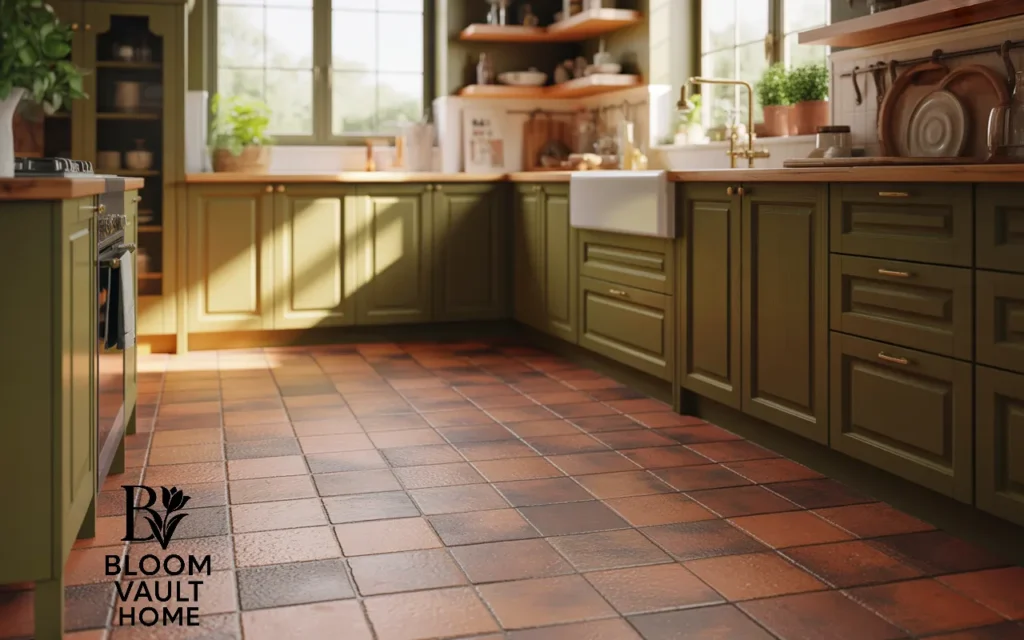
Pairing terracotta flooring with olive green cabinetry is a match made in earthy heaven. The warm, sunbaked tones of the floor beautifully complement the calming, muted richness of olive green, creating a grounded and harmonious palette. It’s a color story inspired by Mediterranean landscapes and organic design principles.
This on trend combination works well in both modern and rustic kitchens and feels cozy yet elevated.
Pro Tips
- Use brass or matte black hardware to add polish without disrupting the earthy vibe.
- Keep wall colors neutral like cream or soft gray to let the colors shine.
- Add natural stone countertops like soapstone or marble for depth.
- Incorporate plants or herbs to echo the palette’s natural roots.
- Opt for flat front or shaker style cabinets depending on the look (modern vs. classic).
Key Style Elements
- Terracotta tile flooring with matte or rustic finish
- Olive green lower cabinets or island base
- Brass, black, or wood hardware accents
- Complements natural woods, stone, and ceramic accessories
- Works in Mediterranean, rustic modern, or biophilic kitchens
- Earthy, calming, and very on trend
- Rich but not overpowering perfect for cozy yet chic interiors
- Layers of warmth and sophistication in a grounded palette
23. Terracotta Tiles in Narrow Galley Kitchens
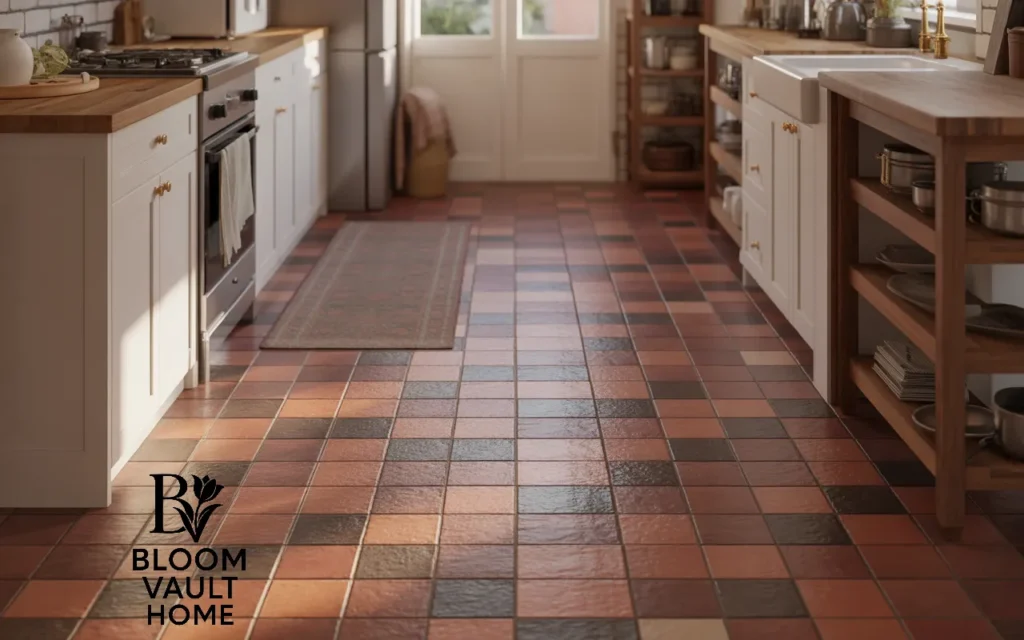
Make the most of a galley kitchen by installing elongated rectangular terracotta tiles that guide the eye and enhance the sense of movement. The warm tones of terracotta bring instant charm and coziness, while the tile’s linear shape adds direction and visual elongation, making the space feel more open and intentional.
This layout not only improves spatial flow but also delivers an elegant, rustic warmth to otherwise compact or utilitarian layouts.
Pro Tips
- Lay tiles in a running bond or staggered pattern to increase visual interest.
- Use narrow grout lines to maintain a seamless, spacious look.
- Complement the flooring with minimal cabinetry and light reflective surfaces.
- Install under cabinet lighting to highlight the warm tile tones.
- Ideal for city apartments or older homes with classic kitchen footprints.
Key Style Elements
- Elongated terracotta tile (rectangular plank style)
- Laid parallel or diagonally to the kitchen’s length
- Perfect for galley or corridor style kitchens
- Creates a sense of depth and linear movement
- Adds rustic texture and inviting color to small spaces
- Works well with both light and dark cabinetry
- Enhances functionality without sacrificing style
- Cozy, efficient, and full of architectural charm
Benefits of Terracotta Kitchen Flooring
Terracotta isn’t just a beautiful choice it’s also practical. Here’s why homeowners and designers are loving it in 2026:
- Natural Insulation: Retains warmth and helps regulate indoor temperature.
- Slip Resistant: The rough surface of unglazed tiles offers better grip.
- Durable and Long Lasting: Properly sealed terracotta can last for decades.
- Timeless Appeal: Works with both vintage and contemporary designs.
- Eco Friendly: Made from natural clay with minimal processing.
Styling Tips for Terracotta Kitchen Floors
To make the most of your floor:
- Seal unglazed tiles to prevent staining and moisture damage.
- Choose complementary tones like cream, olive, charcoal, or soft blues for walls and cabinetry.
- Use layered lighting (pendants, sconces, under cabinet) to highlight the natural depth of the tiles.
- Mix old and new terracotta floors work equally well with antique details and modern silhouettes.
FAQs About Terracotta Kitchen Floors
Q1. Are terracotta floors hard to maintain in a kitchen?
Not if sealed properly. Regular cleaning with pH neutral solutions and resealing every few years keeps them in top shape.
Q2. Do terracotta floors stain easily?
Unglazed terracotta is porous, so sealing is essential. Glazed options are more stain resistant and easier to maintain.
Q3. Can I use terracotta tiles in a modern kitchen?
Absolutely. Pair with sleek cabinetry, clean lines, and modern fixtures to create a stunning contrast.
Q4. Are terracotta floors cold underfoot?
Terracotta holds warmth better than many materials and works wonderfully with radiant heating for added comfort.
Q5. How do I choose the right grout color for terracotta?
For subtle continuity, go with terracotta or beige grout. For contrast and definition, use dark gray or espresso grout.
Final Thoughts
If you want your kitchen to feel grounded, cozy, and full of character, a terracotta floor is a perfect place to start. Whether you’re renovating a Mediterranean villa or warming up a modern apartment, this clay based material brings timeless texture and rich tone to your everyday life.
From herringbone patterns to large format tiles, these 23 perfect terracotta kitchen floor ideas show that earthy elegance will always have a place underfoot.
Ready to lay the foundation for a kitchen you’ll love for decades? Let terracotta lead the way tile by tile.