
30 Eye Catching Olive Green Kitchen Designs to Inspire Your Next Remodel
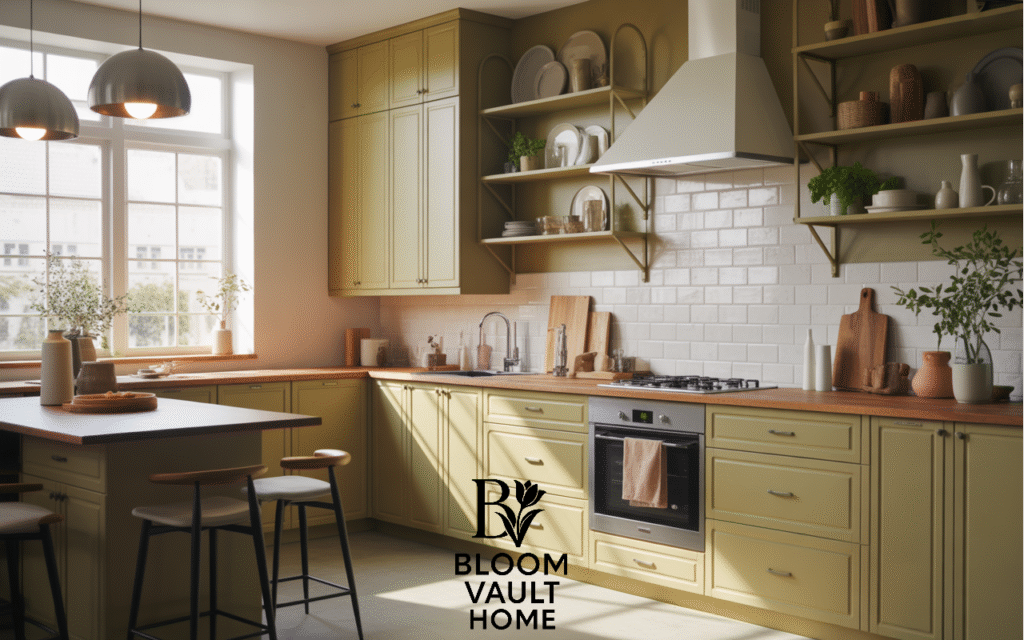
In 2025, eye catching olive green kitchens have taken center stage in interior design and for good reason. This warm, earthy hue strikes the perfect balance between modern sophistication and timeless charm. It’s calming, rooted in nature, and versatile enough to work in both contemporary and traditional spaces.
From sage undertones to deep, moody olives, this color introduces personality without overwhelming the senses. Whether used on cabinets, walls, backsplashes, or accents, olive green invites warmth, harmony, and a subtle pop of color that elevates your entire kitchen space.
Let’s explore 30 jaw dropping olive green kitchen ideas that prove this color belongs in your next remodel.
1. Olive Green Shaker Cabinets with Gold Hardware
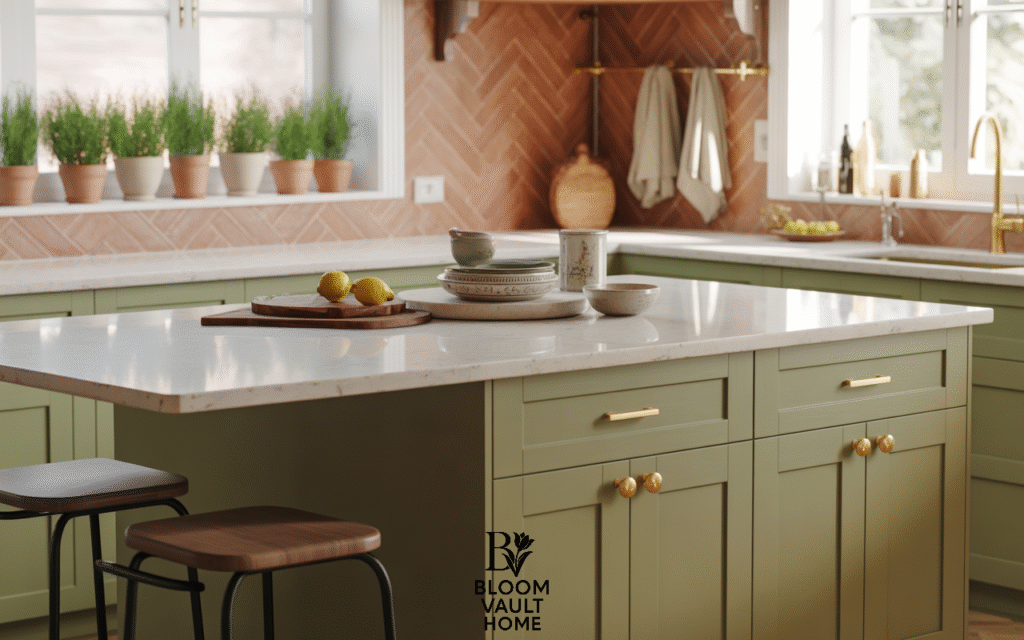
A kitchen wrapped in muted olive shaker fronts instantly feels grounded yet sophisticated, striking the sweet spot between classic charm and modern luxury. The earthy green hue reads almost as a neutral, letting the crisp Shaker lines stay visually prominent while still softening the overall palette. When you introduce brushed gold pulls (or slimline brass T bars) the room gains a subtle glimmer that elevates the cabinetry without tipping into glare or gaudiness.
This pairing sits perfectly in transitional homes: it respects traditional millwork profiles but refreshes them for contemporary living, creating an inviting space that feels curated rather than cookie cutter. Balance the warmth by layering in creamy quartz or marble countertops, a soft white subway backsplash, and open wood shelving.
Stainless appliances disappear into the background, while matte black fixtures or a champagne bronze faucet add just enough contrast to keep the eye moving. The result? A timeless yet on trend kitchen that boosts resale value and delivers daily delight.
Pro Tips
- Sample in natural light first: Paint a large poster board with your chosen olive shade and observe it throughout the day greens shift dramatically with lighting.
- Mix metal accents: Add a few black or bronze accessories (think pendant lights or bar stool legs) so the gold hardware feels intentional, not overpowering.
- Go for a satin or matte finish: High gloss can cheapen the shaker profile; matte keeps it sophisticated and hides fingerprints.
- Use concealed soft close hinges: They preserve the clean frontal lines and enhance premium feel.
- Balance with light surfaces: Pair with off white or pale beige countertops so the cabinetry doesn’t read too heavy.
Key Style Elements
- Recessed panel shaker doors with 3″ rail and stile width
- Muted olive paint (between sage and moss on the color scale) in a low sheen finish
- Brushed or satin gold pulls, knobs, and appliance handles
- Creamy quartz or honed marble worktops with subtle veining
- White or soft taupe subway tile backsplash laid in a classic 1⁄3 offset brick pattern
- Warm under cabinet LED strips to bring out green depth at night
- Light European oak or whitewashed plank flooring for airy contrast
- Uncluttered open shelving or glass front uppers to break up the solid color blocks
2. Glossy Olive Green Subway Tile Backsplash
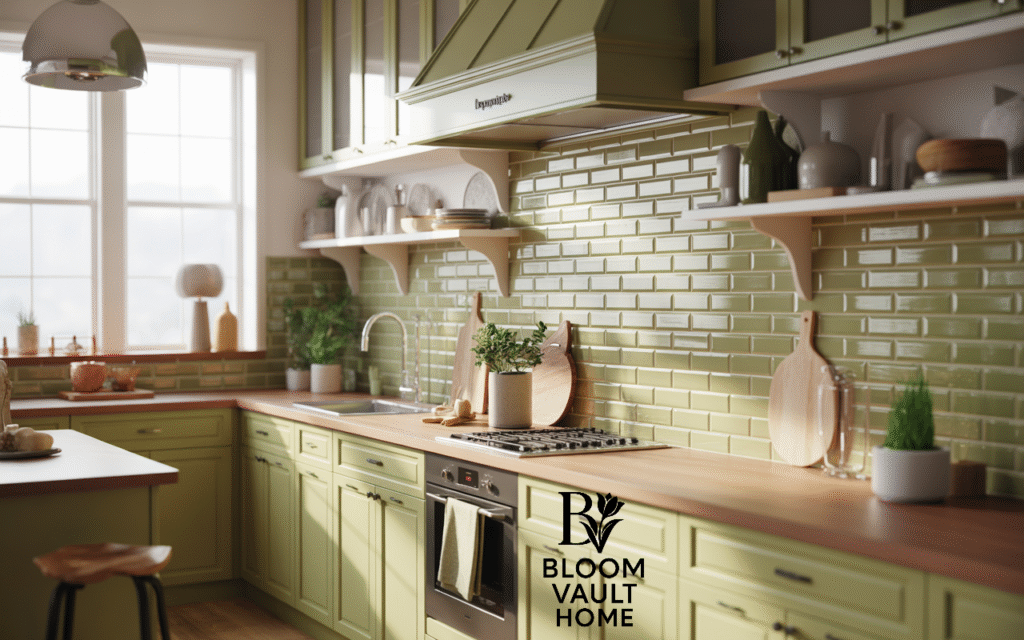
A glossy olive green subway tile backsplash is the perfect design move for homeowners looking to introduce depth and richness without overwhelming their kitchen. These tiles bring a modern edge to rustic, farmhouse, or even eclectic spaces, offering a sleek, reflective finish that plays beautifully with both natural and artificial light. The rich green hue adds organic warmth, echoing natural surroundings while still feeling sophisticated.
Whether you go for a traditional horizontal stack, a vertical lay for height, or a herringbone pattern for flair, the glossy finish draws the eye and adds visual interest without requiring bold color elsewhere.
Especially suited for smaller kitchens or galley layouts, these ceramic tiles amplify light, making the space feel more open and welcoming. They work beautifully behind open shelving, between dark lower cabinets and light uppers, or as a full height wall behind the stove. Paired with warm wood countertops or white quartz, the green backsplash becomes a striking focal point that elevates the entire kitchen.
Pro Tips
- Opt for beveled edges for extra texture: The slight angles add depth and dimension to the reflective surface.
- Use light grout for contrast: A soft grey or off white grout will define each tile and enhance the pattern.
- Consider a full wall backsplash: Extend the tile to the ceiling behind the range hood for a high impact feature wall.
- Seal grout properly: Glossy tiles repel water, but light grout needs sealing to stay clean and bright.
- Pair with warm metals: Brushed gold or antique bronze fixtures complement olive green without clashing.
Key Style Elements
- 3″x6″ or 4″x12″ glossy ceramic subway tiles in a deep olive tone
- Light gray, ivory, or beige grout for clean definition
- Horizontal stack, vertical stack, or herringbone patterns for visual variation
- Matching trim pieces or pencil liner tiles for a polished edge
- Natural wood open shelving to contrast the shine
- LED under cabinet lighting to enhance reflectivity
- Coordinated earth tone accessories (terracotta pots, green dishware, wooden utensils)
- Matte black or brushed brass outlets and switches for a cohesive finish
3. Matte Olive Green Lower Cabinets & White Uppers
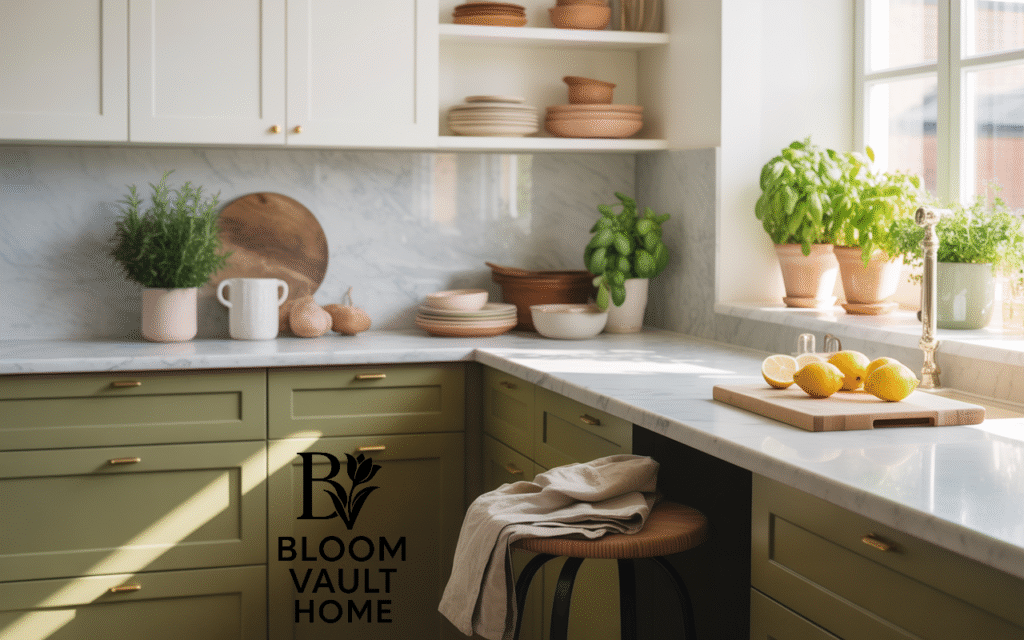
Matte olive green lower cabinets paired with crisp white uppers strike the perfect balance between grounded sophistication and airy freshness. This two tone cabinetry approach is ideal for modern, Scandinavian, and transitional kitchens, offering a clean and composed look that still brings personality.
The olive green base adds an earthy richness to the lower half of the kitchen, grounding the space and hiding everyday wear and tear. Meanwhile, white uppers reflect light and visually expand the room, making it feel taller and more spacious especially important in smaller or galley style kitchens.
This design strategy allows you to enjoy color without overwhelming the entire space. The matte finish on the olive cabinets offers a velvety, contemporary feel, minimizing glare and giving a calm, organic vibe. Pair this cabinet scheme with a white or marble countertop and warm wood or brushed gold hardware to complete the high contrast yet harmonious look.
The combination is highly photogenic and design forward perfect for both functionality and social media appeal.
Pro Tips
- Use the 60/40 color rule: Keep 60% of your cabinetry olive (lowers) and 40% white (uppers) for a balanced visual effect.
- Add a matching olive toe kick and side panels: It gives a custom, built in appearance.
- Keep upper cabinets minimal: Consider flat fronts or glass panels to maintain openness.
- Use soft close drawers and hinges: They complement the high end feel of matte finishes.
- Integrate lighting under uppers: LED strip lighting helps highlight the contrast and makes the workspace functional.
Key Style Elements
- Matte olive green base cabinets with clean, slab or shaker fronts
- Bright white upper cabinets in satin or semi gloss finish
- Natural or marble look quartz countertops for a seamless color flow
- Minimalist gold, black, or stainless steel hardware
- Subway or zellige tile backsplash in white or pale beige
- Light wood or neutral toned flooring (like white oak or greige tile)
- Sleek under cabinet lighting for both aesthetics and utility
- Optional open shelving or floating white shelves to break up cabinetry and add interest
4. Olive Green Kitchen Island as a Focal Point
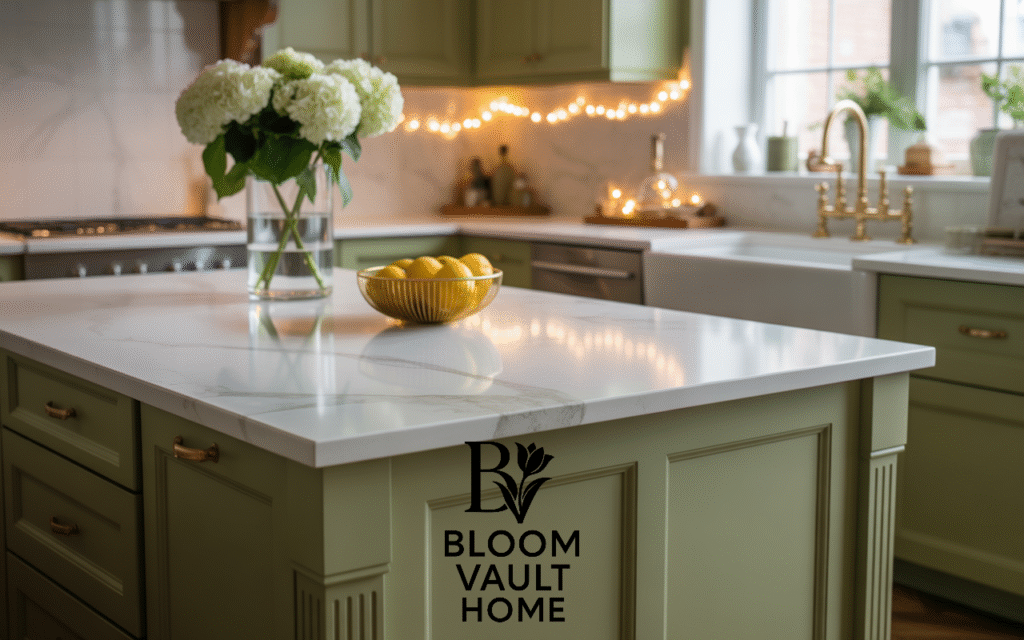
If you’re craving color but hesitant to go all in, an olive green kitchen island is the perfect compromise. By painting just the island in a rich olive tone and keeping the perimeter cabinetry white or natural wood, you create an elegant focal point that draws the eye without overwhelming the space.
This subtle contrast adds depth, character, and a designer touch ideal for open concept layouts where the island serves as both a functional workspace and a visual centerpiece.
The olive green island anchors the kitchen, bringing a grounded, organic feel that complements a wide variety of materials from marble countertops to butcher block and even concrete. It also pairs beautifully with a range of hardware finishes, including matte black, brushed brass, or antique bronze. Whether your style leans farmhouse, modern rustic, or transitional, this design approach lets you experiment with color in a smart, timeless way.
Pro Tips
- Use a durable paint or finish: Kitchen islands see more wear opt for a scrub resistant matte enamel or cabinet grade lacquer.
- Tie in matching accents: Add olive green bar stools, dishware, or decorative vases nearby for a cohesive look.
- Highlight the island with pendant lighting: Warm metallic fixtures above the island enhance the color and serve as jewelry for the space.
- Contrast with a light countertop: White quartz or light butcher block balances the deeper green tone.
- Install outlets discreetly: Place them at the ends or under the overhang to keep the clean lines intact.
Key Style Elements
- Rich matte or satin olive green paint on island base cabinetry
- Crisp white or light wood perimeter cabinets for contrast
- Coordinating countertop materials like Calacatta quartz, white marble, or light wood
- Oversized or duo pendant lights above the island for symmetry and focus
- Bar seating with natural materials (leather, rattan, wood) to warm up the look
- Brushed metal or matte black hardware for accentuation
- Wide plank wood or stone look tile flooring for textural balance
- Under island storage and drawers for maximum functionality
5. Olive Green and Brass Accents
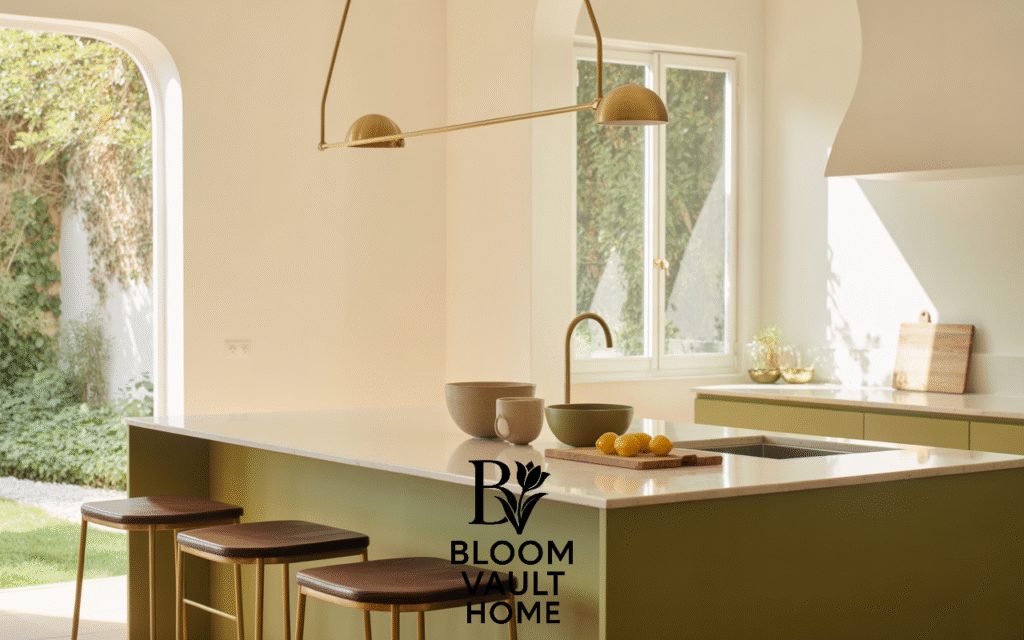
When it comes to elevating your kitchen’s aesthetic, the combination of olive green cabinetry and brass accents is a match made in design heaven. Olive brings warmth and grounded energy to the space, while brass adds a luxurious, slightly vintage sheen that instantly feels upscale without being flashy. Together, they strike a balance between earthy and elegant, traditional and trendy perfect for those who want their kitchen to feel thoughtful and curated.
This pairing works beautifully across design styles from mid century modern to modern farmhouse to eclectic. Brass elements such as cabinet handles, drawer pulls, faucets, and pendant lighting offer just the right amount of contrast against the deep green tones, catching light and creating visual interest. For a cohesive finish, echo the brass tones in other areas of the kitchen like open shelving brackets, range hood details, or even barstool hardware.
Pro Tips
- Choose a brushed or aged brass finish: It’s softer, more timeless, and doesn’t show fingerprints like polished brass.
- Mix metals carefully: If mixing, limit it to two finishes like brass and black to avoid a cluttered look.
- Repeat brass at least three times: This keeps the space feeling cohesive and intentional.
- Install dimmable brass lighting: Warm LED lights can enhance the rich green and golden hues in the kitchen.
- Balance with neutral surfaces: White, cream, or wood countertops and backsplashes prevent the color metal duo from feeling too busy.
Key Style Elements
- Matte or satin olive green base or full height cabinets
- Brushed brass or antique gold hardware and fixtures
- Statement brass faucets with a sleek or vintage silhouette
- Brass pendant lights or sconces over islands or open shelves
- Soft white or warm marble countertops for neutral contrast
- Light wood accents (open shelving, flooring, or stools) to soften the metallics
- Subtle decorative accessories like brass utensil holders or framed art with gold edging
- Minimalist cabinet door styles (shaker or slab) to keep focus on materials and finishes
6. Floor to Ceiling Cabinets for Olive Green Kitchen
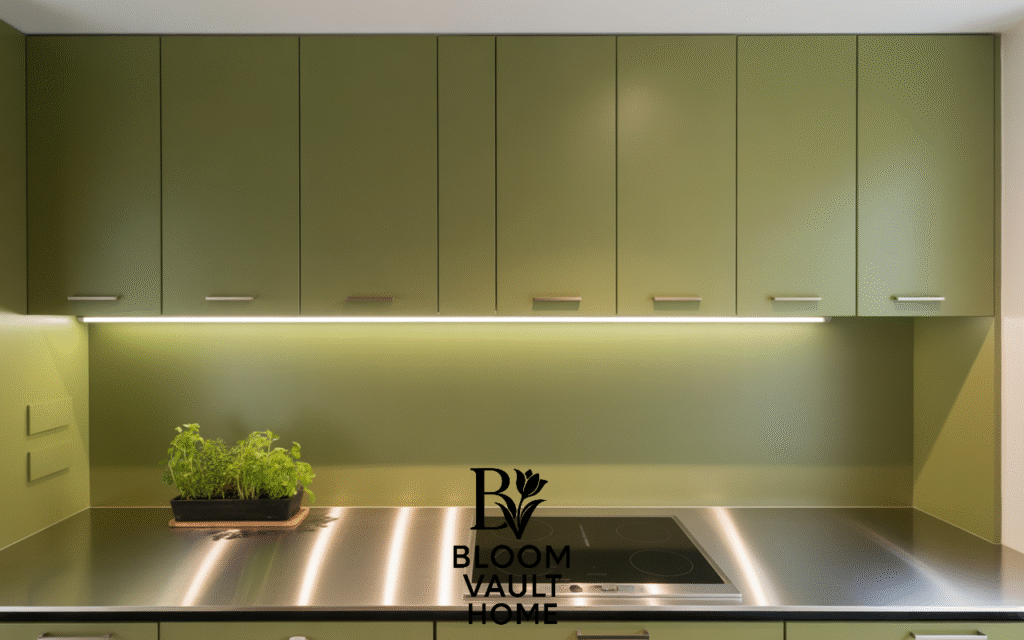
For those ready to make a bold and unforgettable statement, floor to ceiling olive green cabinets offer a dramatic, high impact design choice that oozes sophistication. This immersive approach transforms cabinetry from simple storage into an architectural focal point especially effective in open concept kitchens where walls are limited, and cabinetry serves as both form and function. The rich, natural green tone wraps the space in warmth while offering a timeless color that feels grounded, elegant, and surprisingly versatile.
Full height cabinetry maximizes vertical space, making the kitchen feel taller and more cohesive. When done in olive green, it adds depth without overwhelming, especially when paired with warm wood tones, minimalist hardware, and soft lighting. Whether you choose flat panel for a sleek modern look or shaker style for a more classic feel, the continuity of color creates a seamless and visually calming backdrop that enhances everything around it from islands to artwork.
Pro Tips
- Incorporate integrated appliances: Panel ready fridges and dishwashers keep the color flow uninterrupted.
- Break up the color with open shelves or glass fronts: This lightens the look and adds visual relief.
- Add concealed storage above eye level: Perfect for seasonal or less used items without breaking the aesthetic.
- Use matte finishes for a more refined look: Avoid gloss, which can reflect too much and diminish the richness of olive.
- Balance with light floors and ceilings: Helps prevent the space from feeling too enclosed or heavy.
Key Style Elements
- Full height cabinets in matte or satin olive green paint or lacquer
- Tall pantry towers and appliance garages for a built in, streamlined effect
- Integrated handles or slimline brass hardware for a minimalist, designer edge
- Natural or white countertops for contrast and visual breathing room
- Open shelving or ribbed glass cabinet doors to vary textures and break up solid surfaces
- Light wood or terrazzo flooring to add contrast and keep the room feeling open
- Subtle recessed or under cabinet lighting to highlight cabinetry depth
- Cohesive color palette in adjacent spaces (living/dining) to enhance flow in open layouts
7. Olive Green and Wood Fusion
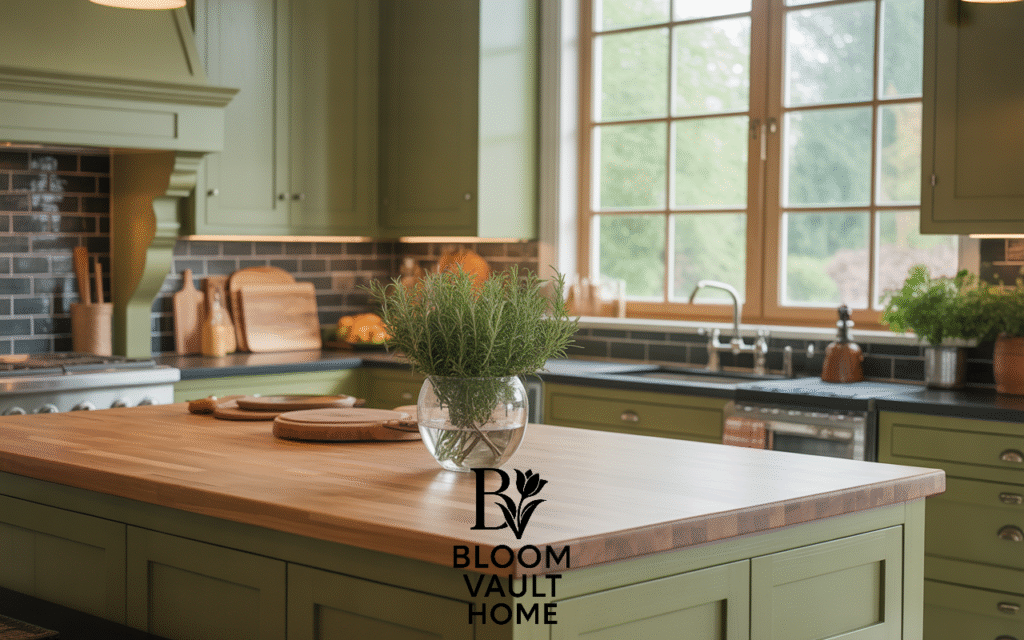
Blending olive green cabinetry with natural wood elements is the ultimate way to bring nature indoors. This earthy fusion feels calm, timeless, and effortlessly welcoming perfect for homeowners who value organic textures and warm, grounded interiors. Olive green evokes the lushness of the forest, while real wood whether in floating shelves, butcher block countertops, or exposed ceiling beams adds rustic charm and tactile warmth. Together, they create a harmonious balance that’s both down to earth and design forward.
This combo works beautifully across multiple styles, including Scandinavian, modern farmhouse, rustic, and Japandi. Olive green cabinets set a cozy, refined foundation, while wood tones introduce contrast and softness. Use lighter woods like white oak, maple, or ash for a breezy, minimalist feel, or go with walnut or reclaimed wood for richer character. No matter how you style it, this pairing celebrates texture, tone, and the beauty of raw materials making your kitchen feel like a serene retreat, not just a functional space.
Pro Tips
- Mix wood tones intentionally: Limit to two complementary wood species for a cohesive look.
- Seal butcher block countertops properly: Regular oiling keeps them beautiful and food safe.
- Use open wood shelving sparingly: It’s ideal above coffee stations or as a break between upper cabinets.
- Bring in live plants: They amplify the organic, nature inspired aesthetic and enhance the olive tones.
- Choose a warm toned olive: It will pair better with most natural wood grains than cooler or gray based greens.
Key Style Elements
- Matte or satin olive green base cabinets
- Butcher block or live edge wood countertops (maple, oak, walnut, acacia)
- Floating natural wood shelves or built in open niches
- Wood range hoods or ceiling beams for added texture
- Light toned tile or natural stone backsplashes to soften the contrast
- Black, oil rubbed bronze, or antique brass hardware for earthy grounding
- Warm under cabinet lighting to highlight wood grain and olive depth
- Neutral accessories like linen curtains, ceramic dishware, and woven baskets
8. Two Tone Olive Green and Black Kitchen

For a bold, moody, and undeniably modern kitchen, the combination of olive green cabinetry with black accents delivers a high contrast aesthetic that’s both dramatic and sophisticated. Olive green softens the starkness of black, adding a natural, organic depth, while black injects sleekness and architectural precision. This duo creates a rich visual tension perfect for urban lofts, contemporary homes, and anyone seeking a more daring kitchen palette.
Pair matte olive base or full height cabinets with jet black quartz or soapstone countertops for an edgy yet grounded effect. Incorporate matte black fixtures, such as gooseneck faucets, minimalist hardware, and industrial pendant lights, to reinforce the contemporary mood. To avoid overwhelming the space, balance the dark tones with warm wood flooring, light walls, or a pale tile backsplash. This palette not only photographs beautifully but feels intentional and elevated, turning your kitchen into a bold design statement.
Pro Tips
- Stick to matte finishes: Gloss can cheapen the look go for flat or honed textures for a modern edge.
- Use black sparingly in smaller kitchens: Limit black to countertops, lighting, and hardware if space is tight.
- Add open shelving or glass front cabinets: It helps break up the darkness and keeps the kitchen airy.
- Warm it up with texture: Think wooden stools, linen curtains, or clay pottery to soften the intensity.
- Install layered lighting: Combine task and ambient lights to prevent the space from feeling too dark at night.
Key Style Elements
- Matte olive green cabinetry (slab or shaker style)
- Black quartz, granite, or soapstone countertops
- Matte black hardware, faucets, and light fixtures
- Neutral or white backsplash to break the darkness (zellige, subway, or stone tile)
- Light oak or walnut flooring for warmth and balance
- Integrated or black stainless appliances for a cohesive look
- Industrial or dome style black pendant lights over the island
- Earthy decorative elements like terracotta planters, reclaimed wood trays, or fabric covered stools
9. Olive Green Tile with Floating Wood Shelves
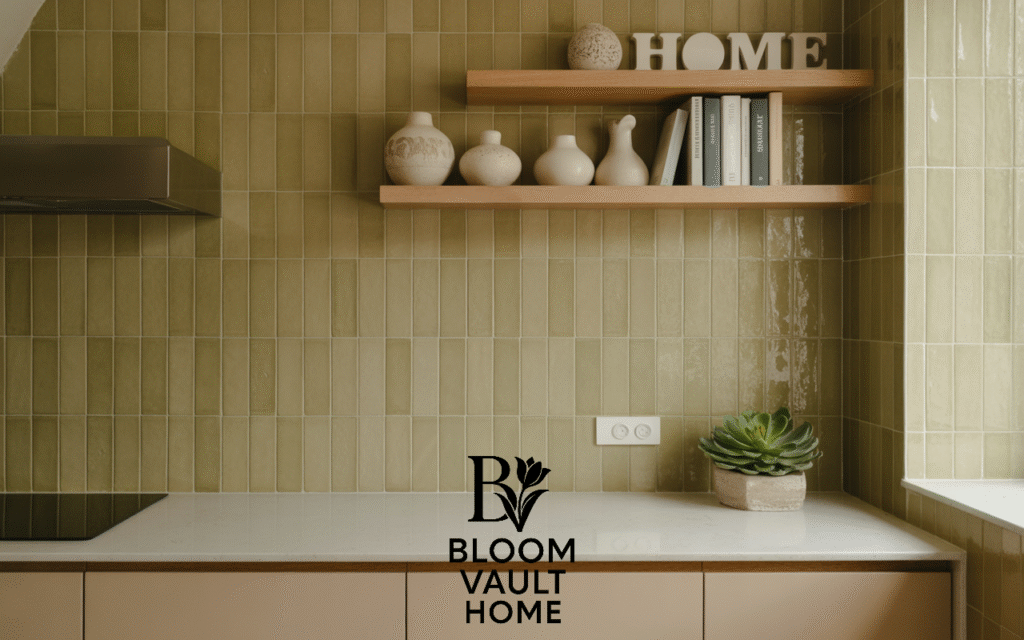
Combining olive green zellige tiles with floating wood shelves delivers a relaxed, bohemian vibe that feels equal parts curated and effortless. Zellige tiles handcrafted with subtle imperfections and glistening glaze bring texture, movement, and organic charm to the kitchen. Their olive green tones echo nature, while floating wood shelves (in oak, walnut, or reclaimed timber) add warmth, airiness, and a casual feel that invites creativity and comfort.
This pairing is perfect for kitchens that aim to feel cozy yet artistic. Instead of bulky upper cabinets, floating shelves keep the walls open and light, showcasing beautiful dishware, plants, or artisanal accessories. The reflective surface of the zellige tiles bounces light beautifully, adding dimension even in smaller or dimly lit spaces. Whether your aesthetic leans boho, rustic, or Mediterranean inspired, this design choice emphasizes individuality and the beauty of natural materials.
Pro Tips
- Use handmade zellige tiles for character: Their irregularities are what make the backsplash feel alive and artisanal.
- Keep shelf styling minimal: Display a mix of ceramics, cookbooks, and greenery to avoid clutter.
- Seal shelves properly: Especially near the stove or sink use a clear matte polyurethane for durability.
- Mix tile shapes and layouts: Consider square, hex, or traditional subway styles depending on your kitchen’s flow.
- Install concealed lighting: LED strip lighting beneath the bottom shelf can highlight the tile’s texture and color.
Key Style Elements
- Olive green glazed zellige or ceramic tiles (2×6 or 4×4 format)
- Floating natural wood shelves in white oak, walnut, or reclaimed pine
- Open wall design in place of upper cabinetry for a breathable, spacious feel
- Earth toned or cream colored grout to enhance tile variation
- Brushed gold, black, or antique bronze hardware for cohesive contrast
- Minimalist styling: handmade ceramics, vintage glassware, or terra cotta pots
- Light colored countertops (quartz, butcher block, or concrete) for visual balance
- Textured rugs, woven baskets, or hanging planters to complete the boho aesthetic
10. Olive Green Pantry Doors
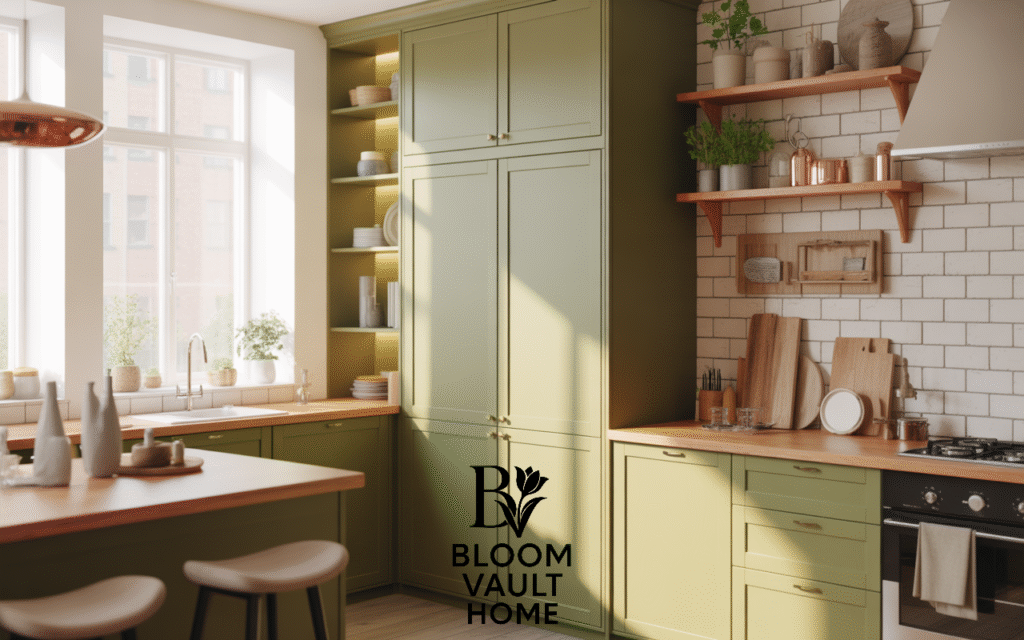
Olive green pantry doors are a subtle yet impactful way to add a high end, cohesive touch to your kitchen. Whether you’re designing a walk in pantry, a built in larder, or a hidden butler’s pantry, painting the doors in olive green brings warmth, depth, and a designer level finish that blends seamlessly with surrounding cabinetry or stands out as a focal point. This earthy hue works beautifully with both modern and traditional kitchens and can either match existing olive green cabinetry or serve as a stylish pop of color against a neutral palette.
Double doors in olive green instantly elevate the look and feel of your pantry entrance especially when paired with elegant hardware like brushed brass knobs, matte black pulls, or even leather straps for a more rustic look. You can go with panel doors for a classic touch, fluted or reeded glass inserts for visibility, or minimalist slab doors for a contemporary edge. The result is a pantry that doesn’t just serve a practical purpose but enhances the entire design flow of your kitchen.
Pro Tips
- Match the trim or casing: Painting the door trim in olive green helps create a seamless built in appearance.
- Add glass inserts if you want visibility: Fluted or frosted glass gives a high end look while hiding clutter.
- Upgrade hardware: Opt for statement handles or knobs in brass, black, or even mixed materials.
- Use soft close or concealed hinges: This keeps the profile clean and luxurious.
- Install a transom or upper panel for added elegance: Especially in taller kitchens, it enhances architectural depth.
Key Style Elements
- Double or single doors in rich olive green, matte or satin finish
- Paneled, slab, or glass insert door styles depending on your kitchen’s aesthetic
- Coordinated hardware in antique brass, black iron, or leather wrapped metal
- Seamless integration with surrounding cabinetry or contrasting for visual interest
- Neutral or natural wood flooring for earthy balance
- Pantry interior with matching olive green shelving or contrasting white for brightness
- Recessed lighting above or inside the pantry for visibility and ambiance
- Optional decorative molding or archways for a custom, high end look
11. Vintage Inspired Olive Green Range Cooker
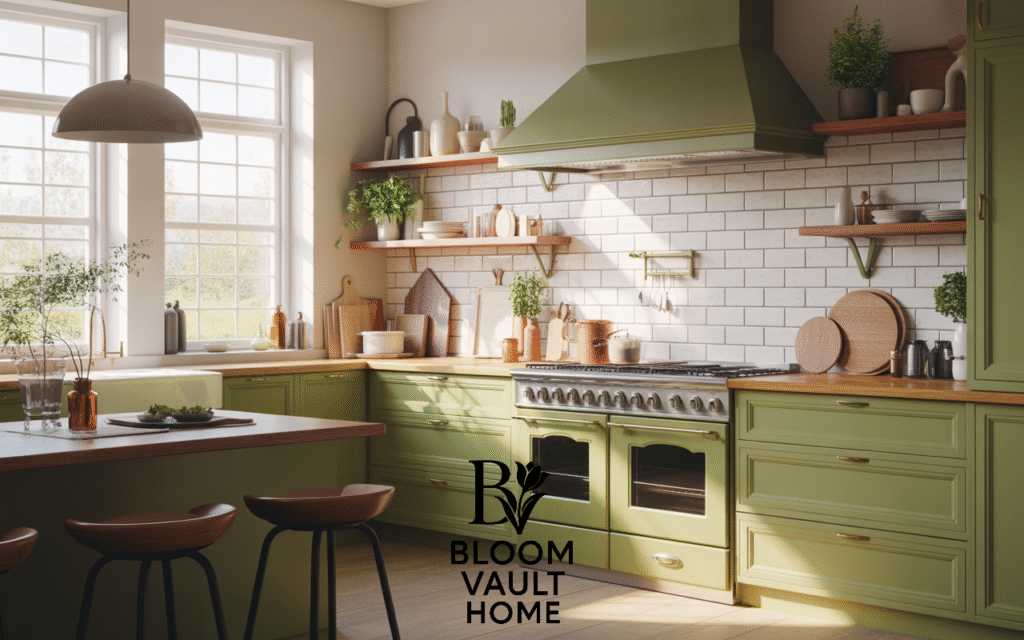
A vintage style olive green range cooker is the ultimate statement piece for kitchens that crave personality, warmth, and timeless appeal. These eye catching appliances blend old world charm with modern performance, anchoring the room in both style and function. The muted green hue brings depth and character, while vintage details like rounded corners, classic knobs, and enamel finishes introduce a nostalgic touch that feels elegant rather than outdated.
Whether you opt for a full size dual fuel range or a compact model for a smaller kitchen, this retro inspired centerpiece adds instant charm. It pairs beautifully with other vintage elements like farmhouse sinks, beadboard paneling, or antique brass hardware, and it can be balanced with sleek, modern finishes for an eclectic look. More than just a pop of color, an olive green cooker adds story and soul to the kitchen making every meal feel like a cozy, curated experience.
Pro Tips
- Choose a brand that blends vintage looks with modern tech: Many heritage style ranges now come with convection, self cleaning, and smart features.
- Let it stand alone visually: Avoid surrounding it with matching olive cabinetry let the cooker shine.
- Install a complementary range hood: Go with a brass trimmed, cream, or stainless steel hood for balance.
- Use matching or contrasting backsplash: Subway or zellige tiles in white, cream, or deep green create a beautiful frame.
- Keep surrounding cabinetry neutral: White, light wood, or soft gray cabinets help emphasize the cooker without clashing.
Key Style Elements
- Freestanding or slide in vintage style range in enamel olive green finish
- Traditional knob and handle detailing with a matte or brushed metallic finish
- Brass, black, or stainless accents to match surrounding fixtures
- Complementary range hood in cream, wood trimmed, or exposed metal
- Simple, neutral backsplash to keep the focus on the cooker
- Open shelving or plate racks nearby to reinforce the vintage charm
- Butcher block, marble, or light quartz countertops to complete the look
- Earth toned or black and white tiled flooring for a nostalgic finish
12. Open Olive Green Shelving Against White Shiplap
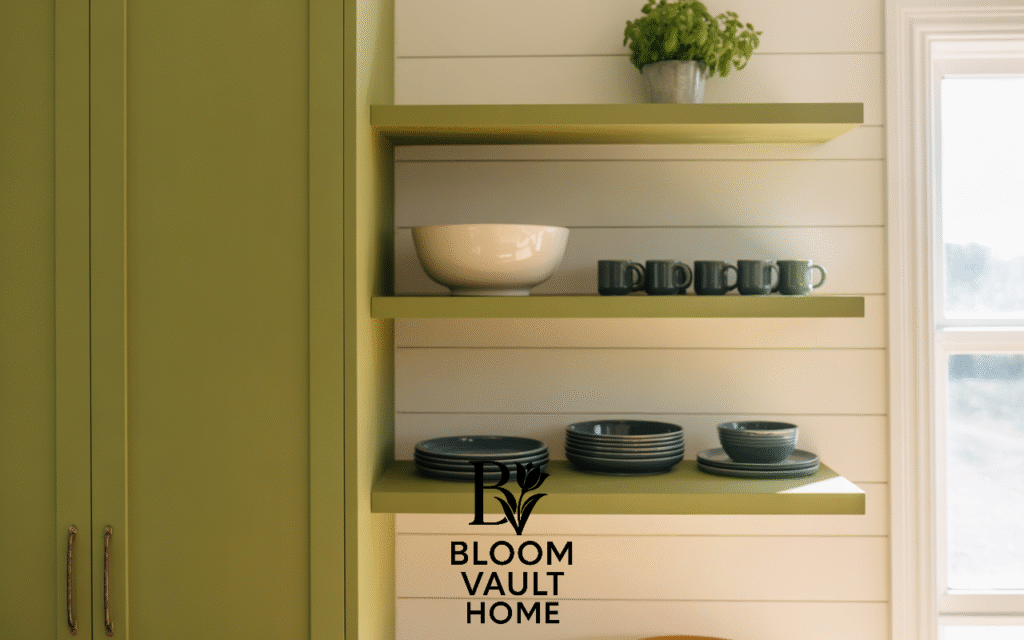
For a farmhouse inspired kitchen with a fresh and modern twist, open olive green shelving set against crisp white shiplap walls delivers the perfect balance of rustic charm and clean elegance. The contrast between the rich, earthy olive shelves and the bright, horizontal lines of the shiplap creates a visually striking yet welcoming look. It’s a design that celebrates simplicity and functionality ideal for kitchens that double as cozy gathering spaces.
This pairing is especially effective in smaller kitchens or breakfast nooks, where open shelving can make the walls feel more expansive while offering space to showcase everyday essentials or decorative items. The olive green color adds depth and a natural feel, connecting the room to the outdoors, while the shiplap adds timeless character and texture. Whether you’re styling with ceramic dishes, mason jars, or potted herbs, this look feels warm, lived in, and perfectly curated.
Pro Tips
- Use semi gloss paint for shelving: It adds a subtle sheen and improves durability for open kitchen storage.
- Install floating brackets for a clean look: Hidden supports let the green shelves visually “float” against the wall.
- Limit shelf layers to 2–3 rows: Keeps the space feeling open and avoids a cluttered appearance.
- Style with a mix of practical and decorative items: Include dishes, woven baskets, small plants, and cookbooks.
- Frame the area with sconces or picture lights: Adds warmth and highlights the shelves as a design feature.
Key Style Elements
- Open shelves in matte or satin olive green, made of wood or MDF
- Horizontal white shiplap wall paneling as the backdrop
- Natural or neutral toned accessories: ceramic bowls, wooden cutting boards, linen napkins
- Brass or matte black accent lighting above or around the shelves
- Light stone, quartz, or butcher block countertops beneath the shelves for cohesion
- Farmhouse or apron front sink nearby to reinforce the rustic charm
- Earthy color palette with touches of white, beige, and soft greens
- Optional vintage hooks or pegs below the bottom shelf for added function and charm
13. Olive Green Herringbone Backsplash

For a kitchen that’s both elegant and full of texture, an olive green herringbone backsplash offers a refined, upscale statement. This unique tile layout adds dynamic movement and visual depth, elevating the space without needing loud colors or overly ornate details. Whether placed behind the stove, sink, or along an accent wall, the herringbone pattern draws the eye and gives a sense of craftsmanship, while the olive hue brings natural warmth and timeless style.
This design works especially well with a variety of countertop and cabinetry finishes. Pair it with matte white, natural wood, or even charcoal cabinetry for high contrast, and choose a soft grout color to make the pattern pop without overwhelming. Glossy or handmade ceramic tiles in olive bring a subtle variation in tone and shine, enhancing the layered texture of the herringbone layout. The result is a show stopping backsplash that feels both classic and contemporary.
Pro Tips
- Choose smaller, slim format tiles: 2×6 or 3×9 tiles work best for detailed herringbone layouts.
- Hire a pro for installation: Precision is key improper angles will stand out in a herringbone pattern.
- Opt for a medium or light grout tone: Helps define the pattern while keeping it elegant.
- Use the herringbone as an accent zone: Ideal behind the stove or sink rather than across all walls.
- Frame the herringbone with trim tile or metal edging: Gives a polished, designer finish.
Key Style Elements
- Olive green ceramic or zellige tiles in herringbone layout
- Grout in ivory, soft gray, or light beige to highlight the pattern
- Full height backsplash or framed area behind cooking/sink zones
- Matte or glossy tile finishes for texture and light play
- Surrounding cabinetry in neutral or earthy tones: white, wood, or charcoal
- Quartz or marble countertops in white or cream for balance
- Brass or black fixtures for a luxe touch
- Accent lighting (like sconces or under cabinet LEDs) to enhance texture and depth
14. Rustic Olive Green Cabinets with Exposed Beams
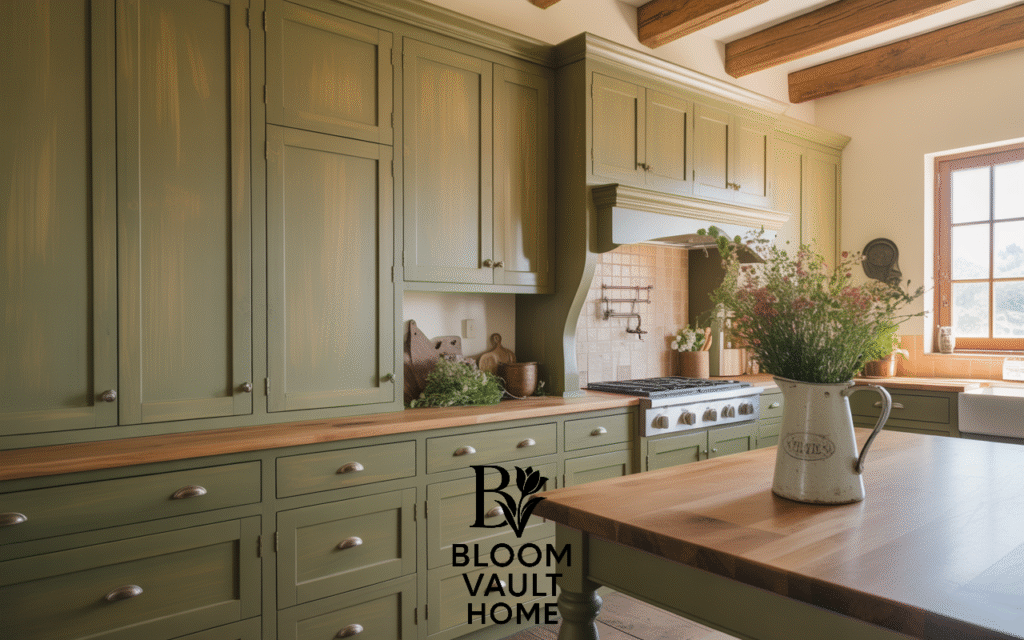
For a kitchen that feels like a cozy countryside retreat, rustic olive green cabinets paired with exposed wooden beams and stone floors create an inviting and timeless atmosphere. This design style embraces natural materials and muted tones, offering a sense of heritage and warmth. The olive green cabinetry adds a rich, earthy touch that grounds the space, while the raw wood beams overhead bring architectural charm and authenticity. Together, they create a layered, lived in look that’s perfect for traditional farmhouses, country cottages, or even modern rustic interiors.
The key is in the textures brushed or distressed wood cabinetry finishes, unpolished stone flooring, and handcrafted details like vintage style hardware or apron front sinks. This palette and material blend connects the indoors with the surrounding landscape, making the kitchen feel like an extension of nature. Whether you’re cooking, hosting, or simply sipping coffee, this rustic combination sets the stage for comfort, tradition, and quiet luxury.
Pro Tips
- Use inset or beadboard cabinet fronts: These add old world charm and reinforce the rustic feel.
- Choose a distressed or hand brushed olive paint finish: It adds texture and patina, perfect for a timeworn look.
- Expose ceiling beams naturally: Don’t over stain preserve their raw or weathered appearance for authenticity.
- Opt for limestone, flagstone, or textured tile floors: These enhance the earthy, grounded tone of the room.
- Layer in vintage elements: Copper pots, wrought iron hardware, and antique stools elevate the rustic mood.
Key Style Elements
- Olive green wood cabinetry with matte, brushed, or distressed finish
- Overhead natural wood beams (oak, pine, or reclaimed wood)
- Stone or stone look flooring in neutral, earthy tones (beige, gray, or soft brown)
- Farmhouse sink (ceramic or copper) with bridge or gooseneck faucets
- Antique or vintage style hardware (wrought iron, oil rubbed bronze, or brass)
- Open wood shelving with rustic brackets or carved corbels
- Warm ambient lighting (lantern pendants, wrought iron sconces, or Edison bulbs)
- Decorative touches like woven baskets, pottery, and herb bundles for countryside charm
15. Minimalist Olive and Concrete Combo
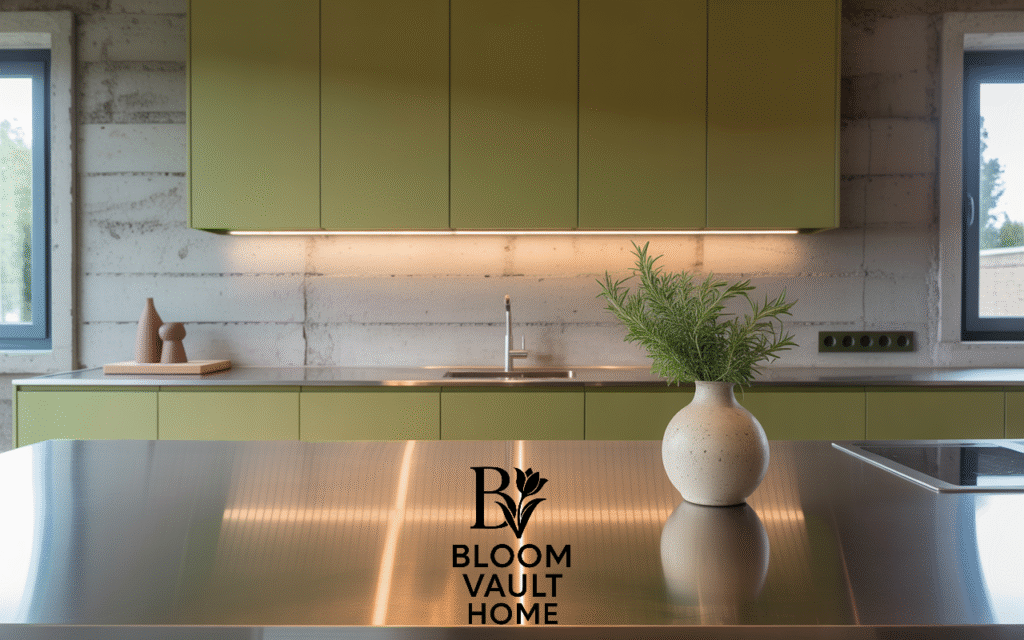
For those who love sleek, understated elegance, the combination of olive slab cabinetry and poured concrete countertops delivers a minimalist kitchen that feels grounded, modern, and effortlessly refined. This pairing strips away the unnecessary and celebrates raw materials, muted tones, and functional beauty. The matte olive green cabinetry brings in warmth and color without shouting, while the concrete counters provide cool, industrial contrast with a handcrafted edge. Together, they create a balanced composition of nature and structure perfect for modernists who crave calm, clutter free environments.
Slab style cabinets, with their flat, handle less fronts, reinforce the minimalist aesthetic and keep the space looking clean and uninterrupted. Concrete countertops add texture and variation in tone, especially when sealed with a soft satin finish. This combo thrives in open plan lofts, urban apartments, or modern homes that favor form, function, and timeless restraint. Add in sleek black or brushed metal fixtures, and your kitchen becomes a serene retreat with an architectural edge.
Pro Tips
- Choose handle less cabinetry or push to open systems: Keeps the olive fronts clean and uninterrupted.
- Seal concrete properly: A matte, food safe sealer prevents staining while maintaining the raw finish.
- Use a muted olive tone: Stick to desaturated greens for a sophisticated, minimalist palette.
- Limit open shelving or visible accessories: Hide clutter to let the materials speak for themselves.
- Integrate lighting into cabinetry or ceilings: Avoid ornate fixtures opt for linear LEDs or recessed lighting.
Key Style Elements
- Slab front matte olive cabinetry with seamless panels
- Poured or precast concrete countertops with a smooth, matte finish
- Integrated appliances or panel ready options for a cohesive look
- Minimalist backsplash optional or flush with the countertop material
- Brushed black or stainless steel fixtures with clean lines
- Neutral flooring like polished concrete, large format stone tiles, or pale wood
- Concealed storage solutions to keep surfaces clear
- Streamlined pendant or track lighting to match the overall simplicity
16. Olive Green Accent Wall in a White Kitchen
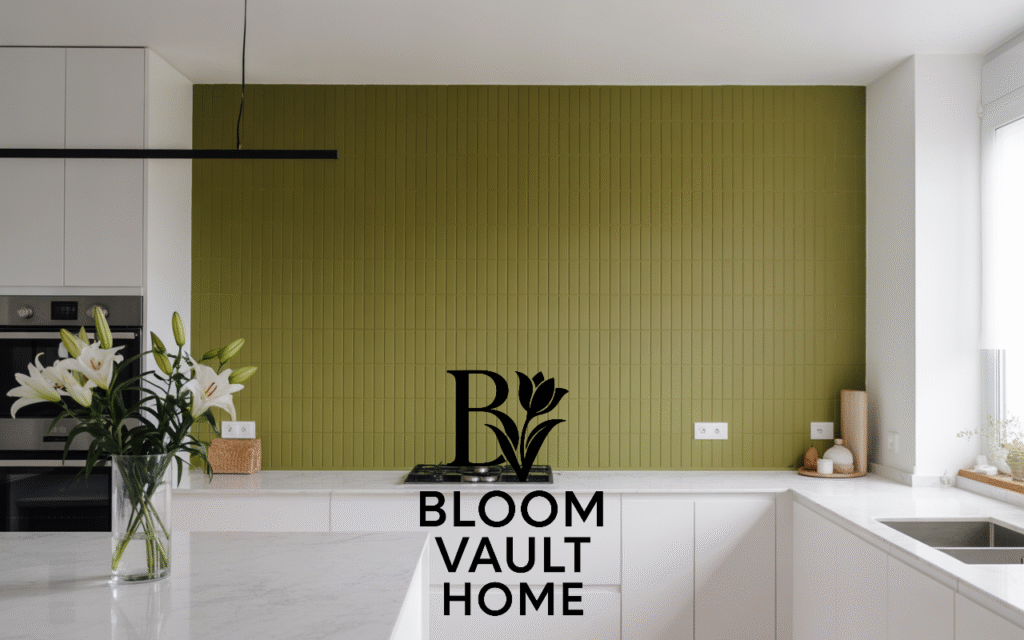
If you’re not quite ready to commit to olive green cabinetry, an olive green accent wall is the perfect gateway into this earthy, timeless hue. In a predominantly white kitchen, a painted olive wall introduces depth and visual interest without overwhelming the space. Whether it’s positioned behind open shelving, a cozy dining nook, or even around a window frame, this subtle splash of color instantly warms up the room and adds a curated, designer touch.
The contrast between crisp white surfaces and the organic richness of olive green creates a balanced and inviting look. It adds just enough personality to keep the kitchen from feeling sterile, while still maintaining the brightness and airiness that all white kitchens are known for. This approach is especially appealing for renters or cautious remodelers, as it’s a low risk, high impact way to experiment with color.
Pro Tips
- Use a muted, warm olive shade: It pairs better with white and gives a more natural, calming feel.
- Frame open shelving with the accent wall: This helps the green act as a subtle backdrop for decorative items.
- Choose a washable paint finish: Ideal for areas near prep zones, shelves, or dining corners.
- Tie in green with small accessories: Add touches of olive in seat cushions, dishware, or artwork for cohesion.
- Paint adjacent walls in soft white, not stark white: Warmer whites (like eggshell or ivory) will blend more seamlessly with olive.
Key Style Elements
- Olive green feature wall with matte or eggshell finish
- All white or off white cabinetry and trim to contrast cleanly
- Floating wood or metal shelves installed over the green wall for functional styling
- Cozy breakfast nook with olive wall backdrop, paired with neutral or wood furniture
- Black, brass, or natural toned accents (like frames, hooks, or sconces)
- Light stone, oak, or tile flooring to maintain brightness
- Coordinated accessories like green glazed ceramics, herb planters, or linen napkins
- Ambient or directional lighting to highlight the accent wall without overpowering it
17. Olive Green Ceiling for a Dramatic Touch
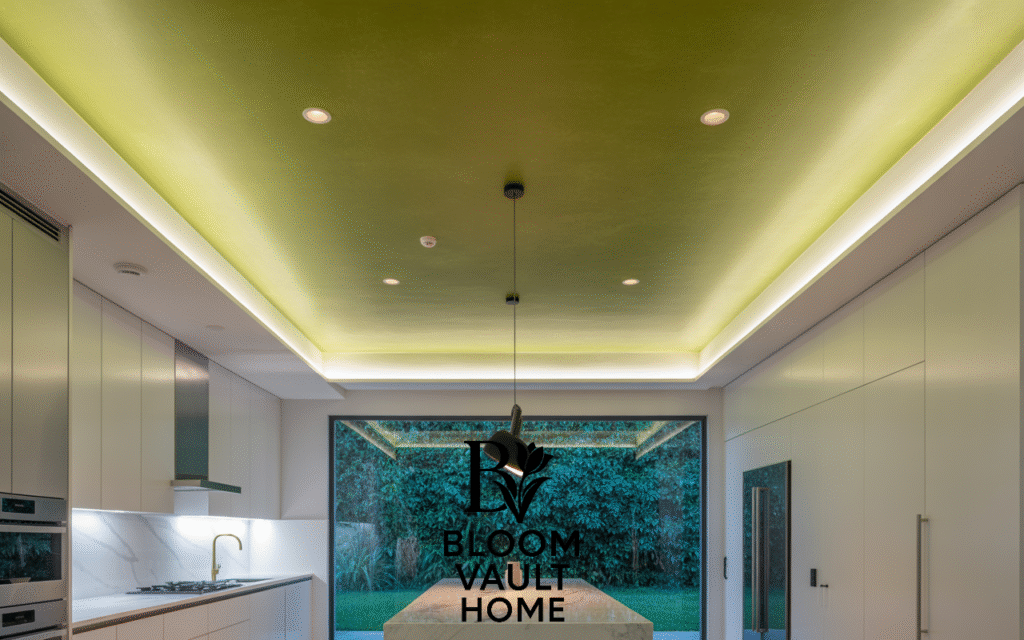
For a truly unexpected and artistic design twist, consider flipping the script and painting your kitchen ceiling olive green. While ceilings are often left white or neutral, introducing olive above eye level creates instant drama, warmth, and intimacy without crowding the space. This approach works especially well in kitchens with high ceilings, lots of natural light, or open floor plans where the ceiling becomes a visible, unifying element.
By keeping the cabinetry, walls, and surfaces light think whites, creams, or soft woods the olive green ceiling becomes a sophisticated design statement that doesn’t overpower. It draws the eye upward, adds depth to the room, and provides a cozy, cocoon like ambiance. Whether you’re working with a modern loft, a rustic home, or a Scandi inspired kitchen, this ceiling treatment offers a bold but balanced alternative to conventional design choices.
Pro Tips
- Test paint in different lighting: Ceilings catch shadows choose a slightly warmer olive to avoid it looking gray.
- Use a flat or matte finish: It softens the color and hides imperfections better than semi gloss.
- Keep walls and cabinets minimal: Let the ceiling be the only strong color in the space.
- Frame with white or wood crown molding: Adds definition and a finished edge between ceiling and walls.
- Pair with warm lighting: Pendant lights, under cabinet LEDs, or sconces in brass or bronze help enhance the richness of the green.
Key Style Elements
- Flat/matte olive green paint on a smooth ceiling surface
- White, cream, or very light wall and cabinet colors for contrast
- Warm wood or pale flooring to anchor the space
- Subtle accents in olive throughout the space (barstools, textiles, ceramics)
- Statement lighting fixtures that hang slightly below the olive ceiling for added visual interest
- Optional wood beam or coffered ceiling details for texture and layering
- Minimalist decor to keep the focus on the ceiling treatment
- Cohesive styling with earthy tones and soft natural finishes throughout
18. Dark Olive Cabinets with White Marble
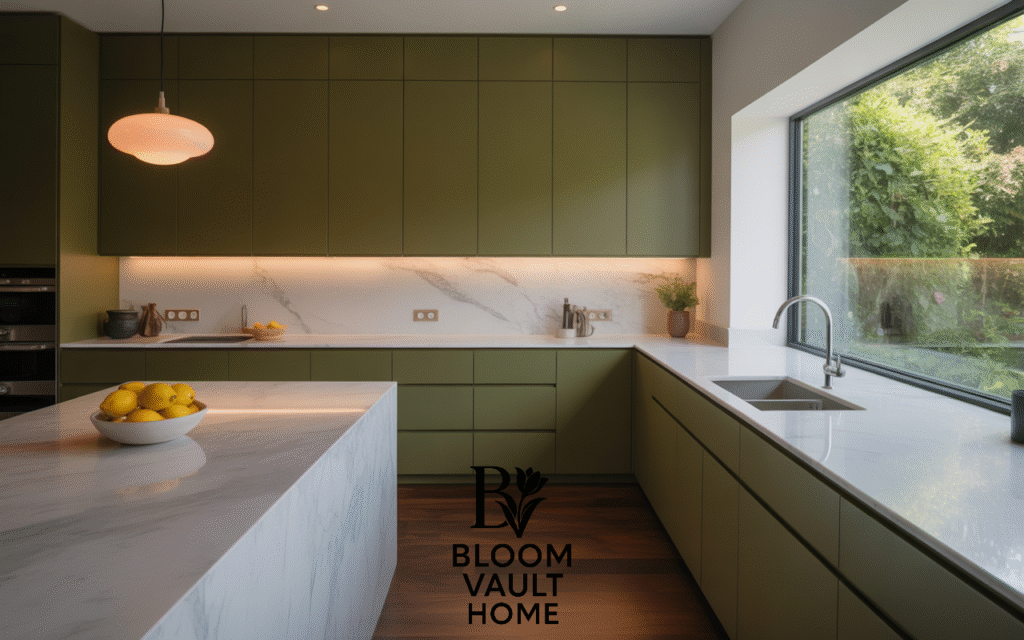
For a kitchen that radiates refined elegance, pairing deep olive cabinets with white Calacatta marble countertops offers a luxurious and timeless design statement. The rich, moody green grounds the space and adds depth, while the crisp white marble with its dramatic veining and luminous surface introduces a sophisticated contrast that feels both high end and balanced. This duo is perfect for those who want a bold yet classic kitchen that doesn’t rely on trend driven colors or flashy materials.
Dark olive cabinets offer the warmth of green with the depth of charcoal, making them incredibly versatile and easy to style with a variety of finishes. When topped with Calacatta marble, the kitchen immediately feels elevated, clean, and artful. Whether you’re going for modern classic, transitional, or European farmhouse, this pairing works beautifully in both large and small kitchens especially when paired with brass fixtures, minimalist hardware, or antique accents.
Pro Tips
- Choose Calacatta over Carrara for a bolder look: The dramatic veining creates visual impact and pairs beautifully with dark olive.
- Keep upper cabinets light or minimal: Let the deep base cabinets and marble take center stage.
- Seal your marble regularly: It’s beautiful but porous proper care ensures lasting elegance.
- Pair with warm lighting: It enhances the veining in the marble and brings out the richness in the olive.
- Balance with natural textures: Wood stools, linen curtains, or clay accessories soften the contrast and add warmth.
Key Style Elements
- Deep olive green base cabinetry in matte or satin finish
- White Calacatta marble countertops with bold grey or gold veining
- Minimalist or traditional cabinet styles (shaker or flat panel)
- Brass or matte black hardware for a luxe contrast
- Optional open shelving or light uppers in white or natural wood
- Neutral or wood look flooring to ground the palette
- White or marble slab backsplash to match countertops
- Elegant pendant or sconce lighting to highlight the countertop’s veining
19. Olive Green Retro Tiles with Midcentury Cabinets
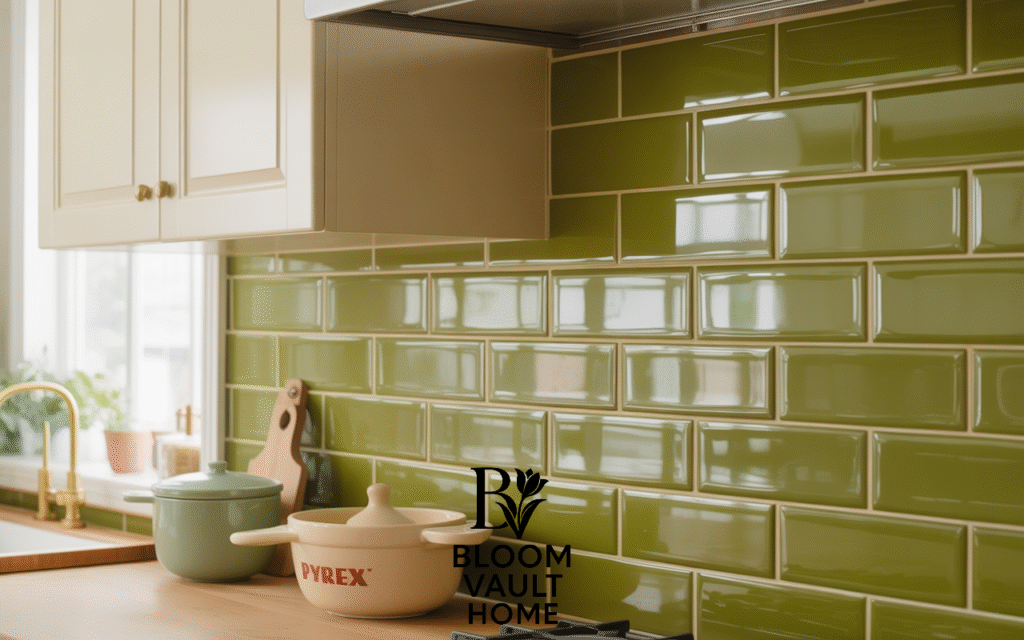
Bring a nostalgic yet stylish flair to your kitchen by combining retro inspired olive green tiles with warm walnut mid century modern cabinetry. This design celebrates vintage aesthetics with a fresh twist perfect for homeowners who appreciate both color and character. Olive green mosaic or geometric tiles instantly transport you to the bold design era of the ’50s and ’60s, while the sleek lines and rich tones of mid century cabinets add warmth, structure, and timeless appeal.
This pairing thrives on contrast and balance: the intricate texture and playful vibe of the tiles work harmoniously with the simplicity and sophistication of slab front walnut cabinets. To complete the look, incorporate other retro elements like rounded lighting fixtures, brass hardware, and slim tapered legs on furniture. It’s a style forward approach that nods to the past without feeling outdated perfect for eclectic homes or retro modern renovations.
Pro Tips
- Use mosaic, penny round, or square tiles: These formats feel most authentic to mid century retro aesthetics.
- Choose walnut or teak wood finishes: These rich woods offer a perfect contrast to olive tones.
- Keep countertops simple: Go with solid white or cream surfaces to let the tile and wood shine.
- Add globe pendants or retro sconces: Lighting helps reinforce the mid century vibe.
- Incorporate pops of color sparingly: Think burnt orange, mustard, or navy for accessories to stay true to the era.
Key Style Elements
- Olive green retro tiles (mosaic, penny, or geometric patterns) with a glossy or satin finish
- Mid century modern walnut cabinetry with flat panel fronts and minimal hardware
- Matte brass or brushed gold handles and knobs for a vintage touch
- White quartz or laminate countertops for a clean, subtle base
- Mid century lighting: globe pendants, Sputnik fixtures, or cone sconces
- Furniture with tapered wood legs and natural textiles (like boucle or linen)
- Optional open shelving or niche storage for display
- Colorful yet minimal accessories (retro canisters, art prints, or vintage appliances) to complete the look
20. Industrial Olive Green Kitchen
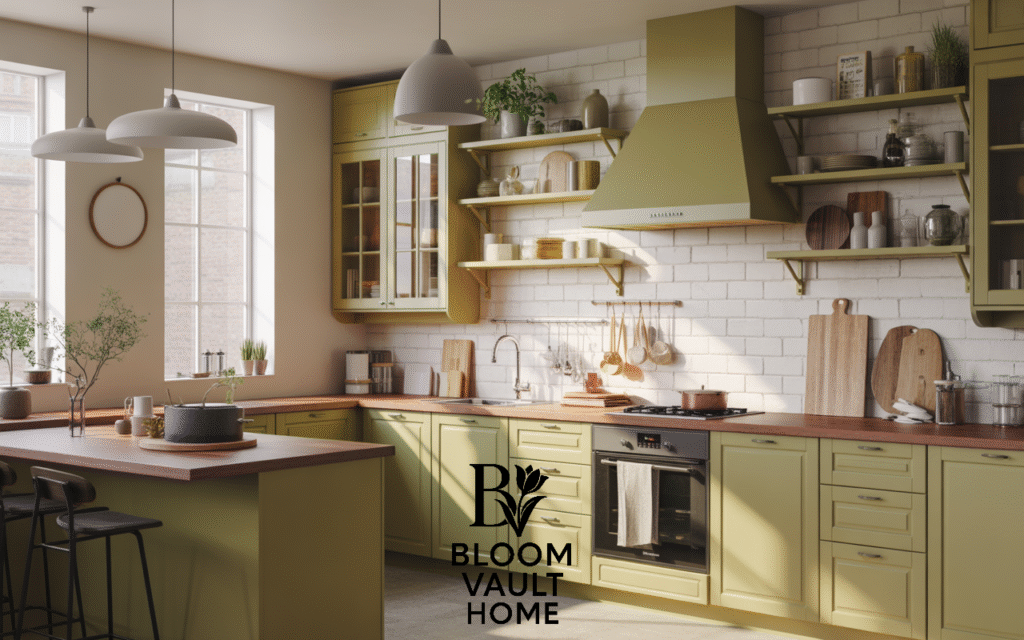
For a bold, urban inspired kitchen with attitude, an industrial olive green design delivers the perfect fusion of grit and style. Olive green metal cabinetry introduces a rugged yet refined color element that softens the hard edges of industrial aesthetics, while still staying true to the look’s raw and utilitarian roots. When combined with exposed brick walls, matte black accents, and concrete or dark wood floors, the result is a moody, edgy space that feels both functional and fashion forward.
Metal cabinet fronts whether painted steel or powder coated aluminum enhance the industrial vibe and add durability, making them ideal for high traffic kitchens. Olive green, as a color, balances the coolness of metal and black with an earthy, grounded feel. Exposed ductwork, pipe shelving, Edison bulb lighting, and concrete countertops further amplify the warehouse loft look. This setup is perfect for city homes, converted lofts, or anyone drawn to an unpolished, architectural aesthetic with a touch of natural warmth.
Pro Tips
- Opt for flat panel or riveted metal cabinetry: Adds an industrial edge while keeping the lines clean.
- Seal brick walls to prevent dust: A matte sealant keeps the texture without compromising practicality.
- Mix textures intentionally: Combine smooth metal, rough brick, and soft textiles (like leather or cotton) for visual balance.
- Use industrial style hardware: Exposed screws, matte black pulls, or pipe style handles enhance the theme.
- Layer lighting: Pendant lights, wall sconces, and under cabinet LEDs create depth and functionality.
Key Style Elements
- Olive green painted or powder coated metal cabinetry with matte finish
- Exposed red or whitewashed brick walls for texture and contrast
- Matte black fixtures and hardware (sink, faucet, lights, shelving brackets)
- Concrete or reclaimed wood countertops for an urban, worn in look
- Edison bulb pendant lights or metal cage fixtures for an industrial glow
- Open metal or reclaimed wood shelving for a warehouse feel
- Industrial bar stools with metal legs and leather or wood seats
- Minimalist, raw edge styling: utility hooks, exposed piping, and steel framed windows or doors
21. Olive Green in Scandinavian Kitchens
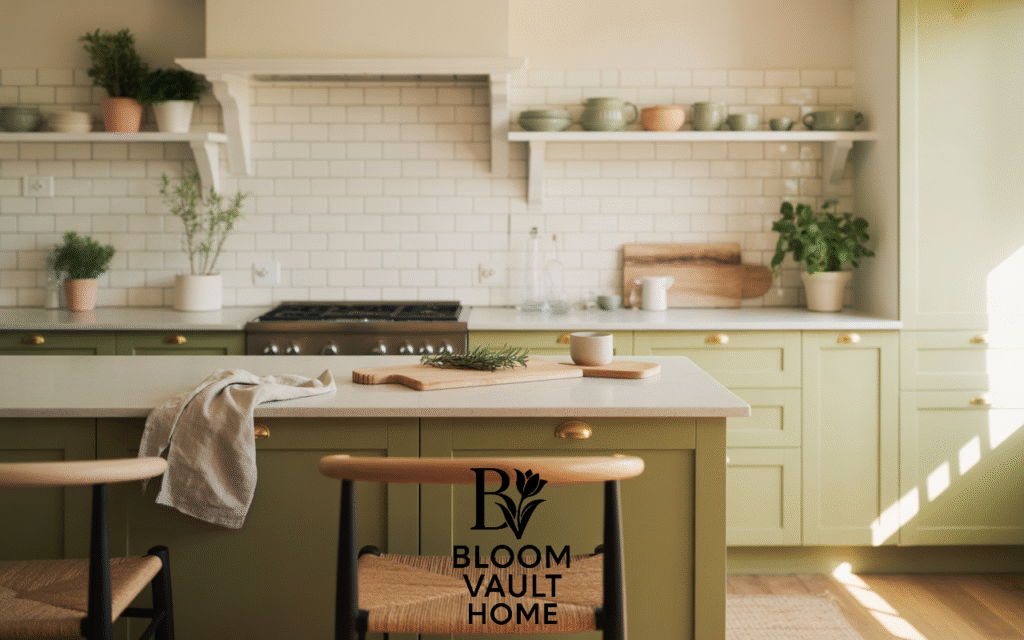
In Scandinavian kitchens, where minimalism meets warmth and function, soft olive green is the perfect way to introduce subtle color without disrupting the clean, airy aesthetic. Muted olive tones on flat panel cabinets offer a calm, nature inspired alternative to traditional whites and grays, bringing a sense of balance and serenity to the space. When paired with light Scandinavian oak floors, pale stone countertops, and soft ambient lighting, olive green enhances the cozy, organic feel that defines Nordic interiors.
This palette is especially suited to small or open plan kitchens, where light and flow are essential. The flat front cabinets maintain the sleek, uninterrupted lines typical of Scandinavian design, while the gentle green tone adds character without overpowering. Keep hardware minimal think slim matte black or integrated pulls and opt for natural textures like woven pendant lights, stone backsplash tiles, and linen textiles to layer in depth and authenticity.
Pro Tips
- Stick to a desaturated olive tone: Cooler greens work better with blonde woods and white elements.
- Use integrated handles or push to open systems: Maintains the clean lined look.
- Choose matte finishes: Reflects Scandinavian restraint and prevents shine in soft daylight.
- Add warmth with layered textures: Woven rugs, pottery, and wood details make the space feel lived in.
- Incorporate plenty of natural light: Olive tones come alive in bright, daylight filled spaces.
Key Style Elements
- Soft matte olive flat panel cabinetry with clean lines
- Scandinavian white oak or ash floors in a natural finish
- Pale quartz or light stone countertops for an airy, seamless look
- Minimalist hardware: slim matte black pulls or touch latch systems
- Warm, woven pendant lights or simple white globe fixtures
- Neutral, textured backsplash tiles (subway, handmade ceramic, or micro zellige)
- Floating shelves or open niches in natural wood
- Accents like clay dishware, linen curtains, and potted herbs for a hygge inspired finish
22. Olive Green and Terrazzo Combo
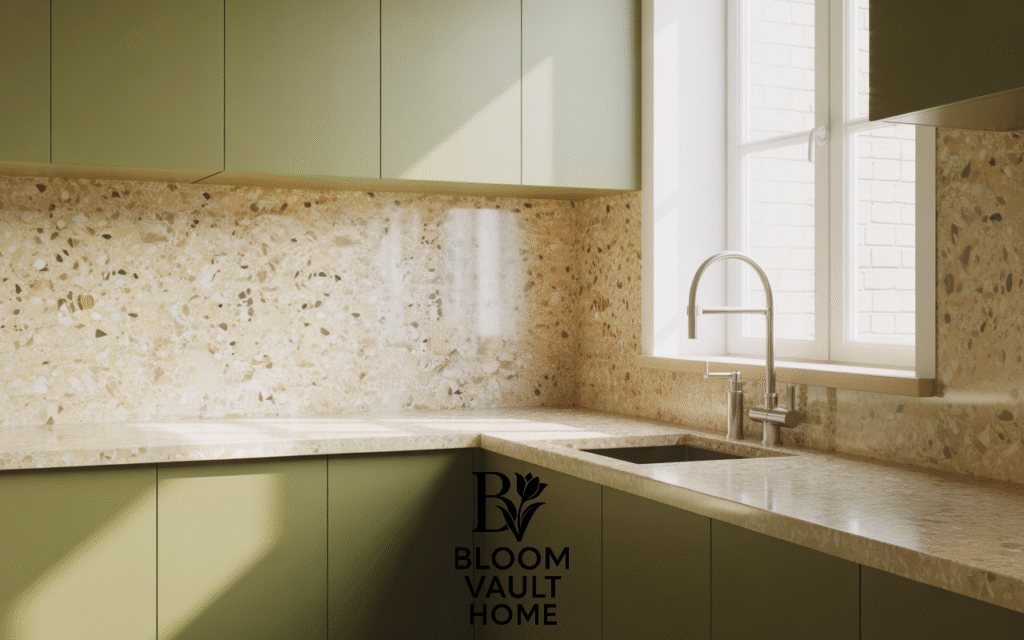
For a playful yet polished kitchen, pairing olive green cabinetry with terrazzo surfaces creates a vibrant and artful statement. Terrazzo known for its speckled mix of stone, glass, and marble chips adds movement, color, and texture, while olive green cabinetry grounds the look with earthy sophistication. This combination bridges classic and contemporary design, perfect for eclectic homes or anyone looking to infuse their kitchen with creativity and modern charm.
Terrazzo can be used in countertops, backsplashes, or flooring to introduce visual interest without overpowering the space. When paired with muted olive cabinets, the speckled patterns feel fresh and intentional rather than chaotic. Choose terrazzo with warm tones beiges, soft greens, or rusts to harmonize with olive cabinetry, or opt for black and white flecks for contrast and edge. This combo allows you to explore bold design while maintaining a cohesive, livable feel.
Pro Tips
- Balance bold terrazzo with muted olive tones: Let the cabinetry act as a calming backdrop.
- Use terrazzo in a single focal area: Either flooring, counters, or backsplash too much can feel overwhelming.
- Choose a matte finish on terrazzo for a modern, understated vibe.
- Pull accent colors from terrazzo flecks: Use them in decor, textiles, or wall art to tie the palette together.
- Pair with sleek hardware: Brushed brass, matte black, or white keep the look clean and modern.
Key Style Elements
- Olive green flat or shaker style cabinetry in matte or satin finish
- Terrazzo surfaces featuring subtle or colorful speckles (in countertops, flooring, or backsplash)
- Neutral or light wall paint to avoid competing with the terrazzo pattern
- Minimalist hardware: thin profile pulls or push to open drawers
- Open shelving or white upper cabinets to keep the space light
- Integrated appliances or minimalist fixtures for a streamlined finish
- Fun decorative accents that echo terrazzo colors (like vases, dishware, or seating)
- Clean lined lighting fixtures in black, white, or brass to complement the bold materials
23. Boho Olive Green Kitchen with Patterned Tiles
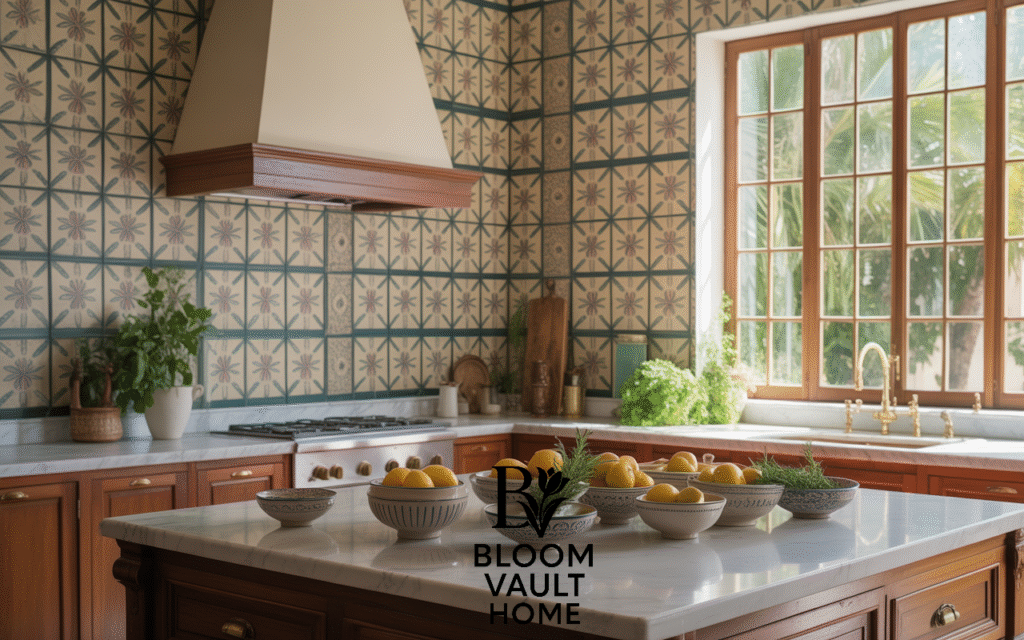
A boho inspired olive green kitchen bursts with character, warmth, and a touch of wanderlust. When paired with patterned cement floor tiles, olive green base cabinets create the perfect foundation for a space that feels collected, cozy, and globally influenced. This look celebrates imperfection, texture, and individuality making it ideal for free spirited homeowners who value both beauty and function.
Patterned tiles introduce vibrant geometry, color, and cultural depth, while olive green cabinets ground the space with their earthy, calming tone. Open wood shelving, handmade ceramics, woven baskets, and vintage accessories complete the look, blending utility with curated charm. It’s a style where no detail is too small every element contributes to a layered, soulful kitchen that tells a story.
Pro Tips
- Use encaustic or cement look porcelain tiles: These are more durable and easier to maintain in high traffic areas.
- Keep cabinet finishes matte: A flat olive green enhances the rustic, handmade feel.
- Layer in global decor: Think Moroccan lanterns, Turkish rugs, and ceramic pottery for authenticity.
- Use a mix of metals: Brass, black, and copper can coexist beautifully in boho kitchens.
- Add greenery: Potted herbs or hanging plants bring life and softness to the space.
Key Style Elements
- Olive green matte base cabinets, preferably in shaker or slab style
- Patterned cement or cement look porcelain floor tiles (geometric, floral, or vintage motifs)
- Natural wood or rattan open shelving to display eclectic dishware
- Mixed metal hardware and fixtures for a collected over time feel
- Global or vintage inspired accents: woven baskets, textured vases, artisan lighting
- Earth toned or off white walls to balance the visual richness
- Butcher block or white countertops for warmth and neutrality
- Light filtering textiles like linen or cotton curtains to soften the space
24. Olive Green Cabinets with Integrated Lighting
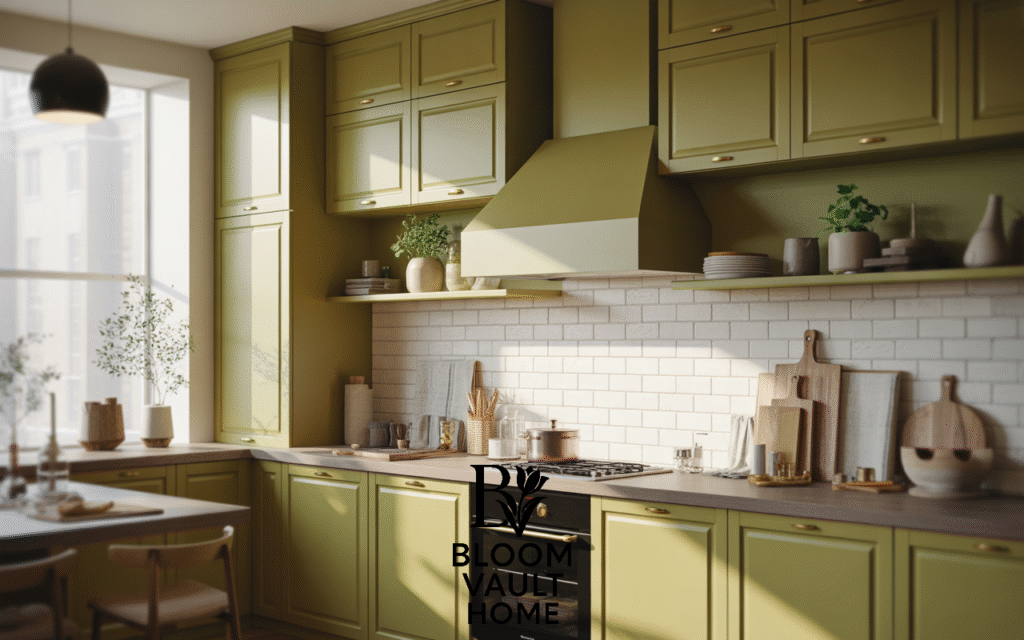
Olive green cabinetry already brings depth and richness to a kitchen but when paired with thoughtfully integrated lighting, it transforms into a sleek, modern, and mood driven design. Under cabinet and toe kick lighting not only enhance functionality but also elevate the olive tones, creating a soft glow that emphasizes the cabinetry’s color and texture. This layered lighting approach gives the kitchen a luxurious, high end feel that works beautifully for both day and night.
Warm LED strips under the upper cabinets illuminate your work surfaces while casting a subtle sheen on the olive finish. Toe kick lighting adds a floating effect, making base cabinets appear lighter and more sculptural especially effective in evening or low light settings. Whether your kitchen leans minimalist, transitional, or contemporary, integrated lighting lets you celebrate the beauty of olive green cabinetry with drama and sophistication.
Pro Tips
- Choose warm white LEDs (2700K–3000K): These enhance olive tones and create a cozy ambiance.
- Install dimmers: Allows you to control mood lighting depending on the time of day or activity.
- Use recessed aluminum channels for LED strips: Gives a polished, built in appearance.
- Highlight toe kicks in islands or galley kitchens: Creates visual separation and modern flair.
- Coordinate with soft overhead lighting: Prevents harsh contrast between cabinet lights and ceiling fixtures.
Key Style Elements
- Matte or satin olive green cabinetry with clean lines
- Under cabinet LED strip lighting in warm tones for task and ambient illumination
- Toe kick lighting for a floating cabinet effect
- Dimmable lighting control for mood and energy efficiency
- Natural or engineered stone countertops that reflect light softly
- Minimalist backsplash materials (glass, marble, or zellige) to complement the glow
- Matte black, brushed brass, or hidden handle hardware for a sleek finish
- Open shelving or niches subtly lit with recessed lighting for layered effect
25. Cottage Style Olive Green with Apron Sink

Channel timeless charm and countryside warmth with a cottage style kitchen that pairs olive green lower cabinets with classic cottage details like a white apron front sink, vintage style hardware, and delicate floral accents. This design is all about creating a space that feels cozy, welcoming, and effortlessly nostalgic. The soft, earthy tone of the olive green base cabinets adds depth and comfort, perfectly complementing the white farmhouse sink a hallmark of traditional cottage kitchens.
This look thrives on texture and character. Think ceramic knobs or antique brass pulls, open shelving with vintage dishware, and light, breezy curtains in soft floral or gingham prints. Layering natural materials like butcher block countertops, linen textiles, and hand painted tiles adds to the storybook quality. Whether you’re cooking for a family or enjoying tea by the window, this olive green cottage style makes the kitchen feel like the heart of the home.
Pro Tips
- Choose a warm olive tone: One with brown or yellow undertones pairs best with cottage elements.
- Add beadboard or tongue and groove paneling: It reinforces the traditional charm of the cabinetry.
- Select a classic fireclay or porcelain farmhouse sink: These offer durability and vintage appeal.
- Use traditional style fixtures: Bridge faucets in brass or chrome complete the look.
- Style with soft fabrics: Think linen, cotton, or floral patterned curtains and tea towels.
Key Style Elements
- Matte olive green lower cabinets with shaker or beadboard fronts
- White apron front farmhouse sink in ceramic or fireclay
- Vintage style hardware: ceramic knobs, aged brass pulls, or latches
- Butcher block or honed marble countertops for a warm, natural touch
- Light floral or gingham curtains for the windows
- Soft white or cream upper cabinets, shelving, or walls
- Wood or checkerboard tile flooring for added character
- Open shelves styled with mugs, crockery, and heritage cookware for a lived in, cozy vibe
26. Olive Green with Black Fixtures and Open Shelves
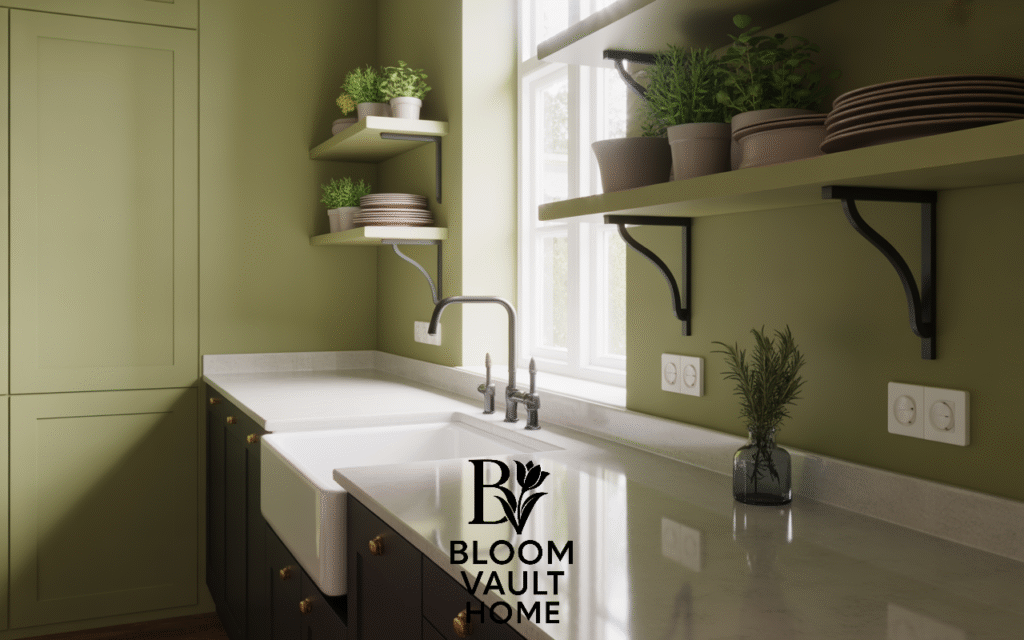
For a sleek, modern kitchen with a touch of natural warmth, pair flat front olive green cabinets with matte black fixtures and open shelving. This minimalist combo strikes the perfect balance between earthy and edgy olive green softens the look while matte black details sharpen it, creating a clean, composed space with plenty of personality. Flat front cabinetry keeps the aesthetic streamlined, while open shelves introduce lightness and the opportunity to display carefully curated kitchen essentials or decor.
This pairing is especially effective in modern, industrial, or Scandinavian inspired spaces where form and function matter equally. The matte black accents faucets, cabinet pulls, lighting fixtures offer strong contrast without overwhelming the design, and floating wood or black metal shelves add utility while keeping the upper walls feeling open. It’s a sophisticated palette that embraces both warmth and contrast, ideal for homeowners who want a modern look without sacrificing comfort.
Pro Tips
- Use handleless or edge pulls for ultra clean lines: It reinforces the modern aesthetic.
- Stick to two dominant finishes: Olive green and black are bold avoid adding too many competing colors or textures.
- Install shelf lighting: LED strips under shelves can add functional lighting and a sleek glow.
- Style shelves with restraint: Neutral ceramics, wood accents, and greenery help maintain the modern look.
- Use a soft white wall paint: It keeps the space from feeling too dark or closed in.
Key Style Elements
- Flat panel olive green cabinets in matte finish
- Matte black hardware, faucets, and lighting fixtures
- Floating shelves in natural wood, black metal, or painted to match the walls
- White or light quartz countertops to brighten the space
- Under shelf or under cabinet lighting for both function and ambience
- Minimalist backsplash: white subway, vertical tile, or concrete look panels
- Neutral flooring (light wood, concrete, or large format tile)
- Carefully chosen decor: monochrome dishware, glass jars, wood cutting boards, and leafy greens for contrast
27. Olive Green & White Quartz Waterfall Island

Elevate your kitchen with the luxurious contrast of olive green cabinetry and a white quartz waterfall island a pairing that feels modern, clean, and undeniably high end. The bold, earthy tone of olive base cabinets grounds the space, while the sleek waterfall countertop introduces crisp lines and a sculptural focal point. This design approach is perfect for open concept kitchens where the island takes center stage, doubling as a prep space, gathering hub, and design statement.
White quartz with subtle veining adds sophistication and brightness, enhancing the olive cabinets without competing for attention. The waterfall edge where the quartz cascades down the sides of the island creates a seamless, continuous look that feels custom and architectural. Pair it with minimalist fixtures, matte black or brushed gold hardware, and integrated appliances for a streamlined yet inviting aesthetic.
Pro Tips
- Choose quartz with subtle veining: Carraraor Calacatta style patterns add visual interest without overwhelming.
- Extend the waterfall edge to the floor: For a clean, uninterrupted finish that enhances the island’s sculptural appeal.
- Use flush cabinetry and hidden storage in the island: Keeps the look sleek and functional.
- Add statement lighting: Pendant lights in black, brass, or glass will frame the island and draw attention to the contrast.
- Stick to a minimalist color palette: Let the olive and white pairing shine by keeping other elements neutral.
Key Style Elements
- Matte olive green base cabinetry with slab or flat panel doors
- White quartz waterfall countertop with soft veining (Calacatta, Carrara, or Statuario styles)
- Integrated appliances and handleless cabinetry for a clean visual flow
- Pendant lighting above the island (brass domes, black lanterns, or glass globes)
- Light wood or concrete look flooring to complement the clean color palette
- Subtle backsplash or full height quartz to match the island for continuity
- Minimalist barstools in wood, leather, or black metal to tie in with the overall style
- Under island lighting or toe kick LED strips for an added layer of luxury
28. French Inspired Olive Green Kitchen
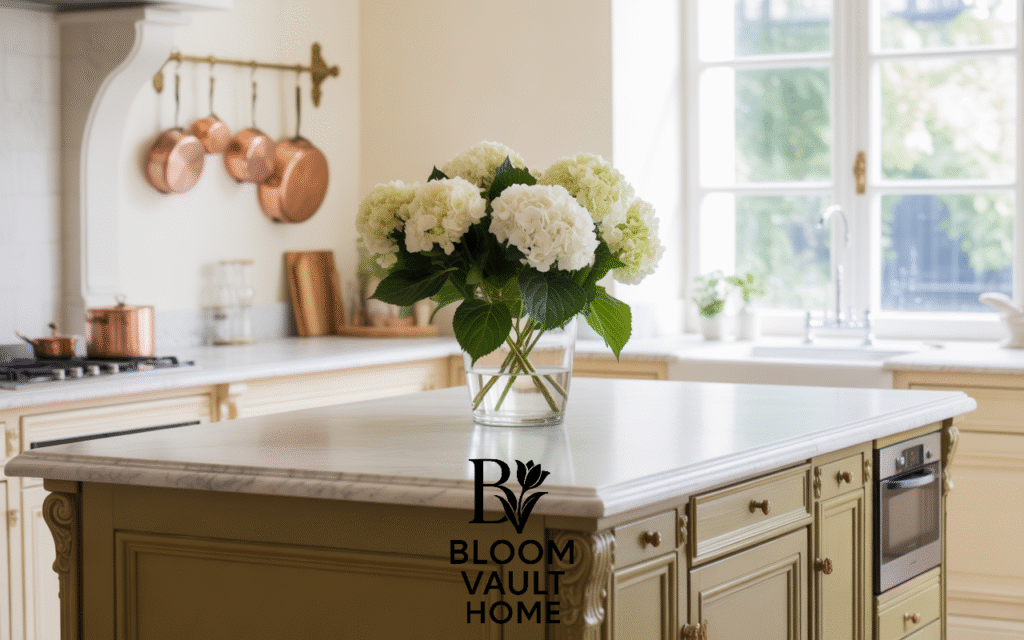
Channel the charm of a vintage Parisian flat with a French inspired olive green kitchen where antique style cabinetry, rich finishes, and elegant details blend to create timeless sophistication. This look leans into tradition with ornate, furniture style olive green cabinets, aged bronze fixtures, and paneled or beadboard walls that bring character and warmth. The palette is subdued yet rich, evoking the muted elegance of classic French interiors.
Paneled cabinet doors with decorative molding, curved legs, and exposed hinges add old world appeal, while bronze or aged brass taps and hardware lend a touch of old European refinement. To enhance the vintage ambiance, include touches like a marble countertop, open shelving with vintage dishware, and a classic range cooker. Whether you live in a country cottage or a city apartment, this style brings romance and sophistication to your kitchen without sacrificing functionality.
Pro Tips
- Choose warm, desaturated olive tones: They feel authentic and pair beautifully with antique finishes.
- Use unlacquered or aged bronze fixtures: These develop a patina over time and add to the vintage charm.
- Incorporate classic French elements: Think glass front cabinets, curved toe kicks, and fluted detailing.
- Layer with natural materials: Marble, limestone, and linen textiles enhance the French country feel.
- Add architectural wall treatments: Paneled or beadboard walls in soft cream or dove gray complement the olive tones beautifully.
Key Style Elements
- Antique style olive green cabinetry with decorative molding and inset doors
- Aged bronze or brass hardware, faucets, and sconces
- Paneled or beadboard wall treatments in neutral tones
- Marble or soapstone countertops for a timeless, high end touch
- Vintage inspired range (cream or black with brass accents)
- Open shelving with antique dishware, apothecary jars, or copper pots
- Terracotta tile or aged wood flooring for a rustic foundation
- Linen curtains, wrought iron accents, and framed art for a Parisian finish
29. Modern Farmhouse Olive Kitchen
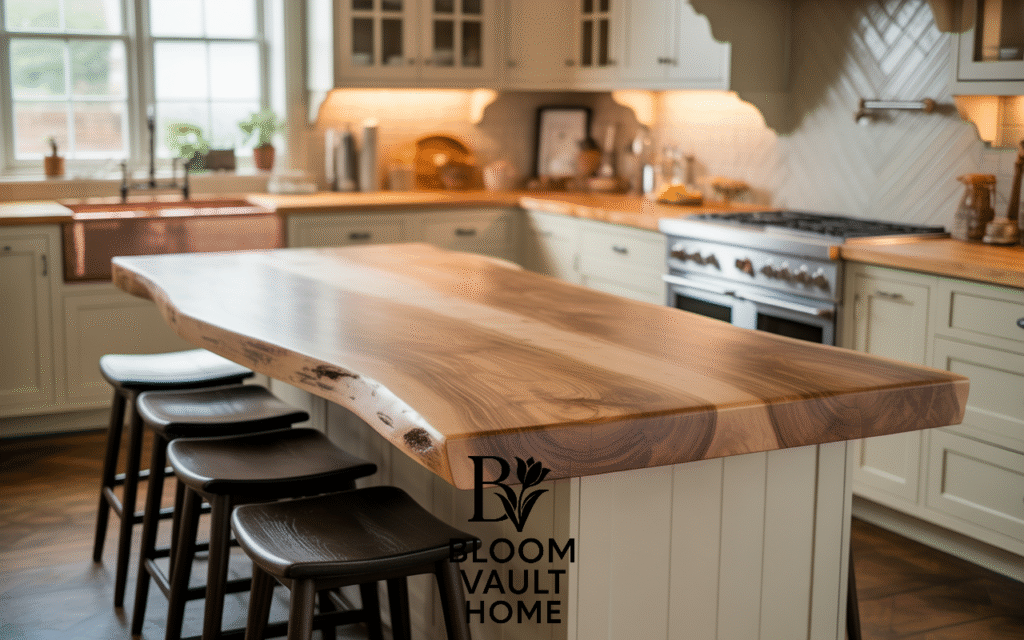
A modern farmhouse olive kitchen brings together the best of rustic charm and contemporary ease combining olive green shaker cabinets with cozy textures, timeless shiplap walls, and classic barn inspired fixtures. This style embraces the welcoming feel of traditional farm kitchens while layering in modern upgrades and clean lines for today’s lifestyles. The muted green cabinetry adds a down to earth feel, creating warmth and personality without overpowering the room.
Shiplap walls or ceilings introduce texture and vintage appeal, while matte black or galvanized barn lighting ties everything together with a utilitarian edge. Olive shaker cabinets, with their crisp profiles and sturdy form, strike the perfect balance between heritage and modernity. Pair with white quartz or butcher block countertops, open wood shelving, and classic farmhouse details like apron sinks and cross back stools to complete the look.
Pro Tips
- Use wide plank shiplap in white or cream: It provides contrast and enhances the olive cabinetry.
- Opt for matte or satin finishes on cabinets: These feel more authentic and age beautifully in farmhouse spaces.
- Install barn style sconces or pendant lighting: Black, iron, or galvanized finishes work best for a farmhouse vibe.
- Mix wood tones for depth: Combine reclaimed wood accents with cleaner finishes for a layered look.
- Add traditional farmhouse details: Think apron sinks, bridge faucets, and vintage inspired hardware.
Key Style Elements
- Olive green shaker cabinets with matte finish
- Horizontal white shiplap walls or ceiling paneling
- Barn lighting: gooseneck sconces or caged pendant lights in black or metal
- Farmhouse sink (fireclay or stainless steel) with a bridge or pull down faucet
- Butcher block, quartz, or honed stone countertops
- Open wood shelves or glass front upper cabinets for a casual, inviting feel
- Natural wood or wide plank flooring to anchor the space
- Farmhouse accents like woven baskets, enamelware, and antique decor for authenticity
30. Small Kitchen? Try Olive Green on Lower Cabinets Only
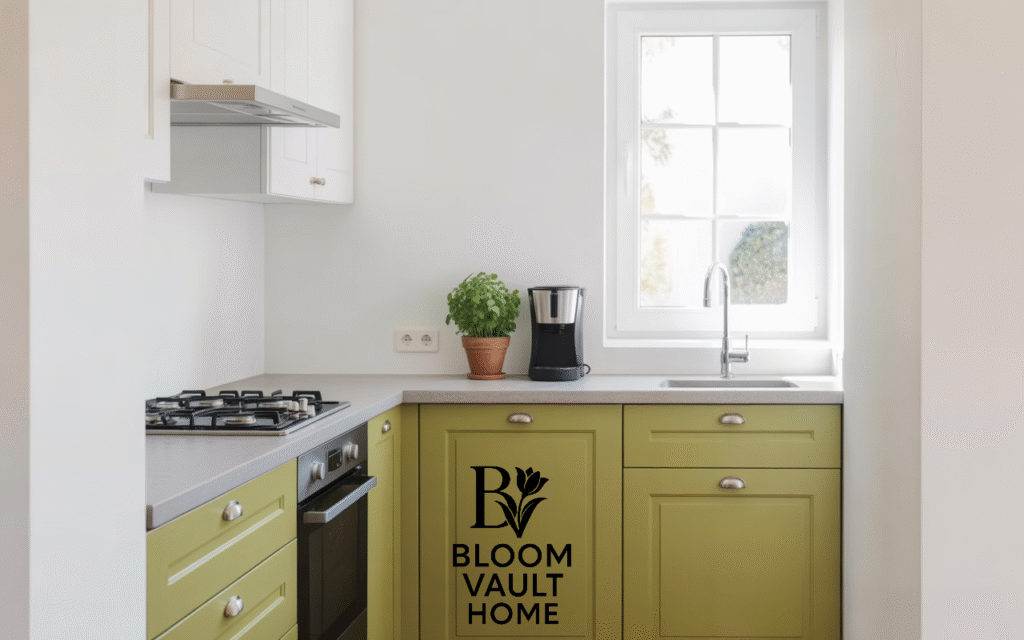
Designing for a small kitchen doesn’t mean you have to shy away from color strategically using olive green on the lower cabinets only can add depth and style without making the space feel closed in. This two tone approach helps ground the room visually while keeping the upper half light, bright, and airy. Pairing olive green base units with white or soft beige uppers creates a balanced, fresh look that feels both cozy and spacious perfect for compact layouts, galley kitchens, or apartments.
The green adds personality and warmth, while the lighter upper cabinetry reflects light, helping the kitchen appear larger and more open. This setup also allows you to introduce visual interest without overpowering the room. Keep the finishes matte or satin to maintain a soft, sophisticated look, and complement the palette with subtle textures like quartz counters, subway tile backsplashes, and natural wood or woven accents.
Pro Tips
- Use the 50/50 color split wisely: Keep darker tones low and light ones high to visually expand the room.
- Install open shelving or glass uppers: Helps break up cabinet weight and adds an open feel.
- Go for a clean backsplash: White subway tile or zellige complements both olive and light uppers.
- Use compact lighting fixtures: Recessed or under cabinet lighting can make a small kitchen feel brighter and more spacious.
- Stick with slim hardware: Minimalist pulls or knobs prevent visual clutter in tighter spaces.
Key Style Elements
- Matte olive green lower cabinets in shaker or flat panel style
- Upper cabinets or walls in white, ivory, or warm beige tones
- Light countertops (quartz, marble look, or butcher block) for an open feel
- Simple backsplash in glossy white or soft neutral tile
- Minimalist hardware in matte black, brass, or brushed nickel
- Compact layout with efficient storage solutions (pull out drawers, toe kick storage)
- Open shelving or narrow upper cabinetry to reduce bulk
- Warm wood or neutral toned flooring to keep the look grounded and cohesive
How to Use Olive Green Without Overdoing It
While olive green is versatile, it’s also bold. Here are expert tips to use it effectively:
- Balance with Neutrals: White, beige, greige, or light wood help soften the richness of olive.
- Choose Your Finish Wisely: Matte and satin finishes feel organic; glossy finishes can modernize the color.
- Use Lighting Strategically: Olive tones can appear darker in low light spaces. Use layered lighting pendants, under cabinet LEDs, and natural light.
- Mix Textures: Combine olive paint with natural wood, tiles, stone, or metal to add dimension.
Final Thoughts
Whether you lean rustic, modern, vintage, or boho, olive green kitchens offer a fresh and enduring take on color that feels grounded yet sophisticated. This nature-inspired hue complements a wide range of textures, tones, and design elements, making it a perfect choice for those looking to elevate their kitchen space with personality and poise.
Planning a remodel? Bookmark this list or share it with your interior designer. And don’t forget to pin your favorite looks for inspiration! If you’re drawn to deeper, moodier tones, you can also check out our guide on dark green kitchen designs